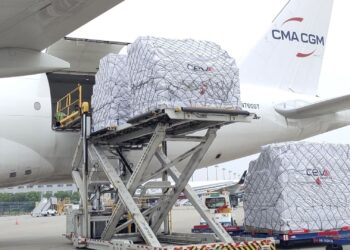
According to www.aircargonews.net, African airlines recorded a 21% year-on-year increase in air cargo demand in February 2026, the strongest regional growth globally that month, alongside a 17.3% capacity increase. This followed an 18.2% demand rise in January, with capacity up 6.5%. For all of 2025, African airlines saw 6% demand growth and 7.8% capacity growth, per IATA data.
Growth Drivers: Perishables, E-commerce, Pharma, and AfCFTA
Key verticals underpinning this expansion include perishables (fruits, vegetables, flowers, seafood), pharmaceuticals, e-commerce, and energy-related cargo. Exports from Africa to Asia — which accounted for just 1.3% of global airfreight market share but delivered 41.6% growth in January — are dominated by these perishables and industrial raw materials, including precious metals. Imports from Asia to Africa comprise semiconductors, machinery parts, automotive components, and renewable energy infrastructure components.
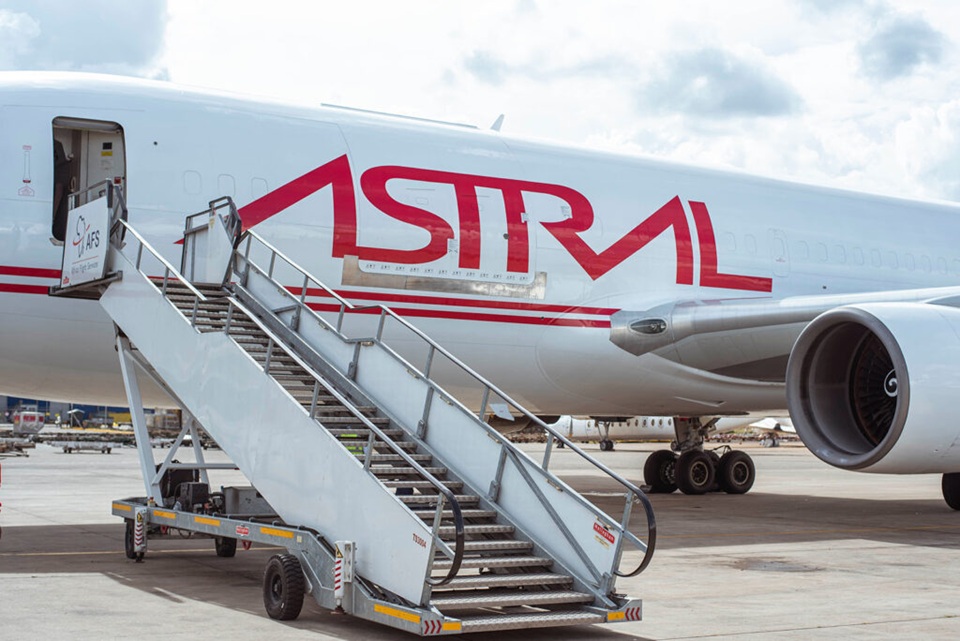
The African Continental Free Trade Area (AfCFTA) is accelerating intra-African trade flows. Sanjeev Gadhia, chief executive of Kenyan cargo airline Astral Aviation, states:
“Africa is one of the most promising air cargo growth regions globally. With AfCFTA gaining traction, we anticipate stronger intra-African trade, increased regional connectivity, and growth in perishables, pharma, and e-commerce flows.”
Ground Handling and Operational Adaptation
Swissport handled approximately 400,000 tons of cargo across Africa in 2025, representing roughly 8% of its global cargo volume of around 5 million tons. Dirk Goovaerts, Swissport’s chief executive for Continental Europe, Middle East, Africa, India & global cargo chair, notes:
“First, perishables exports remain a key driver in many African markets, particularly in horticulture and fresh produce. Second, e-commerce continues to reshape air cargo flows, requiring faster processing, dedicated facilities and greater operational flexibility. Third, the pharmaceutical and healthcare logistics segment is expanding, with increased demand for temperature-controlled supply chains and certified handling processes.”
Swissport has expanded its service portfolio in South Africa to include specialized e-commerce handling, dedicated freight forwarder services, and flexible capacity solutions. Astral Aviation, meanwhile, is adjusting capacity selectively — especially on routes from China and the Middle East into Johannesburg and Lagos via its Nairobi Hub — to serve emerging e-commerce redistribution needs.
Supply Chain Shifts Create New Opportunities
Global supply chain reconfiguration — including post-de minimis exemption adjustments and the longer-term ‘China Plus One’ manufacturing diversification — is redirecting airfreight capacity toward emerging markets. As Goovaerts observes:
“Global supply chains continue to evolve due to geopolitical developments, tariff policies, and the ongoing diversification of sourcing and manufacturing locations… Cargo flows are increasingly shifting toward emerging markets and alternative trade routes, including within Africa.”
Gadhia adds:
“Supply chains are becoming more diversified, and Africa has an opportunity to position itself as a strategic logistics hub linking global markets.”
Despite the strong start to 2026, IATA’s World Cargo Symposium (WCS) in Lima projected only 2% air cargo demand growth for Africa in 2026, aligned with its 2.6% global forecast — down from 3.4% global growth in 2025. Still, the January–February surge signals robust underlying momentum, particularly in high-value, time-sensitive segments.
Source: Air Cargo News
Compiled from international media by the SCI.AI editorial team.