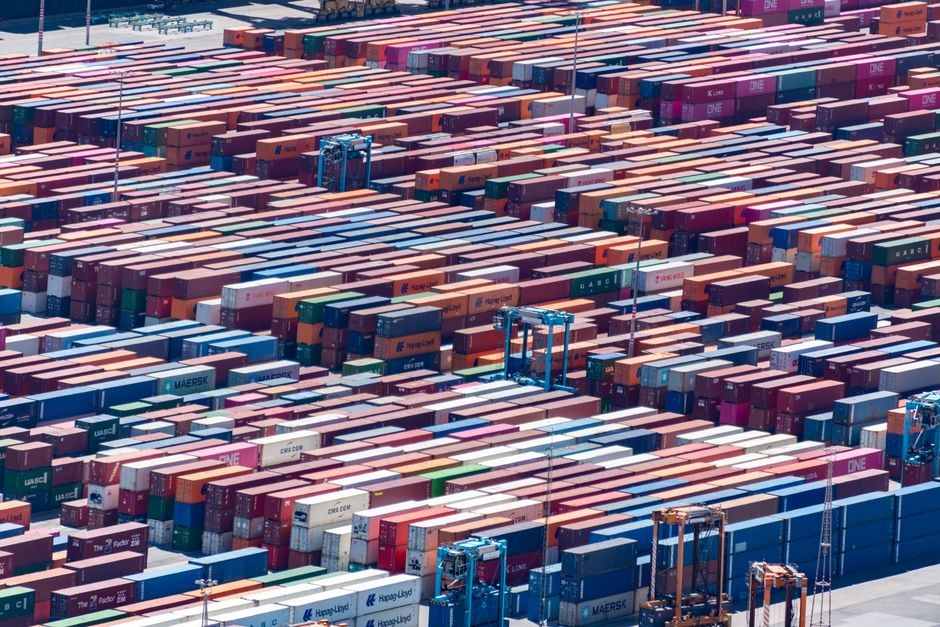
The Strait of Hormuz closure has triggered a 29% surge in spot freight rates from the Far East to the U.S. West Coast since late February, per Xeneta data. Rates to the U.S. East Coast hit $3,382/40ft, while Far East–North Europe and Mediterranean lanes rose 31% and 30%. Port congestion has rippled from the Middle East to key Asian transshipment hubs including Singapore, Port Klang, and Tanjung Pelepas. Shippers are pre-booking capacity amid fears of peak-season shortages, accepting premiums for certainty. Fuel remains available in Singapore but at double pre-crisis prices, and Maersk has refiled an emergency FMC request to expedite fuel surcharge implementation.
According to www.freightwaves.com, the closure of the Strait of Hormuz has driven a 29% increase in spot container freight rates from the Far East to the U.S. West Coast since the end of February — a stark signal of cascading disruption across ocean supply chains despite the route’s physical distance from the conflict zone.
Rate Surges Across Key Trade Lanes
Spot rates tracked by Xeneta show sharp escalations on all major east-west corridors:
- Far East to U.S. West Coast: $2,430 per 40 ft. container (as of April 1)
- Far East to U.S. East Coast: $3,382 per 40 ft. container
- Far East to North Europe: 31% increase since end-February
- Far East to Mediterranean: 30% increase since end-February
- North Europe to U.S. East Coast: $1,775 per 40 ft. container
Operational Ripple Effects
Port congestion in the Middle East has extended to critical Asian transshipment hubs — including Singapore, Port Klang, and Tanjung Pelepas — which serve as vital nodes feeding cargo toward North America. These hubs are now absorbing both volume displacement and heightened uncertainty, amplifying delays and cost pressure upstream.
“Five weeks into the Strait of Hormuz closure and spot rates on every major east-west trade lane have risen sharply, showing this is a conflict with global repercussions for ocean supply chains.” — Peter Sand, Xeneta chief analyst
Shippers are acting decisively, booking capacity early at elevated rates to avoid peak-season shortages. As Sand noted, the Red Sea crisis earlier in 2024 — marked by Houthi attacks and resulting port congestion in Singapore — remains fresh in memory. That episode doubled already-elevated rates; today’s response reflects a proactive, risk-mitigation mindset rather than reactive scrambling.
“The position of carriers is unambiguous – the cost of uncertainty sits with the shipper.” — Peter Sand, Xeneta chief analyst
While fuel shortages from Persian Gulf refining disruptions have not yet materialized, bunkering costs remain elevated: Singapore prices are roughly double pre-crisis levels, though trending down from an initial 200% spike. Rotterdam fuel prices continue rising, and ship-to-ship transfers in the Far East are adding logistical complexity and incremental cost.
Carrier Contingency Planning Under Pressure
With no visible resolution to the crisis, carriers are preparing further operational adjustments. Slow steaming and alternative routing are currently holding line, but blank sailings may follow if volatility persists. Maersk — the world’s second-largest container carrier — has submitted a second emergency request to the U.S. Federal Maritime Commission (FMC) to waive the 30-day waiting period for implementing fuel surcharges. The FMC rejected Maersk’s initial request in late March and is scheduled to rule on the renewed application today.
Source: FreightWaves
Compiled from international media by the SCI.AI editorial team.