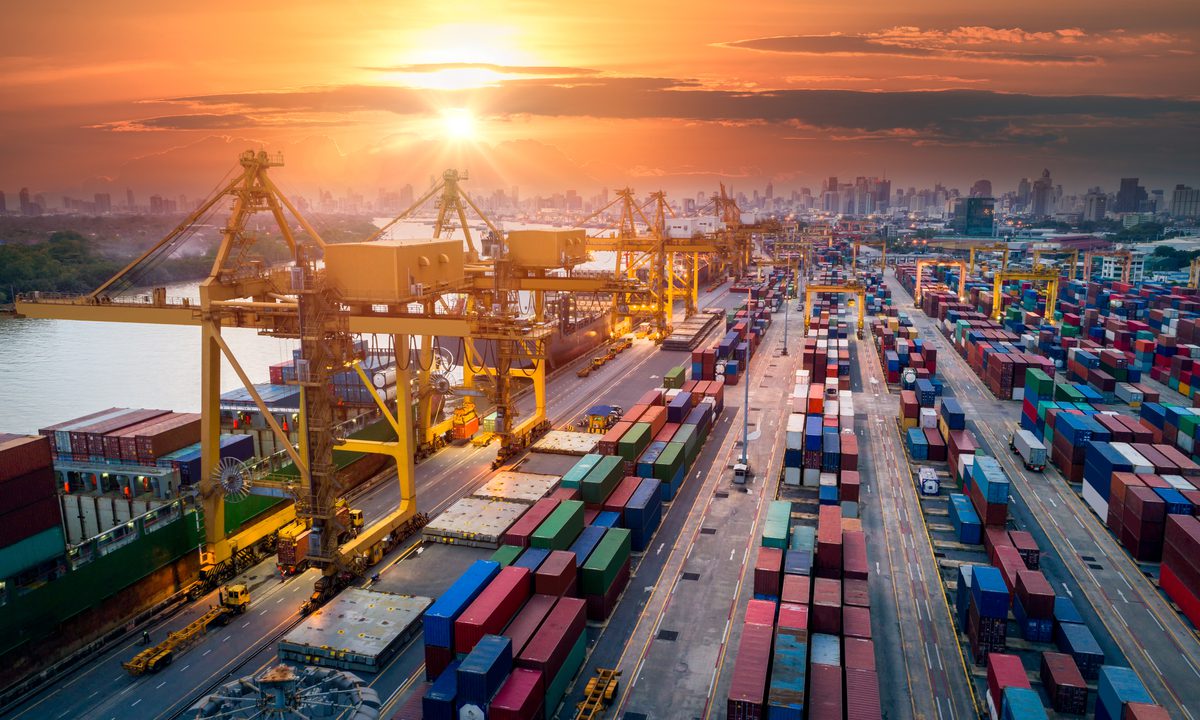
**Trade Finance Faces Stress Test as Global Risks Rise**
*By PYMNTS.com | Updated March 2026*
### **1. A Volatile World Tests the Foundations of Global Trade Finance**
Global trade finance—long regarded as the quiet engine of cross-border commerce—is undergoing an unprecedented stress test. Escalating geopolitical tensions in the Middle East, particularly around the Strait of Hormuz and Red Sea shipping lanes, have triggered cascading disruptions across supply chains, commodity flows, and payment systems. Vessels are rerouting, insurance premiums have surged by as much as 300%, and lead times for critical goods—from semiconductors to agricultural inputs—have extended by weeks. These developments are not merely logistical challenges; they are exposing structural vulnerabilities in legacy trade finance infrastructure. Over 85% of global trade documentation remains paper-based, according to the International Chamber of Commerce (ICC), rendering processes slow, opaque, and highly susceptible to delay or fraud during crises. As banks tighten credit lines and demand stricter collateral, mid-market corporates—especially those reliant on just-in-time inventory models—are facing acute working capital strain. The 2025–2026 Growth Corporates Working Capital Index reveals that average working capital cycle times lengthened by 14.7 days year-over-year, with companies in energy, manufacturing, and agribusiness sectors reporting the steepest deterioration. In this environment, resilience is no longer a strategic differentiator—it is a prerequisite for survival.
“In this environment, resilience is no longer a strategic differentiator—it is a prerequisite for survival.”
### **2. Geopolitical Fractures Reshape Trade Corridors—and Financing Needs**
The Middle East conflict has fundamentally altered the geography of global trade. The closure or militarization of key chokepoints—including the Strait of Hormuz, through which nearly 20% of the world’s oil passes—has forced shippers to adopt longer, costlier routes via the Cape of Good Hope. This adds 10–12 days to Asia–Europe voyages and inflates freight costs by up to 45%. But the financial implications run deeper than logistics. Buyers and sellers now face heightened counterparty risk: sanctions uncertainty, currency volatility (e.g., sharp rials and dirham fluctuations), and sudden port access restrictions mean traditional letters of credit (LCs) often require renegotiation mid-transaction—or collapse entirely. Banks, wary of exposure, are imposing stricter KYC/AML reviews, extending LC issuance timelines from 3–5 days to 10–14 days, and demanding higher margins. For SME exporters in emerging markets, these delays can mean missed production windows and forfeited contracts. Meanwhile, importers in Europe and North America report rising prepayment demands from suppliers seeking guaranteed cash flow amid instability. The result? A widening working capital gap—estimated at $2.5 trillion globally by the World Bank—that disproportionately impacts growth-stage corporates lacking balance sheet depth or banking relationships with global reach.
### **3. Why Paper-Based Systems Fail Under Pressure**
Paper-based trade finance isn’t merely outdated—it’s operationally dangerous in high-risk environments. A single LC transaction typically involves 20–30 documents: commercial invoices, bills of lading, certificates of origin, inspection reports, insurance policies, and bank endorsements—each requiring physical signatures, courier delivery, and manual reconciliation. During recent Red Sea disruptions, PYMNTS observed cases where bills of lading were delayed by over 19 days due to port congestion and document-processing backlogs at correspondent banks. When discrepancies arise—as they do in ~15% of LC transactions—the resolution process can take weeks, halting payment and stranding goods in customs. Worse, paper trails are easily forged or lost, increasing fraud risk: Interpol reported a 62% rise in trade-related document fraud between Q3 2024 and Q4 2025, largely linked to falsified cargo manifests and duplicate financing schemes. Crucially, paper systems lack real-time visibility: neither buyers nor suppliers know the status of a shipment *or* its associated financing until physical documents arrive. In volatile markets, this opacity amplifies uncertainty, triggers conservative inventory buffers, and erodes trust across the value chain—undermining the very purpose of trade finance: enabling secure, predictable exchange.
### **4. Digital Trade Platforms: Building Resilience Through Real-Time Intelligence**
Digital trade platforms are emerging as mission-critical infrastructure—not as incremental upgrades, but as systemic safeguards. Unlike point solutions, integrated platforms unify trade documentation, payment orchestration, supply chain data, and working capital tools into a single, permissioned environment built on distributed ledger technology (DLT) or secure cloud architecture. Leading platforms like we.trade, Contour, and Komgo enable instant issuance and amendment of electronic LCs, automated bill-of-lading verification via IoT and GPS data, and real-time tracking of goods against financing milestones. Critically, they embed compliance logic—automatically screening parties against OFAC, UN, and EU sanctions lists—and flag anomalies before transactions execute. During the 2025 Gulf shipping crisis, firms using such platforms reduced LC processing time by 89%, cut document discrepancies to under 2%, and achieved 99.4% on-time payment execution—even when routing shifted. Beyond efficiency, digital platforms unlock intelligence: AI-driven analytics correlate shipment delays with regional risk indices, forecast working capital shortfalls three months ahead, and simulate “what-if” scenarios (e.g., “What if Hormuz closes for 30 days?”). This transforms trade finance from a reactive cost center into a proactive strategic lever.
### **5. Innovations in Working Capital Management: Beyond the LC**
As traditional instruments falter, forward-looking corporates are adopting agile, digitally native working capital tools. The 2025–2026 Growth Corporates Working Capital Index identifies three innovations gaining rapid traction:
**• Virtual Cards:** Issued instantly against approved receivables, these one-time-use cards enable precise, auditable B2B payments to suppliers—reducing reliance on slow bank transfers and eliminating float. Early adopters report 30–50% faster supplier onboarding and zero chargebacks.
**• Dynamic Discounting:** Powered by platform-based invoice matching, this allows buyers to offer early payment discounts *at scale*, while suppliers select which invoices to accelerate based on their liquidity needs—creating mutual benefit without contractual rigidity.
**• Embedded Supply Chain Finance (SCF):** Integrated directly into ERP and procurement systems, SCF programs now auto-qualify suppliers for financing based on real-time order and shipment data—not just credit scores. In Q4 2025, 72% of Fortune 500 firms piloted SCF modules that dynamically adjust funding terms based on geopolitical risk scores, ensuring liquidity flows precisely where it’s most needed.
Together, these tools compress cash conversion cycles, reduce financing costs by 15–25%, and build adaptive capacity—turning working capital management into a dynamic, responsive function aligned with macro reality.
### **6. The Path Forward: From Crisis Response to Systemic Modernization**
The convergence of Middle East instability, climate-related supply shocks, and evolving regulatory expectations makes clear that patchwork digitization is insufficient. What’s required is systemic modernization—anchored in interoperability, regulatory alignment, and inclusive design. Regulators like the European Central Bank and MAS (Singapore) are advancing digital trade frameworks, including e-BL legal recognition and standardized APIs for bank-platform connectivity. Yet adoption remains fragmented: only 12% of global corporates use fully integrated digital trade solutions, per the ICC’s 2026 Trade Finance Survey. To accelerate progress, industry consortia must prioritize three imperatives: First, establish open data standards (e.g., ISO 20022 for trade messages) to break down platform silos. Second, co-develop cyber-resilience protocols with central banks to ensure DLT-based systems meet critical infrastructure requirements. Third, expand access for SMEs through embedded finance—where platforms partner with fintechs to deliver micro-LCs, instant factoring, and multi-currency virtual cards without complex onboarding. Ultimately, trade finance must evolve from a static, rules-bound process into a living, intelligent layer of global commerce—one that anticipates disruption, allocates capital with precision, and sustains trust even when the world feels most uncertain. The stress test is ongoing. But for those who invest decisively in digital foundations, it is also the catalyst for enduring competitive advantage.
This article is based on the original report “Trade Finance Faces Stress Test as Global Risks Rise” published by PYMNTS.com. Source: PYMNTS.com
This article was generated with AI assistance and has been professionally edited to provide in-depth analysis and industry insights in the field of supply chain finance.