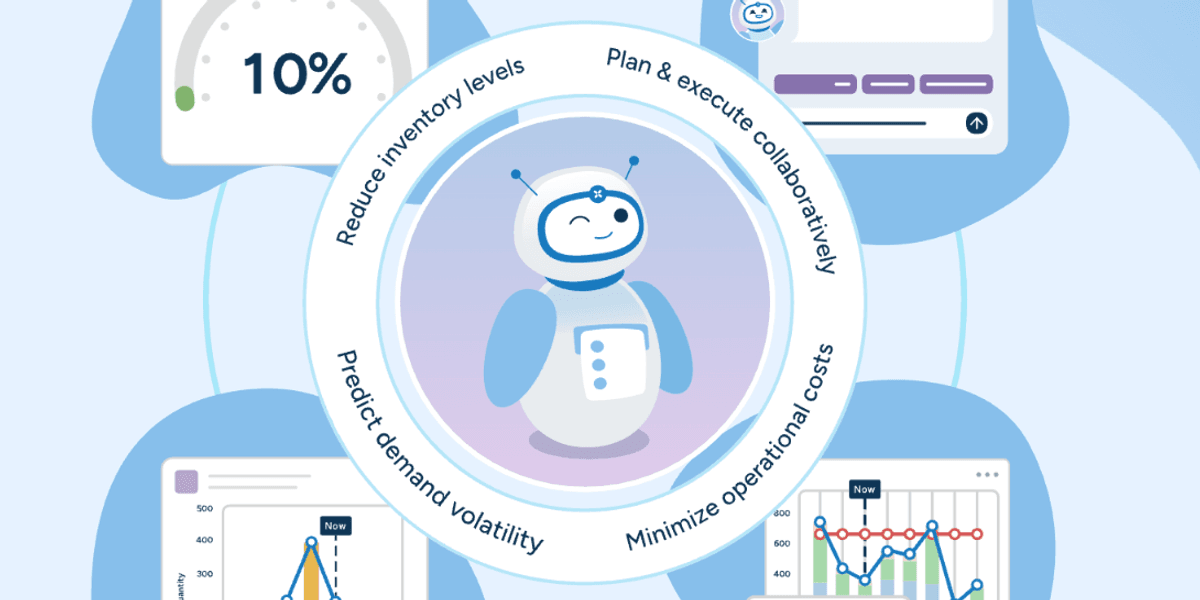
According to www.dcvelocity.com, only 10% of retail and manufacturing leaders say they would trust AI to make fully independent supply chain decisions — a finding from Relex Solutions’ “State of Supply Chain 2026: Volatility, Trade-Offs & the Rise of AI” report.
Human Oversight Remains Central
The January 2026 survey — conducted by Researchscape with 514 retail, manufacturing, wholesale, and supply chain leaders — reveals that 54% prefer AI to generate recommendations while humans retain final decision authority. This reflects a deliberate operational model where AI augments rather than replaces human judgment. Despite skepticism about full autonomy, 67% report increased confidence in using AI for supply chain decision-making compared to the prior year.
Adoption by Function and Sector
Current AI deployment is functionally targeted: 47% are using or planning AI-driven inventory and supply optimization; 41% apply AI to logistics and routing. Investment horizons are expanding: 71% plan to invest in generative and agentic AI, and 60% in predictive AI over the next three to five years.
Drivers of AI Investment
- 44% cite consumer demand volatility as their top challenge over the next three years
- 30% identify adapting to sudden consumer demand shifts as a major operational hurdle
- 57% of manufacturers point to raw material procurement disruption as the most impacted area
- 34% of manufacturers highlight regulatory and compliance pressures as a growing concern
Retailers are deploying AI-driven forecasting and decision-support tools to strengthen demand visibility and responsiveness — balancing margin protection with product availability. Manufacturers, meanwhile, prioritize AI applications that mitigate procurement risk and ensure compliance adherence.
“This trend reflects the maturation of AI in supply chain management, moving beyond hype to practical, value-driven applications that enhance rather than replace human expertise.” — Relex Solutions, “State of Supply Chain 2026”
These patterns align with broader industry developments: Gartner’s 2025 Hype Cycle for Supply Chain Technology notes that agentic AI prototypes are now entering pilot phases at companies including Maersk and Unilever, while Walmart and Amazon have publicly reported scaling AI-powered demand sensing across regional distribution networks. Unlike early-stage automation focused on warehouse robotics or transport telematics, today’s AI investments center on cognitive tasks — forecasting error reduction, multi-tier supplier risk scoring, and dynamic safety stock calibration — all requiring validated human-in-the-loop validation protocols. For supply chain professionals, this means mastering new skills in prompt engineering for scenario simulation, interpreting AI-generated trade-off analyses (e.g., cost vs. carbon vs. lead time), and establishing governance frameworks for model drift detection and override logging — especially in regulated environments like pharmaceuticals or aerospace where audit trails for AI-assisted sourcing decisions are now mandated under EU CSDDD guidelines.
Source: DC Velocity
Compiled from international media by the SCI.AI editorial team.