When diesel futures prices plunged by more than 55 cents per gallon on Monday while retail prices rose for the 24th consecutive day to $5.345 per gallon, global supply chain managers realized that energy supply chain fragility has evolved from a “black swan event” to a structural norm.
The latest FreightWaves report reveals that the current market is “no longer a matter of disrupted or delayed flows, but of permanent supply loss.” This assertion by Energy Aspects consultancy marks a new phase in energy supply chain risk.
Behind this transformation lies the shutdown of Valero Energy’s 380,000 barrel-per-day Port Arthur, Texas refinery due to a fire in a diesel hydrotreater unit. Combined with ripple effects from Middle East conflicts, this has collectively pushed diesel prices to their highest levels since October 2022.
For global supply chains dependent on transportation, this is not merely a cost issue but a systemic risk restructuring.
Data Depth: The Supply Chain Logic Behind the 55-Cent Plunge and 24-Day Rally
On March 24, 2026, ultra-low sulfur diesel (ULSD) futures on the CME commodity exchange set a historic record. The single-day drop of more than 55 cents per gallon was the largest one-day decline since the contract’s inception as a heating oil trading platform in 1979.
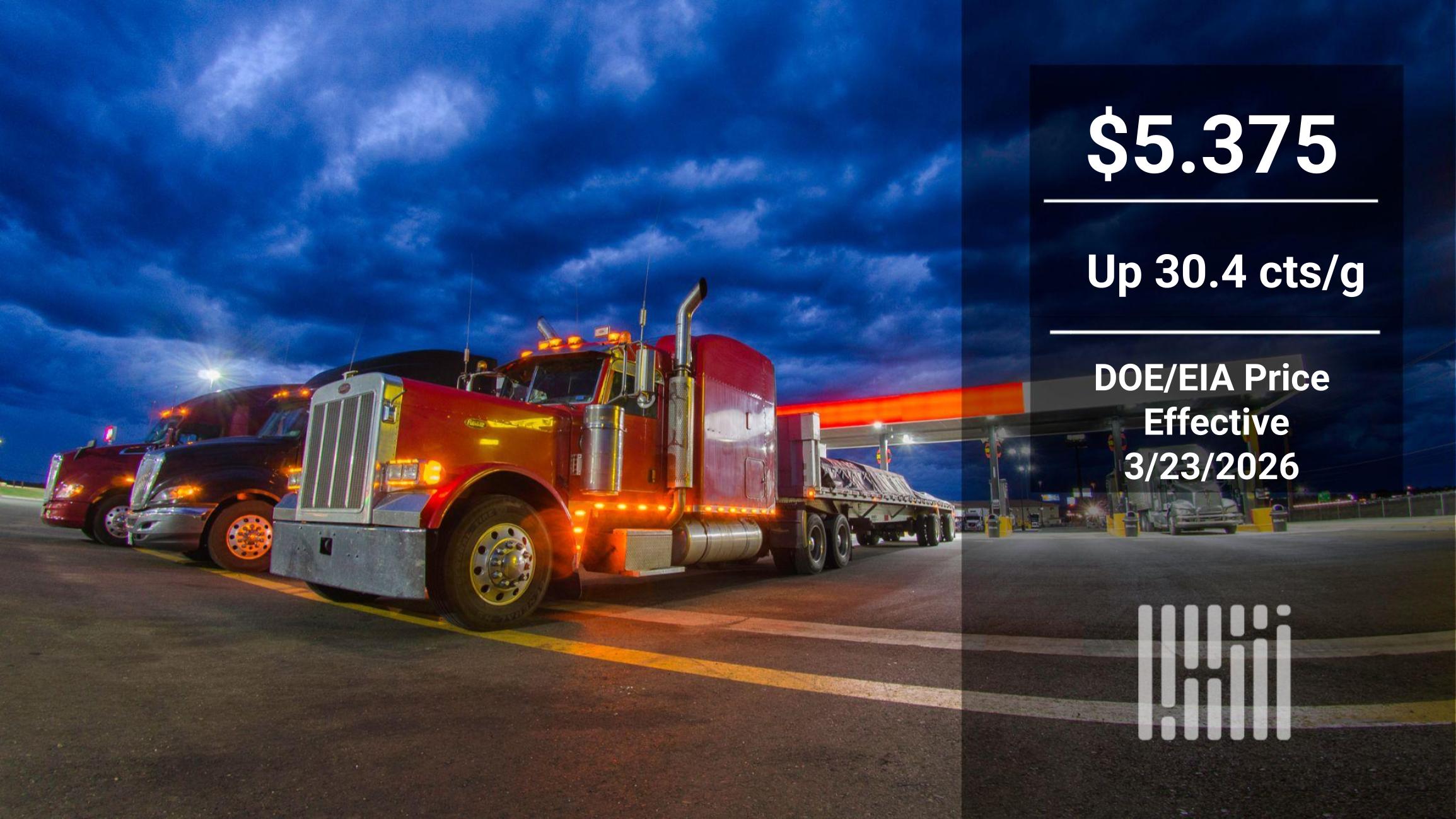
However, this dramatic futures market volatility did not immediately translate to the retail level. The U.S. Energy Information Administration’s (EIA) weekly average retail diesel price rose for the 10th consecutive week to $5.375 per gallon.
This represents a $1.47 per gallon increase since military action began in the Middle East. AAA’s daily average retail price rose for 24 consecutive days, accumulating a $1.587 per gallon increase since February 28.
“The current market is no longer a matter of disrupted or delayed flows, but of permanent supply loss. The remainder of 2026 will be needed to make up for lost supply via stronger runs, or prices will have to rise further to curtail demand significantly.” — Energy Aspects consultancy report
This divergence between futures and spot markets reveals the complex transmission mechanisms of energy supply chains. Multiple factors intertwine to create lags and distortions in price signals across supply chain segments.
Disruption Event: Valero Refinery Fire and Energy Infrastructure Vulnerability
At a time when diesel consumers least needed further supply disruptions, a fire in a diesel hydrotreater unit at Valero Energy’s 380,000 barrel-per-day Port Arthur, Texas refinery led to the complete shutdown of the facility.
The diesel hydrotreater is a critical component for removing sulfur and other impurities from fuel. Its outage not only affects Valero’s own capacity but also exposes the aging and concentration risks of U.S. refining infrastructure.
The Port Arthur refinery is one of the largest in the United States. Its closure immediately triggered supply tightness in regional diesel markets.
This event forms an “East-West resonance” with Middle East conflicts. Uncertainty around Hormuz Strait passage pushes global crude prices higher, while domestic refining disruptions weaken response capacity.
This “multi-point concurrent” disruption pattern characterizes 2026 energy supply chain risks. The impact of a single event rapidly amplifies through highly interconnected global networks.
Mechanism Analysis: How Fuel Surcharges Reshape Logistics Cost Structures
A key mechanism change brought by rising diesel prices is the repricing of fuel surcharges. Citigroup noted in a recent research report a seemingly paradoxical phenomenon.
“Fuel surcharges for truckers should blunt the medium-term impact to transports. Furthermore, the sophistication of fuel surcharge mechanisms should advantage large carriers over smaller carriers.” — Citigroup research report
This judgment reveals that fuel surcharges are not merely cost-pass-through tools but supply chain risk allocation mechanisms. Large fleets typically sign long-term contracts with customers containing complex fuel surcharge clauses.
These clauses are automatically adjusted based on the EIA weekly diesel price index. They incorporate精细化 designs like lag periods, caps, and minimum charges.
When diesel prices fluctuate, large fleets can transfer most cost risks to shippers through this mechanism. They also leverage scale advantages to obtain fuel purchase discounts.
In contrast, small carriers often rely on spot market fuel purchases. They have weaker bargaining power with customers, making it difficult to fully pass on cost increases.
Industry Impact: Transmission Chain from Transportation Costs to Consumer Prices
The ripple effects of rising diesel prices are transmitting through multi-tier supply chains to end consumers. Transportation costs are the first hit.
According to American Trucking Associations data, fuel costs’ share of total truck operating costs has risen from 24% in 2023 to 31% in Q1 2026. For less-than-truckload (LTL) shipping, fuel surcharges have普遍 reached $0.15-0.20 per pound, up 40% year-over-year.
This cost increase transmits to consumers through three channels. First, direct transportation fee increases affecting all goods transported by truck.
Second, rising energy costs in manufacturing and warehousing. Third, agricultural supply chains, where diesel is the primary fuel for farm machinery, irrigation systems, and cold chain transportation.
Preliminary USDA estimates show diesel costs during the 2026 spring planting season will increase corn production costs by $8-12 per acre. This cost will ultimately be reflected in food prices.
Risk Management: Three-Tier Strategy for Corporate Response to Energy Supply Chain Disruptions
Facing energy supply chain disruption risks, leading companies are building three-tier risk management systems. The first tier is operational resilience.
This involves establishing multi-source fuel supply networks. Companies sign long-term agreements with multiple fuel suppliers and establish proprietary refueling facilities at key logistics hubs.
Investment in alternative energy vehicles is also crucial. An international logistics company has electrified 30% of its yard operations by deploying solar charging stations at major distribution centers.
The second tier is financial hedging. Companies use fuel futures, options, and other financial instruments to lock in future procurement costs.
More advanced companies adopt “physical-financial” combination strategies. They hold physical inventories while hedging in financial markets.
The third tier is structural optimization. This involves redesigning supply chain networks to reduce transportation distances and increase transportation mode diversity.
Chinese Perspective: Energy Cost Control and Risk Hedging for Overseas Chinese Enterprises
For Chinese companies going global, global energy supply chain volatility presents both challenges and opportunities. The challenge is that China’s traditional manufacturing cost advantage is being eroded.
In container shipping costs from Shenzhen to Los Angeles, bunker adjustment factors (BAF) have increased from 18% in 2023 to 35% in 2026. Diesel costs account for 28% of operating costs on China-Europe rail services.
The opportunity lies in Chinese companies’ accumulated expertise in new energy technologies and digital management. This can be transformed into competitive advantages.
In energy cost control, leading Chinese overseas companies are taking three measures. First, supply chain localization—establishing manufacturing or assembly bases near major markets.
Second, green logistics—investing in alternative energy vehicles and collaborating with local energy companies to build charging/hydrogen refueling infrastructure.
Third, digital optimization—using AI algorithms to dynamically plan运输 routes, match loads, and forecast fuel demand.
Conclusion: Digital Path to Building Resilient Energy Supply Chains
Historic diesel price volatility reveals a fundamental trend. Energy supply chains have become the most critical yet脆弱环节 in global commerce.
Building resilient energy supply chains is no longer just the procurement department’s responsibility. It is a strategic issue requiring direct CEO attention.
Digitalization is the core path for this transformation. Real-time monitoring of fuel inventories and consumption through IoT sensors is essential.
Blockchain technology can ensure energy source traceability. Artificial intelligence can predict price fluctuations and supply risks.
A global manufacturer’s “energy control tower” project integrates energy data from 87 factories worldwide. It predicts regional supply risks 14 days in advance and automatically activates backup plans.
This digital capability enables companies to shift from “reactive response” to “proactive prevention.” Collaborative ecosystems are equally critical for building resilience.
Source: FreightWaves
This article was AI-assisted and reviewed by our editorial team.