
Specialty retailers worldwide are confronting a paradox that defines the modern commerce era: customer expectations for speed, flexibility, and seamlessness have surged to unprecedented levels—yet the financial and operational infrastructure required to meet them is buckling under structural strain. According to Manhattan Associates’ 2026 Global Unified Commerce Benchmark for Specialty Retail, conducted by Incisiv across more than 400 specialty retailers in EMEA, LATAM, and North America, global logistics and fulfillment costs have risen by over 20% in just three years. This isn’t merely inflationary drift—it’s a systemic cost explosion rooted in fragmented consumer behavior, collapsing channel boundaries, and legacy supply chain architectures ill-suited for real-time decision-making. More than 66% of consumers now use two or more channels before completing a purchase, fluidly shifting between marketplaces, social platforms, messaging apps, brand-owned sites, and physical stores—rendering traditional attribution models obsolete and turning every touchpoint into a potential liability or leverage point. The benchmark reveals that leading retailers aren’t winning by optimizing silos; they’re redefining competitive advantage through end-to-end integration—where the supply chain ceases to be a cost center and becomes the central nervous system of unified commerce.
Supply Chain Restructuring as Strategic Imperative, Not Tactical Adjustment
The phrase ‘supply chain restructuring’ no longer denotes warehouse consolidation or carrier renegotiation—it signals a wholesale reconfiguration of asset ownership, process logic, and organizational accountability. What distinguishes top performers from laggards is not incremental investment in automation, but a fundamental shift in how value is conceived and captured across the fulfillment continuum. For instance, leading U.S. retailers have cut last-mile costs by 31% not by deploying new delivery fleets, but by repurposing an existing, underutilized asset: their own store networks. This strategic pivot reflects deep recognition that physical retail footprints—once viewed as liabilities amid e-commerce growth—are now indispensable nodes in a distributed fulfillment topology. Stores are no longer endpoints but dynamic micro-fulfillment centers, inventory buffers, returns processing hubs, and experiential anchors—all operating in real time against unified demand signals. This reframing demands cross-functional governance: logistics leaders must co-own merchandising calendars, store operations must integrate with warehouse management systems (WMS), and IT architecture must support event-driven orchestration rather than batch-based reporting.
Yet restructuring remains perilous without disciplined prioritization. Too many retailers initiate transformation with technology-first mandates—installing AI-powered WMS or robotics before clarifying which fulfillment SLAs truly drive margin or loyalty. The Incisiv data shows that only 53% of retailers have strengthened last-mile coordination and expanded operational infrastructure to match delivery speed demands—a telling gap indicating that most remain reactive rather than anticipatory. Crucially, restructuring success correlates strongly with leadership alignment: organizations where CSCO, CMO, and CFO jointly define KPIs tied to customer lifetime value (CLV) rather than cost-per-order show 2.7x higher adoption rates of dynamic cross-channel allocation. This underscores that supply chain restructuring is less about logistics engineering and more about enterprise-wide rewiring of incentives, data rights, and performance accountability. Without that, even the most advanced technology becomes another layer of complexity atop brittle processes.
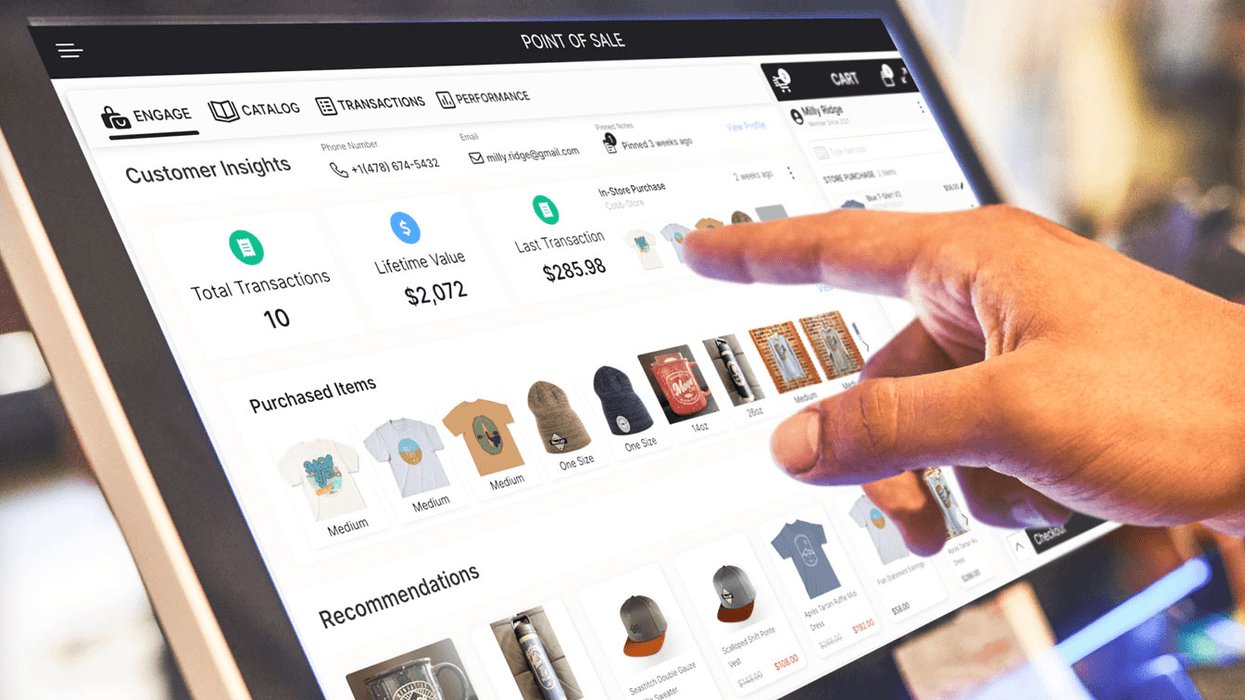
Fulfillment Cost Surge: Drivers Beyond Inflation and Labor
While headline inflation and wage pressures contribute to rising fulfillment costs, the 20%+ increase over three years stems from deeper, interlocking structural forces that compound rather than cancel each other out. First, the fragmentation of consumer journeys has eroded forecast accuracy at the SKU-store level. When shoppers research on TikTok, compare prices on Amazon, check inventory via WhatsApp, and complete checkout on a brand’s app—all within 90 minutes—the resulting demand signal is inherently noisy, volatile, and non-linear. This forces retailers to hold broader safety stock across more locations, increasing carrying costs by up to 18% according to Gartner’s 2025 Retail Inventory Efficiency Index. Second, the proliferation of fulfillment options—buy online, pick up in-store (BOPIS); curbside; same-day delivery; ship-from-store; and hybrid returns—has multiplied the number of discrete process paths, each requiring unique labor protocols, packaging standards, and tracking logic. A single order may now traverse four distinct physical and digital handoffs, inflating transactional overhead by 34% versus traditional ship-from-DC models.
Third, regulatory and sustainability pressures are embedding hidden cost layers. The EU’s CSDDD (Corporate Sustainability Due Diligence Directive) and CBAM (Carbon Border Adjustment Mechanism), coupled with tightening U.S. state-level ESG disclosure rules, compel retailers to map Tier 2 and 3 suppliers, validate emissions data, and audit labor practices—not just for compliance, but for brand risk mitigation. These requirements necessitate investments in blockchain-enabled traceability platforms and supplier collaboration portals, diverting capital from core fulfillment upgrades. Critically, the cost surge is asymmetric: while large players absorb these pressures through scale and tech maturity, mid-tier specialty retailers face disproportionate burden. Their average fulfillment cost per order rose 27% versus 19% for top-quartile peers—a widening gap that threatens long-term viability. This divergence confirms that cost escalation is not uniform but stratified, accelerating industry consolidation and raising urgent questions about whether ‘unified commerce’ is becoming a luxury accessible only to enterprises with $5B+ revenue.
- Top-quartile retailers achieve 50% higher inventory turn rates using real-time visibility and dynamic cross-channel allocation
- Only 22% of mid-tier retailers report full real-time inventory visibility across all channels
- AI-driven demand sensing reduces forecast error by 41% in leading implementations, directly lowering safety stock requirements

Agentic AI: From Reactive Logistics to Anticipatory Orchestration
Agentic AI represents the most consequential inflection in supply chain capability since the advent of ERP systems—shifting logistics from a reactive, exception-driven discipline to an anticipatory, self-correcting orchestration layer. Unlike traditional predictive analytics that flag risks after thresholds are breached, agentic AI systems operate with goal-oriented autonomy: they continuously ingest multi-source data (weather feeds, port congestion APIs, social sentiment, traffic telemetry, equipment IoT streams), simulate thousands of scenario outcomes, and execute prescriptive actions—rerouting shipments, pre-allocating labor, adjusting safety stock parameters—before human intervention is needed. Manhattan Associates’ benchmark identifies this capability as the defining differentiator among high-performing retailers: those deploying agentic AI report 73% faster resolution of fulfillment exceptions and 44% fewer customer-facing service incidents. Importantly, this isn’t about replacing planners—it’s about augmenting them with cognitive bandwidth to focus on strategic trade-offs (e.g., balancing carbon reduction targets against delivery SLAs) rather than firefighting daily disruptions.
The implementation challenges, however, are profound and often underestimated. Agentic AI requires not just model sophistication but foundational data integrity: inconsistent product master data, unstandardized warehouse location codes, or incomplete carrier tracking feeds render even the most advanced agents blind. Moreover, successful deployment demands cultural recalibration—planners must trust algorithmic recommendations over institutional memory, and leadership must accept that short-term volatility (e.g., temporary inventory imbalances during AI-driven rebalancing) is the price of long-term resilience. Early adopters like Nordstrom and Lululemon have embedded agentic AI within their order management systems (OMS), enabling dynamic fulfillment routing that considers not just proximity and cost, but predicted delivery reliability, carbon intensity per mile, and even local labor availability. This transforms the OMS from a transaction processor into a continuous optimization engine—where every order triggers a real-time negotiation among physical assets, transportation capacity, and sustainability constraints.
Crucially, agentic AI’s value compounds when integrated with physical infrastructure. When paired with autonomous mobile robots (AMRs) in micro-fulfillment centers, agentic AI can dynamically reconfigure pick paths based on real-time labor availability and order priority—reducing average pick time by 38%. When linked to electric last-mile delivery fleets, it optimizes charging schedules against delivery windows and grid load forecasts, cutting energy costs by 22%. These synergies reveal that agentic AI isn’t a standalone module but a connective tissue—its ROI scales with the degree of infrastructure digitization and interoperability. As such, its adoption curve mirrors the maturity of a retailer’s underlying technology stack: companies with monolithic, on-premise ERP systems struggle to integrate agentic agents, while those built on cloud-native, API-first architectures achieve deployment in under six months. This technological asymmetry further entrenches the performance divide between leaders and laggards.
Real-Time Inventory Intelligence: The New Currency of Customer Trust
In unified commerce, real-time inventory intelligence is no longer a nice-to-have dashboard feature—it is the foundational currency of customer trust and conversion velocity. When 66% of consumers move across multiple channels before purchasing, the moment of truth occurs at the cart abandonment screen: if inventory status is inaccurate, delayed, or siloed, the retailer loses not just that sale but the credibility required for future engagement. The Incisiv benchmark shows that retailers with true real-time inventory visibility across stores, warehouses, and third-party marketplaces achieve 50% higher inventory turn rates and 3.2x greater conversion lift on BOPIS offers. This isn’t coincidental—it reflects the behavioral economics of immediacy: consumers equate inventory accuracy with brand competence, and perceived competence drives willingness to pay premium pricing and tolerate minor service hiccups. Yet achieving this intelligence remains elusive: only 31% of specialty retailers globally report accurate, sub-15-minute inventory updates across all nodes, and fewer than 12% maintain synchronized availability for marketplace listings.
The technical barriers are surmountable—modern inventory orchestration platforms can unify disparate WMS, POS, and marketplace APIs—but the organizational hurdles are steeper. Real-time intelligence requires breaking down data fiefdoms: warehouse teams resist sharing granular stock data with marketing, fearing promotional overcommitment; store managers withhold ‘soft reserve’ inventory from central systems to protect local sales; and finance departments block API access citing security concerns. Leading retailers overcome this through governance innovation: Nordstrom established an ‘Inventory Truth Council’ comprising supply chain, IT, marketing, and store ops leaders who jointly own data definitions, update SLAs, and adjudicate discrepancies. They also implemented ‘inventory confidence scoring,’ where each node’s data freshness and reconciliation rate is published weekly—turning transparency into a performance lever. This shifts the conversation from ‘whose data is right?’ to ‘how do we collectively improve the score?’ Such structures recognize that inventory intelligence is less a technology problem and more a contract between functions—one that must be renegotiated daily.
Furthermore, real-time inventory intelligence unlocks previously impossible business models. Dynamic cross-channel allocation—where inventory is reserved not by channel but by customer segment, profitability tier, or sustainability objective—relies entirely on sub-minute visibility. A luxury retailer might allocate high-margin items exclusively to its app customers during peak hours, while directing value-conscious shoppers to marketplace channels with lower fulfillment costs. This level of precision requires not just visibility but intelligent constraint modeling: factoring in shipping cost curves, carbon allowances, labor cost differentials, and return propensity. The result is a shift from static channel strategies to fluid, intent-driven fulfillment—where the system asks not ‘where should this ship from?’ but ‘what outcome does this customer journey require, and what inventory configuration best delivers it?’ That question can only be answered when inventory is treated as a live, negotiable asset—not a static ledger entry.
Last-Mile Logistics Transformation: From Cost Center to Experience Engine
Last-mile logistics has undergone a metamorphosis—from the final, expensive leg of delivery to the primary vehicle for brand expression, sustainability signaling, and customer retention. The 31% cost reduction achieved by leading U.S. retailers leveraging stores as fulfillment hubs exemplifies this shift: it’s not about cutting corners but about reconceiving the store’s role in the value chain. Physical locations now serve as hyperlocal distribution points, reducing average delivery distance by 72% and enabling same-day dispatch for 89% of urban orders. But the strategic impact extends beyond cost: store-based fulfillment enables rich experiential layering—customers picking up online orders can receive personalized in-store consultations, exclusive product previews, or instant returns processed on-site. This transforms last-mile from a transactional endpoint into a relational inflection point. Crucially, this model thrives on density: retailers with >50 stores in a metro area achieve 4.3x higher BOPIS attachment rates than those with sparse footprints, proving that network effects—not just technology—drive scalability.
However, this transformation exposes new vulnerabilities. Store-based fulfillment increases labor complexity: staff must toggle between selling, packing, receiving, and returns processing—tasks requiring distinct training, tools, and performance metrics. Without integrated workforce management (WFM) systems that dynamically allocate labor based on real-time order volume, pickup windows, and store traffic patterns, productivity collapses. Leading retailers address this by embedding WFM within their OMS, allowing algorithms to predict staffing needs 72 hours ahead with 89% accuracy, then auto-schedule shifts and cross-train associates on modular skill sets. This moves labor from a fixed cost to a variable, optimized resource. Simultaneously, last-mile is becoming a critical sustainability battleground: 68% of consumers now consider delivery emissions when choosing retailers, and 41% actively avoid brands with non-electric last-mile fleets. Forward-looking retailers are therefore co-investing in EV charging infrastructure, partnering with micro-mobility providers for bike couriers, and piloting drone deliveries in low-density suburbs—transforming last-mile from a cost sink into a visible, values-aligned brand pillar.
- Leading retailers using real-time visibility achieve 50% higher inventory turn rates than peers
- 53% of retailers have expanded last-mile operational infrastructure to support faster delivery
- Agentic AI resolves fulfillment disruptions 73% faster in early adopter implementations
“Retailers are being asked to do something incredibly hard right now: deliver faster, more personalized experiences while also protecting margin. What this benchmark makes clear is that the retailers pulling ahead are not doing it with one standout channel or a single capability. They are doing it by reimagining the entire customer journey and connecting the business end to end, from shopping and checkout to fulfillment and service.” — Katie Foote, SVP & CMO, Manhattan Associates
Source: www.dcvelocity.com
This article was AI-assisted and reviewed by our editorial team.