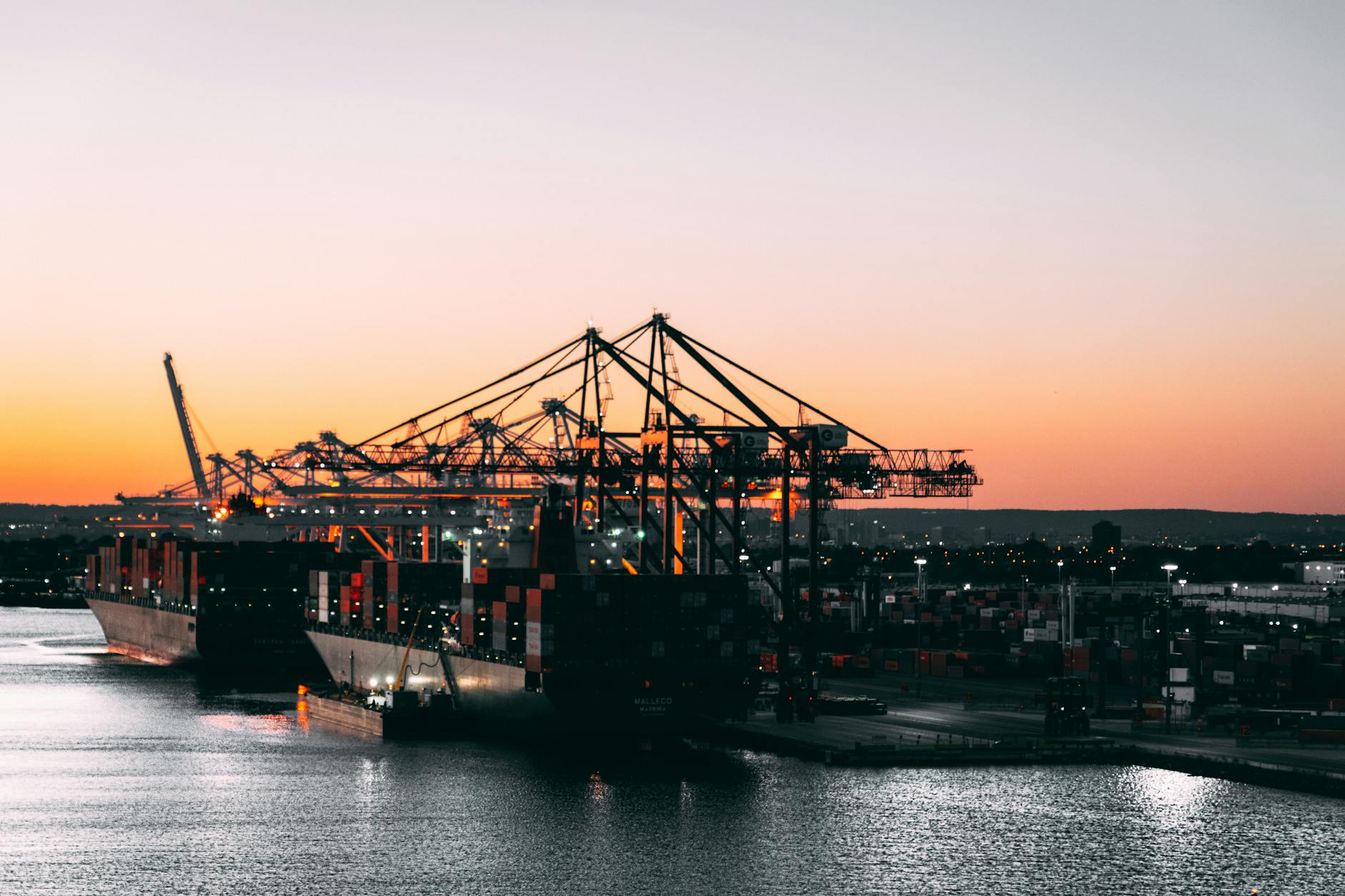
Maersk is no longer just the world’s largest container line—it is rapidly becoming one of the most vertically integrated e-commerce logistics platforms on the planet. With over $42 billion in annual revenue and control of 730 vessels, 4.1 million TEUs of capacity, and 300+ port calls per week, the Danish shipping behemoth has spent decades mastering the physics of transoceanic movement. Yet its recent pivot into parcel delivery—anchored by acquisitions, AI-driven orchestration, and deep integration with e-fulfillment ecosystems—signals a far more profound strategic inflection: the deliberate dismantling of the artificial boundary between ocean freight and doorstep delivery. This isn’t an opportunistic side hustle; it’s a structural response to the collapse of traditional logistics silos, accelerated by pandemic-era demand volatility, Amazon’s relentless infrastructure expansion, and the irreversible rise of direct-to-consumer (DTC) commerce. As Maersk now moves more than 12 million parcels per month across North America and Europe, its ambition transcends market share—it seeks to redefine how value is captured across the entire supply chain continuum, from factory gate to front porch.
The Strategic Imperative: Why Ocean Carriers Can No Longer Stop at the Dock
The maritime industry has long operated under a tacit division of labor: ocean carriers move containers, terminal operators handle port dwell, drayage firms shuttle boxes inland, and parcel carriers deliver the final mile. That model was economically rational when global trade moved in bulk, schedules were predictable, and shippers accepted 60–90-day lead times. But today’s e-commerce economy operates on sub-48-hour fulfillment SLAs, dynamic inventory allocation, and real-time visibility expectations that render legacy handoffs not just inefficient—but commercially untenable. Maersk’s realization—that it was already performing 75% of the end-to-end logistics work for major retail clients—was less an epiphany and more the inevitable conclusion of data aggregation across its integrated logistics units. Its internal analytics revealed that for top-tier apparel and electronics shippers, Maersk managed everything from factory pickup and customs clearance to bonded warehousing and cross-dock consolidation—yet still handed off to third-party last-mile providers who commanded premium margins while delivering inconsistent service levels. That disconnect represented not only lost revenue but strategic vulnerability: as customers increasingly equated brand experience with delivery speed and transparency, Maersk’s inability to control the final touchpoint eroded its value proposition as a ‘single-point accountability’ partner.
This imperative is further amplified by macroeconomic pressures reshaping carrier economics. With container freight rates having collapsed by 68% from their 2022 peak and spot market volatility now the norm rather than the exception, ocean lines face mounting pressure to diversify revenue streams beyond volatile voyage charters. According to Drewry’s 2026 Logistics Profitability Index, integrated carriers capturing end-to-end margin—especially in high-frequency, low-weight, high-margin parcel flows—are achieving EBITDA margins of 14.3%, versus 6.1% for pure-play ocean operators. Crucially, parcel logistics also offers recurring, contractually anchored revenue: unlike container bookings that fluctuate with seasonal peaks and geopolitical shocks, e-commerce fulfillment contracts often span three to five years with built-in volume escalators and service-level penalties. For Maersk, which reported $2.8 billion in logistics & services revenue in 2025—up 37% year-on-year—parcel integration isn’t about chasing parcel volumes; it’s about locking in sticky, high-margin relationships with brands that demand full-stack reliability. As Sam Coiro, Head of E-Commerce Commercial Business Development at Maersk, observed:
“We’re not trying to become another UPS or FedEx. We’re building the logistics layer that sits beneath the brand—where the customer sees ‘Delivered by [Brand Name]’, but behind the scenes, Maersk orchestrates every node, from API-level warehouse management to predictive delivery windowing.” — Sam Coiro, Head of E-Commerce Commercial Business Development, Maersk
Acquisition Architecture: Visible, BDP, and the Data-First Integration Playbook
Maersk’s parcel strategy rests on two parallel pillars: physical infrastructure acquisition and digital orchestration capability. Its 2023 acquisition of Visible Supply Chain Management—a U.S.-based parcel reseller operating 22 e-fulfillment centers and managing over 8.4 million monthly shipments—was the foundational move. Unlike traditional M&A in logistics, which often focuses on route density or fleet size, Visible offered something far more valuable: a mature parcel technology stack, including proprietary TMS, real-time carrier scorecarding, and API-native integrations with Shopify, Magento, and BigCommerce. Critically, Visible had already built deep commercial relationships with mid-market DTC brands—precisely the segment most underserved by legacy parcel carriers and most receptive to embedded logistics solutions. When combined with Maersk’s existing Logistics & Services division—which manages 115+ warehouses globally and processes over 2.1 million orders weekly—Visible transformed Maersk from a container mover into a platform capable of handling order receipt, inventory allocation, pick-pack-ship, carrier selection, and returns processing—all within a single contractual framework.
The 2024 acquisition of BDP International—the $3.2 billion global freight forwarder with strong U.S. parcel capabilities and 40+ domestic distribution centers—added critical mass in ground transportation and regulatory expertise. Where Visible provided the e-commerce-native software and customer base, BDP delivered scale, customs brokerage muscle, and established relationships with regional LTL and final-mile providers across 18 countries. Most importantly, BDP’s enterprise-grade compliance systems enabled Maersk to immediately onboard complex regulated verticals like pharmaceuticals and cosmetics—sectors where parcel delivery requires temperature validation, chain-of-custody documentation, and FDA-compliant audit trails. Rather than attempting to build these capabilities organically—a process that would have taken five years and hundreds of millions in R&D—Maersk executed a precision acquisition strategy targeting complementary data assets, not just physical assets. The result is a unified data lake aggregating over 1.4 petabytes of shipment telemetry annually, feeding machine learning models that optimize everything from carrier selection (factoring in real-time traffic, weather, and historical on-time performance) to dynamic packaging recommendations based on product fragility and destination climate.
- Visible Supply Chain Management: 22 e-fulfillment centers, 8.4M parcels/month, native e-commerce APIs, Shopify/Magento integrations
- BDP International: $3.2B revenue, 40+ distribution centers, FDA-compliant pharma logistics, customs brokerage in 82 countries
- Maersk’s pre-acquisition Logistics & Services unit: 115+ warehouses, 2.1M weekly orders, 730-vessel ocean network, 300+ port calls/week
Data Orchestration Over Physical Ownership: The AI-Native Delivery Operating Model
Contrary to conventional wisdom, Maersk is not building a fleet of white vans or acquiring regional parcel carriers en masse. Instead, it has architected a radically asset-light, AI-native delivery operating model—one that leverages its vast data assets to outperform vertically owned networks without bearing their capital intensity. At the core lies Maersk’s ‘Orchestrator Platform’, a cloud-native logistics OS that ingests real-time feeds from over 240 carrier partners—including regional players like OnTrac and LaserShip, national firms like USPS and FedEx Ground, and emerging micro-fulfillment specialists like Bringg and Roadie. Using reinforcement learning algorithms trained on five years of historical delivery performance across 12,000 ZIP codes, the platform dynamically assigns each parcel to the optimal carrier based on a multi-dimensional cost-service matrix: predicted delivery time, carbon footprint per mile, claims rate, weekend/holiday surcharge applicability, and even local driver familiarity with apartment complexes or gated communities. This isn’t static routing; it’s continuous optimization, recalculating assignments up to 17 times per parcel as new data arrives—from traffic congestion alerts to weather disruptions to unexpected carrier capacity constraints.
This intelligence layer transforms Maersk from a service provider into a predictive logistics partner. For example, its AI models now forecast delivery success probability at the individual package level with 92.4% accuracy 48 hours pre-departure, enabling proactive interventions: rerouting high-risk shipments, offering customers alternative delivery windows, or triggering automated SMS notifications with precise GPS-tracked ETAs. More strategically, Maersk uses this predictive capability to renegotiate contracts—not on price alone, but on outcome-based KPIs. One Tier-1 beauty brand now pays Maersk a base fee plus a success bonus tied to first-attempt delivery rate above 89%, with penalties for missed SLAs. This shifts risk from shipper to logistics provider—and incentivizes Maersk to invest in upstream improvements like smarter packaging, better address validation, and dynamic dispatch algorithms. As industry analyst Anika Patel of Gartner notes:
“The future of logistics isn’t about who owns the most trucks or warehouses. It’s about who owns the best decision intelligence. Maersk’s bet is that data sovereignty—the ability to see, analyze, and act on end-to-end logistics signals—is the ultimate competitive moat.” — Anika Patel, Senior Director, Supply Chain Research, Gartner
The implications extend beyond efficiency. By aggregating parcel-level data across thousands of shippers, Maersk identifies systemic bottlenecks invisible to individual brands: recurring delays at specific postal facilities, chronic mislabeling patterns in certain manufacturing regions, or seasonal spikes in damaged-in-transit claims for particular product categories. These insights feed into Maersk’s consulting arm, which now advises clients on packaging redesign, supplier labeling standards, and even factory layout optimization to reduce dock-to-truck dwell time. In essence, Maersk is monetizing collective intelligence—turning anonymized operational data into prescriptive business intelligence, a revenue stream that grows exponentially with network scale and diversity.
Competitive Realignment: Disrupting the Parcel Duopoly and Reshaping Carrier Economics
Maersk’s entry into parcel logistics is accelerating a fundamental reconfiguration of the $427 billion global parcel market—one historically dominated by the UPS-FedEx duopoly controlling 58% of U.S. ground volume and DHL holding 22% of international express parcels. Unlike traditional challengers that compete on price or geographic coverage, Maersk attacks the duopoly’s structural weaknesses: lack of end-to-end visibility, rigid contractual structures, and limited integration with upstream supply chain systems. While UPS and FedEx still rely on legacy mainframe systems for core sorting and routing, Maersk’s Orchestrator Platform operates natively in the cloud, enabling rapid API integrations and real-time event streaming. This allows Maersk to offer features impossible for incumbents: automatic reconciliation of carrier invoices against actual delivery events (reducing billing disputes by 63% for early adopters), dynamic insurance pricing based on real-time risk scoring, and fully automated returns processing with instant refund triggers upon scan confirmation. For e-commerce brands drowning in logistics complexity, Maersk doesn’t sell parcels—it sells certainty.
The economic ripple effects are already visible. Major retailers are shifting parcel volume away from traditional carriers not because Maersk is cheaper, but because its integrated model reduces total cost of ownership. A recent benchmark study by Armstrong & Associates found that brands using Maersk’s end-to-end solution experienced 22% lower total logistics cost per order, driven primarily by reduced labor for exception handling, fewer lost packages due to improved address validation, and faster working capital turnover from accelerated returns processing. Crucially, Maersk’s pricing model decouples cost from weight and distance—the traditional parcel pricing levers—and instead anchors fees to value-added outcomes: guaranteed delivery windows, carbon-neutral transit options, or premium unboxing experiences. This shift forces incumbents to respond: FedEx recently launched its ‘FedEx Fulfillment’ platform, while UPS acquired UK-based e-fulfillment specialist iQ Fulfilment. Yet both remain fundamentally carrier-centric; Maersk’s architecture remains shipper-centric, designed around the brand’s P&L—not the carrier’s network utilization.
- UPS-FedEx duopoly controls 58% of U.S. ground parcel volume; Maersk targets the remaining 42% via integration-led differentiation
- Brands using Maersk’s integrated solution report 22% lower total logistics cost per order and 63% fewer billing disputes
- Maersk’s AI models predict first-attempt delivery success with 92.4% accuracy 48 hours pre-departure
Sustainability as Strategic Leverage: Carbon Accounting and Circular Logistics
In an era where 73% of Fortune 500 companies have committed to net-zero emissions by 2040, Maersk’s parcel strategy embeds sustainability not as a CSR initiative but as a core competitive differentiator and regulatory hedge. Its Orchestrator Platform calculates real-time carbon emissions for every parcel leg—factoring in vehicle type, fuel blend, route elevation, and load factor—and presents shippers with carbon-optimized alternatives: consolidating shipments to reduce miles, selecting electric delivery vehicles where available, or routing through hubs powered by renewable energy. For brands facing tightening Scope 3 emissions reporting requirements under the SEC’s new climate disclosure rules, Maersk provides auditable, blockchain-verified carbon accounting down to the individual SKU level—a capability no traditional parcel carrier offers. This transforms sustainability from a cost center into a procurement advantage: one luxury fashion client secured a 12% premium on wholesale pricing by demonstrating verifiable carbon reductions across its logistics footprint, directly attributable to Maersk’s routing intelligence.
Beyond emissions tracking, Maersk is pioneering circular logistics infrastructure within its parcel ecosystem. Its newly launched ‘Loop Returns’ program—operating across 32 U.S. metro areas—uses reverse logistics algorithms to determine whether a returned item should be restocked, refurbished, recycled, or donated, based on real-time condition assessment, market demand forecasts, and residual value modeling. This goes far beyond simple return shipping: Maersk’s AI analyzes image scans, sensor data from smart packaging, and historical return reasons to predict disposition pathways with 89% accuracy, reducing landfill diversion by an estimated 14,000 tons annually per million returns processed. For retailers facing average return rates of 24% in apparel and 32% in electronics, Loop Returns transforms a cost center into a profit center—recovering up to 68% of original item value through optimized refurbishment channels. Critically, Maersk monetizes this capability not through transaction fees, but through shared savings: it takes a percentage of recovered value, aligning incentives with the shipper’s financial success. This model represents the next frontier of logistics innovation—where the supply chain doesn’t just move goods, but actively regenerates value across the product lifecycle.
Source: www.freightwaves.com
This article was AI-assisted and reviewed by our editorial team.