FedEx Reports Strong Third Quarter Performance
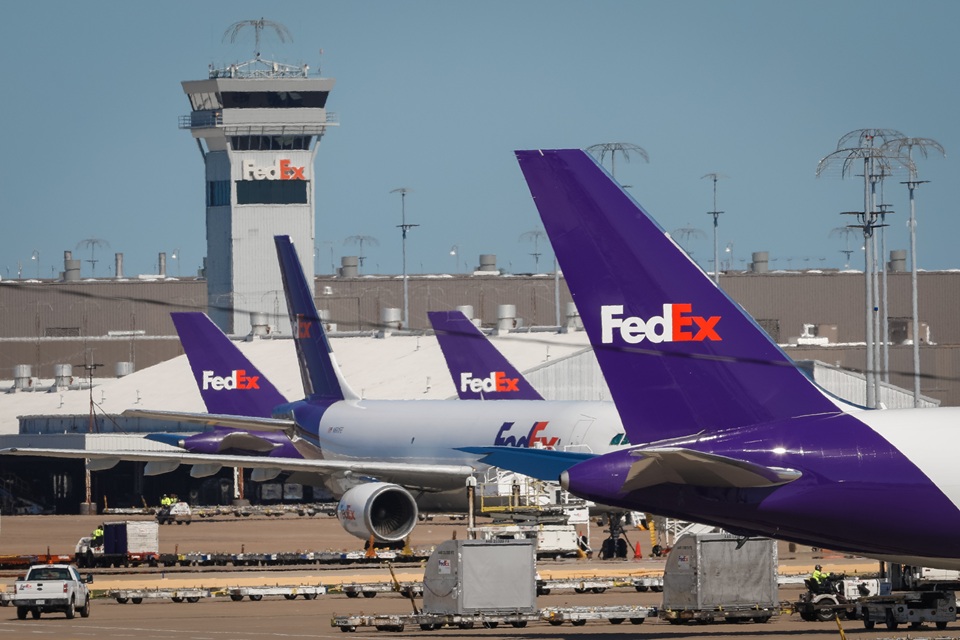
FedEx recently announced its fiscal 2026 third quarter earnings, showing significant growth in both revenue and profits. For the quarter ending February 28, company revenue increased 8.1% year-over-year to $24 billion, operating income rose 4.6% to $1.35 billion, and net profit surged 16.5% to $1.1 billion. This performance exceeded market expectations, demonstrating FedEx’s ability to achieve steady growth through strategic adjustments and cost control amid global economic uncertainty.
The FedEx Express segment’s operating performance improved during the quarter, primarily driven by higher U.S. domestic and International Priority package yields, continued cost savings from transformation initiatives, and increased U.S. domestic package volume. These positive factors were partially offset by higher variable incentive compensation expenses, wage rate increases, financial impacts from global trade policy changes, increased purchased transportation rates, and the grounding of the MD-11 fleet.
Limited Impact from Middle East Conflict on FedEx Operations
Despite ongoing conflict in the Middle East, FedEx expects minimal material impact on its performance. Company President and CEO Raj Subramaniam described the Middle East as a “relatively small part” of total revenue and said the company would monitor trends closely. Chief Customer Officer Brie Carere noted that at the peak of the crisis, 20% of air cargo capacity had been removed from the market, but this has now leveled off to about 10%.
“We have adjusted our pricing accordingly, and we have demand surcharges in place today. Our fuel index is updated weekly and is doing its job—it will cover costs and ensure we maintain profitability.”
— Brie Carere, Chief Customer Officer, FedEx
In response to rising jet fuel prices resulting from the conflict, Carere added that FedEx’s fuel index is updated weekly and is “doing its job.” “It will cover and ensure that we maintain profitability,” she said. This dynamic pricing mechanism demonstrates FedEx’s flexibility and risk management capabilities in responding to market volatility.
Financial Impact of MD-11 Groundings
The grounding of the company’s MD-11F fleet resulted in a $120 million “headwind” to adjusted operating income during the quarter due to higher operating costs and lost revenue. FedEx expects an additional $55 million headwind in the current quarter as a result of the grounding but hopes to have the aircraft flying again by the end of the period.
All MD-11F aircraft were grounded following the fatal crash of a UPS MD-11F after taking off from Louisville, US on November 4, 2025. This incident has had profound implications for safety standards across the air cargo industry, prompting major airlines to reassess the operational risks of aging freighter fleets.
International Business Achieves First Growth
This quarter, the company’s international quarterly export volumes registered growth for the first time during the fiscal year. Carere stated: “This is an impressive achievement given the sustained declines on the transpacific lane due to the dynamic global trade environment. This international growth is a direct result of our targeted strategy to reroute capacity to our Asia-Europe and intra-Asia lanes, both of which delivered significant revenue growth, along with continued growth in U.S. international outbound and our European region.”
Due to trade tensions, the company reduced transpacific outbound capacity by approximately 15% of its own capacity and 25% of third-party capacity during the quarter, with much of its own capacity relocated to Asia-Europe and intra-Asia routes. This strategic adjustment demonstrates FedEx’s acute responsiveness to changes in the global trade landscape.
FedEx Freight Segment Faces Challenges
Meanwhile, the FedEx Freight segment’s operating results decreased during the quarter due to increased costs associated with the company’s planned spin-off, lower shipments, and higher wage rates, partially offset by increased yield. The company added that overall net income includes a tax benefit of $99 million from the recognition of certain foreign tax loss carryforwards.
The Freight segment’s performance reflects competitive pressures in the less-than-truckload market, particularly in North America, where traditional freight operations face structural challenges as e-commerce growth slows and economic uncertainty increases.
Implications for Supply Chain Professionals
FedEx’s earnings report and response strategies provide important insights for global supply chain managers. First, diversified route networks and flexible capacity allocation are key to mitigating geopolitical risks. Second, dynamic pricing mechanisms and fuel surcharge adjustments can effectively hedge against cost volatility. Third, risk management of aging assets requires greater prudence, as the MD-11 grounding incident highlights the importance of fleet modernization.
For supply chain professionals in China, FedEx’s experience shows that in an increasingly uncertain global trade environment, building resilient supply chain networks, strengthening risk hedging mechanisms, and optimizing asset allocation are core elements of maintaining competitiveness. While the Middle East conflict has had limited direct impact on FedEx, its ripple effects—including reduced capacity, rising fuel costs, and route adjustments—remind us that geopolitical risk has become a normalized challenge in supply chain management.
As global supply chains continue to face multiple stress tests, companies need to focus more on data-driven decision-making, flexible network design, and forward-looking risk management. FedEx’s performance this quarter proves that through strategic adjustments and operational optimization, logistics companies can still achieve steady growth even during periods of geopolitical turbulence.
Source: Air Cargo News – FedEx reports strong Q3 and expects minimal impact from Middle East conflict
This article was AI-assisted and reviewed by our editorial team.