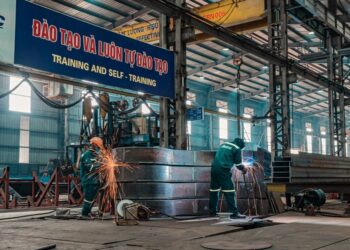
As the global trade landscape undergoes rapid restructuring, Southeast Asia has transcended its role as an “alternative” to become an indispensable partner in international supply chains. By fiscal year 2026, major brands are projected to source 40% of their dual-channel procurement from this region—a figure expected to surpass 60% by 2027. This surge is not merely a narrative of产能转移 (capacity transfer), but a structural transformation driven by digitalization imperatives, sustainability mandates, and geopolitical resilience.
HKTDC’s latest research reveals an often-overlooked reality: Southeast Asia’s B2B digital commerce market already exceeded $90 billion in 2024, with projections pointing to $130 billion by 2026. This growth rate significantly outpaces mature Western markets, fueled by five interconnected dynamics: supply chain diversification strategies, digital procurement tool adoption, green product certification waves, talent skill upgrades, and regional trade agreement dividends. This article provides a comprehensive deep dive into four core sectors—consumer electronics, sustainable products, home furnishings, and industrial equipment—offering replicable pathways for Chinese enterprises entering this dynamic marketplace.
Consumer Electronics & Smart Devices: Vietnam-Malaysia Dual Engine
Southeast Asia’s rise in consumer electronics transcends simple “China+1″代工 (contract manufacturing) narratives; it represents rapidly maturing vertical integration capabilities. Vietnam’s electronics exports surpassed $126 billion in 2024, led by long-term investments from Samsung, Apple, and Intel: the Bac Ninh province near Hanoi hosts over 80 electronic component suppliers, forming a complete value chain from PCB fabrication to final assembly. More critically, local capabilities are undergoing qualitative leaps—domestic enterprises are no longer content with OEM work alone; they are independently developing IoT modules, smart home hubs, and other high-value-added products, with double-digit growth covering both computer components and finished electronic goods categories.
Malaysia serves as ASEAN’s electrical & electronics (E&E) hub. Penang’s semiconductor cluster has attracted over 500 related enterprises, with machinery, boilers & equipment exports exceeding $7 billion in 2024, where 45% flowed to Singapore and beyond. The government’s Industry4WRD initiative is driving SMEs through transformation from labor-intensive assembly to data-driven precision manufacturing. A robotics startup in吉隆坡 (Kuala Lumpur) launched a vision-guided picking system capable of identifying and classifying electronic components ranging from 5mm to 200mm diameter in 0.3 seconds with 99.7% accuracy—a technology reshaping entire regional intelligent equipment manufacturing standards.
Thailand maintains distinctive advantages in automotive electronics and smart home integration. The Bangkok metropolitan area has developed a three-tier supply network covering wire harnesses, sensors, and ECU control units, while IoT startup momentum continues accelerating—融资 rounds increased 34% year-over-year in 2024, concentrated in “remote monitoring + predictive maintenance” scenarios. These trends collectively point to one conclusion: Southeast Asia is evolving from “low-cost assembly base” to “intelligent terminal manufacturing center,” where future competitiveness hinges on digital catalog completeness, certification transparency, and customization response speed.
Green & Sustainable Products: Indonesia-Philippines Natural Materials Revolution
Under tightening global ESG regulations, Southeast Asia’s green product exports are experiencing explosive growth. The European Union’s Carbon Border Adjustment Mechanism (CBAM) and the U.S. Clean Energy Act’s dual pressures force global buyers to seek low-carbon footprint, traceable raw material alternative supply chains—precisely Southeast Asia’s天然强项 (natural strength).
Indonesia, leveraging abundant bio-based resources, has emerged as the global leader in eco-packaging materials. Local bamboo, rattan, palm leaf, and natural raw material suppliers report annual growth rates of 15–20%; leading enterprises have begun investing in bioplastic production lines, achieving full-chain closure from raw material cultivation to finished manufacturing. For instance, a Jakarta-based sustainable packaging manufacturer using waste palm fiber to produce biodegradable food containers has obtained both U.S. FDA and EU Food Contact Material certifications. Despite unit prices being 28% higher than conventional plastic containers, order volumes still grew 47% year-over-year—indicating rapidly increasing market acceptance of green premiums.
Thailand’s Bio-Circular-Green (BCG) Economy National Strategy provides systematic policy support for the country’s green product exports. Through tax incentives, R&D subsidies, and technical training, the government has supported over 1,200 SMEs entering three细分赛道 (niche tracks): upcycling, compostable packaging, and renewable fibers. A textile recycling factory in Chiang Mai transforms discarded clothing into high-performance sportswear fabrics, securing long-term procurement agreements with international brands like Nike and Patagonia. At a single-tonne price premium of 35% over traditional cotton yarn, delivery cycles have shortened by 40%.
The Philippines differentiates through coconut-based materials and handicraft revival. Bioplastic manufacturers in Baguio have successfully developed fully biodegradable cosmetic bottles with substitution rates reaching 68%, obtaining both EU CE certification and the U.S. EPA GreenChemistry Award. Meanwhile, handcrafted décor items leverage DTC platforms like Etsy and Amazon Handmade to directly reach Western consumers at average transaction values of $127 with repurchase rates of 31%, demonstrating the powerful vitality of “culture + sustainability” models.
Home, Furniture & Decor: Digital Transformation Drives Design Premium
Southeast Asia’s furniture exports face a historic inflection point. According to Euromonitor forecasts, the regional home décor export market will reach $24.8 billion by 2030 (up from $14 billion in 2023)—a CAGR of 8.5%, significantly outperforming Europe (4.2%) and North America (3.1%). Behind this growth lies the triple resonance of accelerated urbanization, rising e-commerce penetration, and awakening design innovation capabilities.
Vietnam centers on sustainable wooden furniture. Da Nang and Greater Ho Chi Minh City host over 300 medium-to-large wood processing factories, with 47% having obtained FSC (Forest Stewardship Council) certification. These enterprises no longer rely on low-price competition; instead, they combine traditional mortise-and-tenon craftsmanship with modern modular design, launching new product lines featuring “disassemblable, reconfigurable, zero-glue installation.” A furniture exporter in Binh Duong Province supplied living room sets to Walmart采用无钉结构设计 (using nail-free structural design); assembly time compressed from 45 minutes to 12 minutes, logistics damage rates dropped 63%, and unit profit margins increased 19%.
Malaysia focuses on the premium durable furnishings market, targeting hospitality and contract market upgrade demands. Design studios in Kuala Lumpur employ virtual showrooms and AR preview tools, allowing overseas buyers to visualize sofa fabric effects under different lighting conditions online. This “what you see is what you get” experience raised average inquiry conversion rates from 11% to 29%, while customer average order values grew 42%.
Indonesia’s rattan and eco-certified wood products leverage collective certification actions through local industry associations to breakthrough green barriers in European and American markets. A family business in Bali launched a “zero-waste rattan collection” series converting pruning waste into small storage件的收纳件 (storage pieces), achieving 100% raw material utilization, winning Germany’s Red Dot Design Award, and climbing into Amazon Germany’s Best Seller Top 10. Meanwhile, the Philippines’ handicraft revival movement leverages Facebook Live Shopping and TikTok Shop platforms, enabling weaving cooperatives in remote villages to directly connect with New York buyers, with annual sales jumping from $80,000 to $340,000.
Industrial Supplies & Machinery: Malaysia-Singapore Leading Intelligent Manufacturing
Southeast Asia’s manufacturing maturity is most evident in exports of precision industrial goods, automation equipment, and “factory of the future” solutions. The region is transitioning from “importing machinery” to “collaborative R&D and customization,” becoming a critical node in the global Industrial Internet of Things (IIoT) ecosystem.
Malaysia anchors ASEAN’s smart manufacturing, with sustained enhancement of its export competitiveness in precision engineering, robotics, and high-tech machinery sectors. In 2024, machinery, boilers & equipment exports exceeded $7 billion, where automated production line integration systems accounted for 38%. Major clients include Germany’s Bosch, Japan’s Fanuc, and Singapore’s Tempur-Pedic. MITI’s Industry4WRD initiative has provided technology upgrade subsidies to 2,300 SMEs, elevating their capabilities in PLC programming, SCADA system integration, and predictive maintenance algorithms to levels comparable with Japanese and Korean Tier 2 suppliers.
Singapore serves as the advanced logistics and Industry 4.0 demonstration center. With a $120 million investment, the Smart Logistics Hub deployed over 500 AI-driven分拣臂 (sorting arms) and automated guided vehicles, real-time processing cross-border orders from Indonesia, Malaysia, and Thailand. The system uses machine learning to predict order peak periods during promotional seasons, proactively adjusting AGV charging strategies and warehouse buffer configurations, reducing order fulfillment cycles by 23% and dropping error rates to 0.08%. Additionally, Singapore’s domestic medical and industrial device manufacturers embed AI diagnostic algorithms into portable ultrasound equipment, enabling remote image interpretation at primary hospitals in developing countries—a “hardware + algorithm + service” integrated model reshaping value distribution logic in the global medical device supply chain.
Thailand leads in agriculture and automotive industry machinery exports. The automotive parts cluster in Nakhon Ratchasima has integrated CNC machining centers with online quality inspection systems, achieving 100% coverage detection of cylinder block micro-cracks with yield rates stable at 99.94%. Agricultural machinery manufacturers in Chiang Mai add LoRaWAN IoT modules to tractor fuel consumption monitoring systems, enabling real-time transmission of soil moisture, fuel usage, and fault warning data, helping Thai smallholder farmers reduce operating expenses by 17%—this “downward-compatible” technical adaptation capability is precisely Southeast Asia’s unique advantage compared to developed markets.
2026 Market Outlook: Digitalization & Resilience Determine Victory
Looking ahead two years, Southeast Asia will surpass traditional trade regions in both GDP and export growth. Stronger-than-expected economic performance in Q2 2025 shows robust activity across electronics, heavy industries, home décor, and green products, with Vietnam’s electronics sector alone driving 7.5% GDP growth in the first half of the year. Through 2027, ASEAN’s total manufacturing and export trade value is expected to grow at an annual rate of 6–8% for key sectors, leaving the region well-insulated from trade shocks or supply chain disruptions.
Digitalization and sustainability are no longer “value-add items” but survival thresholds. The EU’s Digital Product Passport (DPP) requires all industrial goods exported to Europe to provide lifecycle carbon footprint data, forcing Southeast Asian suppliers to establish complete data chains from raw material tracing, energy consumption monitoring, to waste recycling. Meanwhile, over 62% of ASEAN buyers report that digital trade tools save them a full week per order cycle, with this efficiency dividend accelerating globalization processes for SMEs.
Implications for Chinese Enterprises:
- Certification First: Before market access, prioritize obtaining foundational certifications like ISO 9001, FSC, CE, and UL to avoid subsequent compliance cost surges
- Digital Infrastructure: Build multi-language product catalogs, real-time translation communication tools, and online factory inspection systems, transforming “information asymmetry” into “trust assets”
- Local Collaboration: Partner with local industry associations to participate in regional standard setting, rather than unilaterally exporting products
- Green Premium Mindset: Incorporate carbon emissions, water consumption, and waste management into product design, viewing them not as cost burdens but as value drivers
Conclusion: Strategic Leap from “Cost Arbitrage” to “Capability Symbiosis”
Southeast Asia’s supply chain rise represents a fundamental systematic reconstruction of multi-dimensional capabilities: no longer reliant on single factors (labor costs or tariffs), but building irreproducible regional competitive advantages through technology diffusion, institutional optimization, and cultural fusion. For Chinese enterprises, the greatest opportunity lies not in “finding alternative production bases,” but in integrating into local innovation ecosystems—combining domestically accumulated digitalization experience, green technologies, and supply chain management capabilities with Southeast Asia’s scenario complexity and policy diversity to jointly define next-generation global trade rules.
As HKTDC Research states: “The opportunity for 2026 is enormous—but only for those ready to connect, digitize, and meet global buyer expectations.” Those who率先率先完成从”搬运货物”到”搬运智能” (率先完成 from “moving goods” to “moving intelligence”) paradigm shift will occupy irreplaceable positions in this quiet yet profound industrial revolution.
Source: sourcing.hktdc.com
This article was AI-assisted and reviewed by our editorial team.