# The 2026 Logistics Inflection Point: Navigating Fragmented Recovery and Capability-Driven Resilience
“The FTL market entered a definitive cyclical inflection point in late 2025, ending a prolonged freight recession.” — FTI Consulting, *Global Transportation & Logistics Outlook: Q4 2025 Snapshot*
## I. Full Truckload (FTL): A Structural Supply Tightening Emerges
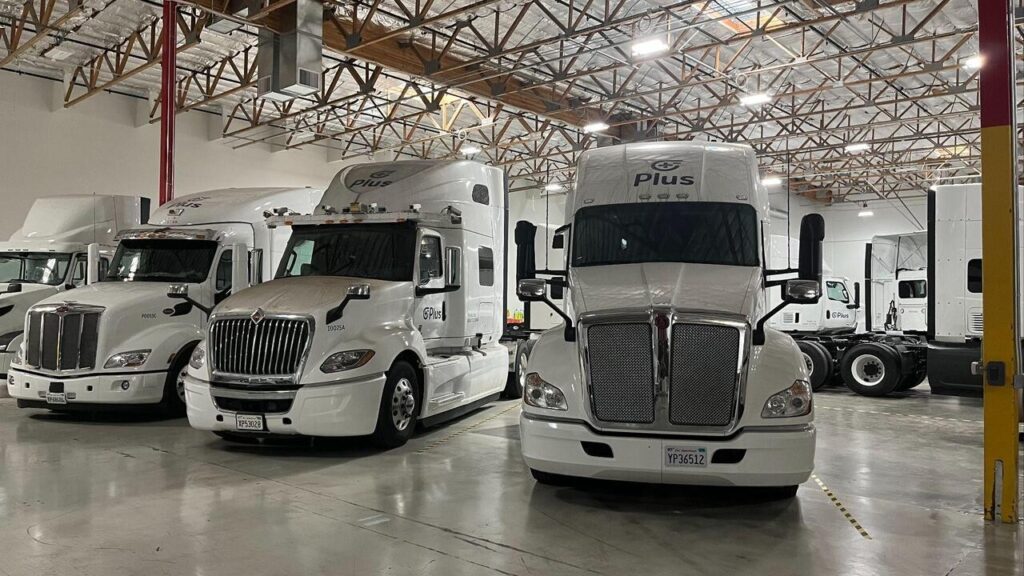
The FTL market entered a definitive cyclical inflection point in late 2025, ending a prolonged freight recession. Per FTI Consulting’s *Global Transportation & Logistics Outlook: Q4 2025 Snapshot*, spot truckload rates rose approximately 9% year-on-year in Q4 2025, while bid rejection rates exceeded 13%—the highest since 2022. This signals not temporary volatility but structural carrier rationalization: fleet retirements accelerated (18.5% of trucks aged >10 years exited service), diesel prices averaged $3.85/gallon, and insurance premiums surged 22%. Crucially, this tightening is supply-driven—not demand-led—reshaping shipper-carrier power dynamics.
For global shippers, the challenge lies in regional imbalance: Texas and Georgia face 14% immediate capacity shortfalls, while Midwest agricultural lanes sustain 31% empty miles. FMCSA’s ELD 2.0 mandate further strained small carriers, increasing IT costs by $4,200/year per truck and prompting ~11% to exit. Forward-looking shippers are shifting from transactional spot bidding to strategic capacity partnerships—locking 30–40% of core lane volume via 3–5-year contracts integrated with AI-powered dynamic routing.
Looking ahead to 2026, rate increases will be asymmetric: North America (+6–8%), Europe (+high teens, driven by EU ETS Phase III), and Asia-Pacific (moderated by 35% new-energy truck penetration). Key variables include U.S. interest rates—if the Fed cuts in Q2 2026, equipment financing relief could ease capacity constraints; if inflation persists, small-carrier attrition may extend into mid-2026. Actionable advice: (1) Conduct three-dimensional carrier scoring (on-time performance, exception resolution, data integration depth); (2) Lock core-lane capacity early; (3) Pilot blockchain-based BOLs to reduce payment cycles from 14 days to <72 hours.
## II. Less-Than-Truckload (LTL): Pricing Resilience Amid Demand Softness
Despite muted industrial output growth (2.1% in 2025, IMF), the LTL pound-rate index hit an all-time high in Q4 2025—a 5.3% YoY increase. This reflects a fundamental shift: LTL is evolving from standardized consolidation into a tiered fulfillment platform. Leaders like XPO and Old Dominion now offer Standard (3–5 day delivery), Priority (+18–22% premium, next-day guaranteed), and Custom (dedicated facilities for pharma/semiconductors) services. This segmentation lifts margins and locks client retention (92.7% renewal rate for multi-tier users vs. 76.4%).
Challenges persist: manual sorting bottlenecks drive up labor costs, and rigid Fuel Adjustment Factor (FAK) formulas fail to reflect real-time fuel cost shifts—causing $130M in hidden carrier losses in 2025 (ATA). Meanwhile, automation penetration remains low (29% vs. 68% in parcel), worsening peak-season delays.
In 2026, expect AI-powered sorting (visual recognition for irregular items) and “elastic capacity” contracts—where shippers prepay base capacity and purchase priority uplift on-demand. Shippers should: (1) Standardize pallet specs and RFID tagging across suppliers; (2) Integrate LTL partners into ESG reporting frameworks; (3) Leverage LTL hubs as micro-fulfillment buffers (e.g., IV diagnostics firms cut stockouts from 9.3% to 2.1%).
## III. Warehousing: Utilization at Record Lows, But Quality Commands Premiums
Global warehouse utilization fell to 68.4% in 2025—the lowest since 2009 (CBRE). Yet rents for high-quality assets rose 3.2%, with smart warehouses (AMR, LEED, solar) commanding 28% premiums. This divergence confirms warehousing has shifted from “space rental” to “execution capability.” Smart facilities achieve 99.97% order accuracy and 2.7x higher throughput than legacy sites.
The generational gap is stark: only 12% of existing warehouses are IoT-enabled, versus 89% of new builds. Retrofitting old assets yields poor ROI (7.3 years vs. 4.1 for new builds), while ESG mandates (EU CBAM, SEC disclosure rules) force carbon data transparency—unattainable without energy management systems.
2026 trends include “capability M&A” (e.g., real estate firms acquiring WMS startups) and performance-based rent models (base rent down 20%, variable fees tied to KPIs). Shippers must: (1) Map “fulfillment capability heatmaps” to prioritize automation; (2) Adopt hybrid ownership (own core hubs, use REITs for regional nodes); (3) Integrate warehouse APIs into master data platforms for real-time inventory optimization.
## IV. Ocean Shipping: Overcapacity Suppresses Rates, Geopolitics Redraws Trade Lanes
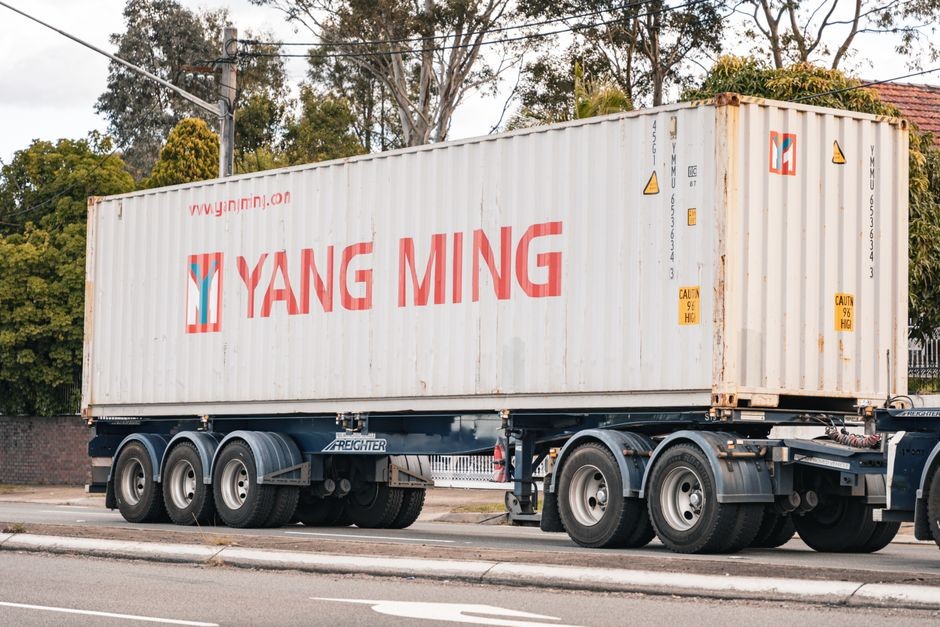
2025 saw the container shipping market trapped in a “high-capacity, low-yield” dilemma. FTI reports global effective capacity reached 26.8M TEU in Q4 2025 (+6.4% YoY), but load factors stood at just 71.2%—9.8pp below pre-pandemic averages. Consequently, the Shanghai Containerized Freight Index (SCFI) averaged $1,420/TEU, down 63% from its 2023 peak. Structural overcapacity persists: 78% of newbuilds delivered in 2025 were 15,000+ TEU megaships, yet only 35% of global ports have deep-water berths to accommodate them, causing average anchorage delays of 5.7 days (Alphaliner).
Geopolitical risks are redrawing shipping maps. Though Red Sea tensions eased in Q4 2025, 42% of Asia-Europe trade still routes via the Cape of Good Hope (up 29pp from 2023), adding 12 days transit time. Cascading effects include a 23% Suez Canal toll hike, pushing Asia-Europe Bunker Adjustment Factor (BAF) to $320/TEU, and feeder network reliability dropping to 68.5%. Trade flows are restructuring: China-Europe rail volumes surged 33% QoQ in Q4 2025, albeit at 3.2x ocean costs, suitable only for high-value goods. Meanwhile, U.S. Ocean Shipping Reform Act (OSRA 2022) enforcement levied $210M in demurrage penalties in 2025, pressuring carriers to optimize terminal coordination but worsening short-term booking chaos.
2026 will see a “rational attrition” phase. FTI forecasts global fleet growth slowing to 2.1%, with scrapping at just 1.8% of capacity—rebalancing requires 2–3 years. A key variable is alliance strategy: THE Alliance terminated its slot-sharing with 2M in December 2025, moving to a “dynamic alliance” model that auctions routes quarterly, boosting slot allocation efficiency by 40%. Shippers must abandon “single trunk line” thinking and build multimodal resilience: (1) Decompose Asia-Europe trade into “ocean trunk + rail feeder” combos (e.g., Yangtze River Delta exports to Kaliningrad by sea, then rail to Berlin—5 days slower than direct shipping but 18% cheaper); (2) Use freight rate options to hedge—buy call options when SCFI 48-hour data synchronization delays per shipment, crippling emergency rerouting. Emerging technologies are tackling these pain points: Singapore Changi’s AI screening system (launched 2025) uses X-ray image deep learning to cut pharma screening to 1.2 hours; Luxembourg Cargo Hub’s blockchain links e-AWB directly to customs, slashing clearance time by 76%.
2026 will accelerate air cargo value reconfiguration. FTI predicts premium time-definite product revenue share will rise from 31% in 2025 to 44% in 2026, driving margin recovery. Key trends: (1) “Air-rail intermodal” normalization (e.g., Zhengzhou Airport’s “Air-Rail Express” to Duisburg—goods loaded onto China-Europe Railway within 2 hours of landing, 41% cheaper than pure air); (2) Drone cargo commercialization scaling (Amazon Prime Air & JD Logistics approved for 3km urban delivery in 12 countries); (3) Carbon neutrality pressure spurring Sustainable Aviation Fuel (SAF) premium mechanisms (EU to tax non-SAF cargo from 2026). Supply chain leaders should: prioritize “non-substitutable” goods (clinical trial samples, photoresists) for air; co-create “green lane” agreements with airlines (SLA for screening, handling, customs); embed SAF usage clauses in procurement contracts with annual carbon reduction reporting. One multinational pharma firm advanced global drug launches by 11 days via this approach, capturing $120M first-mover advantage.
## VI. M&A & Capital: Strategic Stockpiling in Downturn, Mid‑Market Platforms as Value Pockets
Global logistics M&A deal value was $4.82B in 2025, down 64% from the 2021 peak, but deal structure fundamentally shifted. FTI emphasizes that while volume is low, 83% of deals targeted sub‑$500M mid‑market platforms, and 72% involved capability acquisitions (TMS, warehouse robotics, carbon‑management SaaS). This signals industry capital logic shifting from “scale‑driven” to “capability‑augmenting”—giants no longer pursue horizontal consolidation but precision‑acquire vertical domain expertise. Case studies: DHL acquired UK AI route‑optimization firm OptimoRoute for $320M, embedding its algorithms into global road networks; Japanese trading house Itochu invested $180M in Vietnamese smart‑warehousing startup LogiTech, rapidly gaining Southeast Asian automation know‑how.
The deeper challenge is post‑merger integration failure risk. Only 41% of 2025‑completed deals achieved expected synergies within 18 months, primarily due to system silos: acquired WMS/TMS API compatibility with buyer ERP was <35%, degrading order visibility. Worse, talent chasm—mid‑market tech firms saw 38% core‑algorithm‑team attrition vs. industry average 19%—forcing acquirers to redesign integration frameworks. DHL’s “dual‑track” integration preserves acquired tech brands and R&D structures, synchronizing only at customer‑delivery layer; Maersk’s standalone “innovation incubation fund” provides 3‑year tech‑transition support to acquisition targets rather than forcing assimilation.
2026 M&A will exhibit a “barbell” pattern: one end features strategic acquisitions of vertical tech firms by giants ($200–500M per deal), the other sees industrial capital consolidating regional logistics assets (e.g., China logistics‑property funds acquiring 12 Yangtze Delta standard warehouses). FTI advises supply chain leaders to reframe capital perspective: (1) Reclassify logistics‑tech spend from OPEX to CAPEX, acquiring core algorithms via M&A/JVs; (2) Participate as LPs in logistics‑industry funds to back early‑stage tech projects, locking future‑3‑year tech‑iteration dividends; (3) Conduct “tech‑maturity audits” on existing providers, incorporating API openness, data‑sovereignty terms, AI‑model explainability into qualification criteria. One retail group reduced omnichannel fulfillment system failure rate by 67% and customer complaints by 53% via this strategy.
### Conclusion: The 2026 Logistics Strategic Roadmap
2026 logistics will continue its “fragile recovery”基调, but fragmentation becomes the defining feature: FTL enters capacity‑pricing‑power transition, LTL deepens service‑tiering, warehousing value shifts from space to capability, ocean shipping restructures lanes amid capacity attrition, air cargo focuses on high‑value nerve endings, M&A pivots toward capability‑augmentation. Supply chain leaders must discard “cost‑center” thinking and reposition logistics as a “strategic‑capability engine,” launching three immediate actions: ① Build cross‑modal capacity portfolios (long‑term contracts + spot + tech‑enabled platforms) to contain overall fulfillment volatility within ±10%; ② Invest in a Digital Twin of Logistics for end‑to‑end real‑time visibility from order to delivery; ③ Embed ESG metrics (carbon intensity, water consumption, social compliance) into all logistics‑provider KPIs. Only then can true resilience be built amid structural transformation.
—
**Data Table: Q4 2025 Core Logistics Metrics Comparison**
| Mode | Spot Rate Change | Capacity Utilization | Key Pressure Points | 2026 Core Trends |
|—————|——————|———————-|——————————-|———————————–|
| Full Truckload| +9.0% | Capacity Tightening | Insurance/Fuel Cost Rise | Long‑Term Contracts + AI Routing |
| LTL | +5.3% (index) | Hub Saturation | Manual Sorting Bottlenecks | Smart Tiering + Elastic Capacity |
| Warehousing | +3.2% (premium) | 68.4% | ESG Compliance Pressure | Performance‑Based Rent + Hybrid |
| Ocean Shipping| -63% (SCFI) | 71.2% | Megaship‑Port Mismatch + Red Sea | Multimodal + Freight Options |
| Air Cargo | -6.2% | 61.3% (freighters) | Screening/Temp‑Control Gaps | Air‑Rail Intermodal + Green Lanes |
**Source**: FTI Consulting, *Global Transportation & Logistics Outlook: Q4 2025 Snapshot*, December 2025.
Source: FTI Consulting, *Global Transportation & Logistics Outlook: Q4 2025 Snapshot*
This article was AI-assisted and reviewed by our editorial team.