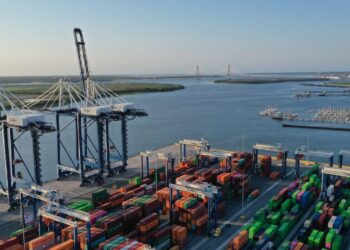
In a strategic move to enhance regional supply chain resilience and optimize trade flows, Saudi Arabia has unveiled its ambitious Logistics Corridors Initiative, a comprehensive infrastructure program designed to redirect cargo from Persian Gulf ports to Red Sea facilities. Announced by Saleh bin Nasser Al Jasser, Minister of Transport and Logistics Services, during a visit to Jeddah, this initiative establishes dedicated operational routes for containers and goods originating from Saudi Arabia’s Eastern Region and Gulf Cooperation Council (GCC) member states. By channeling shipments through Jeddah Islamic Port and other Red Sea coastal terminals, Saudi Arabia aims to accelerate cargo movement, strengthen connectivity between regional and global markets, and position itself as a pivotal logistics hub amid ongoing geopolitical tensions affecting Middle Eastern shipping lanes.
Architectural Framework and Operational Mechanics
The Logistics Corridors Initiative represents a sophisticated reconfiguration of Saudi Arabia’s domestic and regional logistics architecture. At its core, the program creates specialized “cargo arteries” that physically and administratively link ports in the Eastern Province—such as Dammam and Jubail Industrial Port—with the Red Sea port network centered around Jeddah Islamic Port. This east-west corridor enables the systematic redirection of containers and bulk cargo that would traditionally exit through Persian Gulf ports, offering shippers an alternative route that bypasses the geopolitically sensitive Strait of Hormuz. The operational model incorporates standardized procedures developed in collaboration with the Zakat, Tax and Customs Authority, which Governor Suhail bin Mohammed Abanmi describes as “an important step toward improving the integration of customs and logistics procedures between Saudi ports and those across GCC countries.”
What distinguishes this initiative from conventional port development projects is its dual-function design: diversification of cargo flows to reduce dependency on single chokepoints, and integration of previously fragmented regional logistics resources into a unified network. The Saudi government has implemented transit services across its customs ports that permit goods to move through the kingdom to other GCC nations via multimodal land, sea, and air routes. Additionally, the nationwide network of bonded warehouse zones allows importers and exporters to store merchandise with suspended duties and taxes prior to clearance or re-export, providing crucial flexibility for supply chain managers navigating volatile market conditions. These complementary measures collectively address what Abanmi identifies as key objectives: “facilitating cargo movement and accelerating customs clearance processes, helping improve the efficiency of regional and international trade flows.”
Strategic Elevation of Red Sea Ports as Regional Hubs
Jeddah Islamic Port’s designation as the primary node within the Logistics Corridors Initiative reflects Saudi Arabia’s calculated bet on the Red Sea’s growing importance in global maritime trade. As the kingdom’s largest Red Sea port and its principal gateway to Africa, Europe, and beyond, Jeddah offers distinct advantages over Persian Gulf alternatives: proximity to the Suez Canal (approximately 1,200 kilometers versus 3,500+ kilometers from Gulf ports), deeper natural berths capable of accommodating ultra-large container vessels, and established connectivity to major east-west shipping routes. Minister Al-Jasser explicitly acknowledges this strategic positioning, noting that “Red Sea ports, particularly Jeddah Islamic Port, play a key role in handling redirected shipments and containers from the kingdom’s eastern ports and neighbouring Gulf countries, strengthening the kingdom’s connectivity with international trade networks.”
This redirection strategy carries significant implications for regional logistics dynamics. First, it reduces Saudi Arabia’s exposure to disruptions in the Strait of Hormuz, through which approximately 20% of global oil trade and substantial container volumes traditionally pass. Second, it capitalizes on the Red Sea’s comparative stability relative to the Persian Gulf, where recent Iran-related conflicts have prompted temporary port closures and shipping suspensions. Third, the initiative aligns with Saudi Vision 2030’s emphasis on developing the Red Sea coast through megaprojects like NEOM and the Red Sea Project, creating natural synergies between tourism, residential, and logistics infrastructure investments. By proactively developing Red Sea port capacity, Saudi Arabia positions itself to capture trade flows that might otherwise bypass the region entirely during periods of Persian Gulf instability.
Supply Chain Resilience in the Face of Regional Shipping Crises
The timing of the Logistics Corridors Initiative coincides with unprecedented challenges to Middle Eastern maritime security and shipping reliability. Since late 2023, Houthi attacks on commercial vessels transiting the Red Sea have compelled major carriers including Maersk and MSC to suspend Red Sea routes temporarily, rerouting ships around Africa’s Cape of Good Hope at the cost of 8-10 additional sailing days and substantially higher fuel consumption. Concurrently, escalating Iran-related tensions in early 2026 triggered temporary closures of the Strait of Hormuz and operational suspensions at Jebel Ali Port, creating a dual-crisis scenario that exposed the fragility of regional supply chains dependent on these critical waterways.
In this context, Saudi Arabia’s initiative represents a proactive resilience-building strategy rather than reactive crisis management. Minister Al-Jasser emphasizes that “the kingdom’s infrastructure and flexible logistics services allow it to adapt quickly to shifts in global trade and maintain continuity in regional supply chains.” This approach embodies what supply chain experts term “adaptive capacity”—the ability to reconfigure logistics networks dynamically in response to disruptions. By establishing pre-planned alternative corridors with dedicated infrastructure and administrative support, Saudi Arabia reduces the lead time required to activate contingency routes during emergencies, potentially saving days or weeks compared to improvised responses. The minister further underscores this preparedness mindset: “The transport and logistics ecosystem continues to expand operational capacity across ports, airports and transport networks, ensuring stable supply chains while supporting local and regional markets.”
Regional Economic Integration and Trade Facilitation Impacts
Beyond Saudi Arabia’s domestic logistics optimization, the Logistics Corridors Initiative carries profound implications for Gulf economic integration and cross-border trade facilitation. As the largest economy within the GCC, Saudi infrastructure improvements naturally create spillover benefits for neighboring states seeking efficient access to global markets. The initiative’s customs harmonization components—particularly the transit services and bonded warehouse network—address longstanding barriers to seamless intra-GCC trade, where divergent regulatory regimes and bureaucratic procedures have historically impeded smooth cargo movement.
Abanmi’s explanation of the customs authority’s role reveals the initiative’s integrative ambition: “Saudi Arabia offers a transit service across its customs ports, allowing goods to be transported through the kingdom to other GCC countries via land, sea and air routes.” This policy innovation effectively transforms Saudi territory into a conduit for regional trade, enabling goods from Qatar, Kuwait, Bahrain, Oman, and the UAE to reach international markets via Saudi ports without undergoing full import-export procedures at each border crossing. For supply chain managers operating across the Gulf, this reduces administrative burdens, shortens transit times, and lowers compliance costs—factors that collectively enhance the region’s competitiveness as a manufacturing and distribution hub. The bonded warehouse system adds further flexibility by allowing companies to maintain strategic inventory buffers within Saudi Arabia while deferring tax liabilities until goods enter local markets or are re-exported.
Implications for Global Supply Chain Strategies
The Saudi Logistics Corridors Initiative presents both challenges and opportunities for multinational corporations managing Middle Eastern supply chains. Companies with significant exposure to the region should consider several strategic adjustments:
- Route Diversification: Rather than concentrating all shipments through Persian Gulf ports, companies can allocate portions of their cargo to Red Sea routes via Saudi corridors, creating natural hedging against disruptions in either maritime corridor.
- Inventory Positioning: The availability of bonded warehouses in Saudi Arabia enables more flexible inventory strategies, allowing companies to maintain regional stock closer to both Gulf and Red Sea markets without immediate tax implications.
- Partner Selection Logistics providers with established capabilities in Saudi Arabia’s evolving port and customs ecosystem may offer reliability advantages during periods of regional instability.
For Chinese companies—which constitute Saudi Arabia’s largest trading partner with bilateral trade exceeding $100 billion annually—the initiative offers particular relevance. Many Chinese manufacturers and exporters rely heavily on Persian Gulf ports for Middle Eastern market access, making them vulnerable to Hormuz-related disruptions. By developing relationships with Saudi logistics providers and exploring Red Sea routing options, Chinese firms can enhance their regional supply chain resilience while potentially reducing transit times to North African and European markets.
Future Trajectory and Industry Implications
Saudi Arabia’s Logistics Corridors Initiative signals a broader shift in Middle Eastern supply chain management from passive vulnerability to active resilience building. This trend will likely manifest in several industry developments over the coming years:
- Multimodal Network Expansion: Successful implementation of the initial corridors may prompt investment in complementary rail and road infrastructure, creating true intermodal connections between Persian Gulf and Red Sea ports that compete with established hubs like Dubai’s Jebel Ali.
- Digital Integration Platforms: To achieve seamless coordination across ports, transport modes, and customs systems, Saudi authorities will likely develop unified digital logistics platforms leveraging blockchain for documentation, IoT for cargo tracking, and AI for predictive analytics.
- Sustainability Integration: Aligned with Saudi Green Initiative objectives, future corridor development may incorporate environmental considerations such as electric truck fleets, port-side renewable energy generation, and carbon footprint monitoring systems.
Minister Al-Jasser’s concluding remarks frame the initiative within Saudi Arabia’s long-term strategic vision: “The transport and logistics ecosystem continues to expand operational capacity across ports, airports and transport networks, ensuring stable supply chains while supporting local and regional markets.” This statement confirms logistics infrastructure as a strategic national asset worthy of sustained investment. For global supply chain professionals, monitoring the evolution of Saudi Arabia’s logistics network—and understanding how to leverage its emerging capabilities—will become increasingly important for maintaining competitive advantage in the Middle Eastern market. As geopolitical tensions continue to shape regional trade patterns, proactive adaptation to initiatives like the Logistics Corridors may determine which companies thrive amid uncertainty and which struggle with disrupted flows.
Source: constructionweekonline.com
This article was AI-assisted and reviewed by our editorial team.