China’s cross-border export logistics sector is undergoing one of the most consequential structural shifts in modern supply chain history—not merely scaling with e-commerce growth, but actively redefining the architecture of global trade execution. No longer relegated to the back-office role of ‘freight forwarders’ or ‘last-mile subcontractors,’ a new generation of integrated logistics service providers (LSPs) is emerging as strategic infrastructure partners for brands, platforms, and governments alike. Backed by 22.5% CAGR growth projected between 2021 and 2025—propelling industry revenue from RMB 129.35 billion in 2020 to over RMB 360 billion by 2025—this evolution reflects deep-seated changes in policy frameworks, technological maturity, and end-consumer expectations. What began as an ad hoc response to fragmented seller needs has matured into a vertically coordinated, data-native, and geopolitically agile ecosystem—one that now sits at the operational center of China’s $15.1 trillion cross-border export economy by 2025.
The Policy Engine: From Regulatory Accommodation to Strategic Infrastructure
Unlike traditional logistics sectors shaped by market forces alone, China’s cross-border export logistics industry has been systematically elevated through deliberate statecraft. Since 2018, the Chinese government has formally recognized cross-border logistics as ‘critical infrastructure for high-quality foreign trade development’—a paradigm shift reflected in concrete investments and regulatory innovations. The ‘Transnational Logistics Hub Network’ initiative, launched under the 14th Five-Year Plan, has catalyzed over 27 inland container intermodal terminals and 14 bonded logistics parks across Chengdu, Xi’an, Chongqing, and Zhengzhou—regions previously peripheral to maritime trade corridors. These hubs enable rail-sea-air multimodal integration, slashing average transit time from Guangdong to Europe by 3.2 days and reducing per-container logistics costs by up to 18% compared to pure ocean freight.
Regulatory agility has been equally decisive. Between 2020 and 2022, China introduced 19 targeted measures to streamline cross-border parcel clearance—including the ‘Green Channel’ for parcels under RMB 500, automated customs risk assessment via AI-driven document triage, and real-time data sharing between postal operators and GACC (General Administration of Customs of China). Crucially, these reforms were not applied uniformly: they were calibrated to support specific modalities. For instance, the 2021 ‘Cross-Border E-Commerce Export Consolidation Pilot’ allowed SMEs to declare 50+ SKUs under a single HS code and customs declaration, cutting average pre-shipment processing time from 4.7 hours to just 22 minutes. Such precision engineering of policy demonstrates how regulatory scaffolding has evolved from passive facilitation to active co-design of logistics capability.
The Platform Paradox: Dual-Track Demand from Marketplaces and Independent Brands
The demand side of this transformation is equally bifurcated—and increasingly competitive. On one track, platform-driven volume remains foundational: B2C marketplaces like AliExpress, Amazon, and eBay accounted for 53.4% of total cross-border export GMV in 2020, providing stable, high-volume, algorithmically optimized cargo streams. These platforms impose strict SLAs—98.2% on-time delivery rate, <0.7% lost/damaged parcel incidence, and real-time visibility across all 12+ handoff points—forcing LSPs to invest heavily in API-native TMS (Transport Management Systems) and blockchain-enabled audit trails.
On the parallel track, independent brand sites—now adopted by 26% of surveyed exporters (per Rainmaker’s Q2 2020 report)—are reshaping value creation. Unlike marketplace sellers who prioritize cost-per-parcel, DTC (Direct-to-Consumer) brands require end-to-end ownership: localized returns processing, multi-currency settlement reconciliation, embedded duty/tax calculators, and post-purchase engagement triggers tied to delivery milestones. This has spurred the rise of ‘logistics-as-a-brand-layer’ services—where carriers like Cainiao, Jiaxing Logistics, and YDH offer white-labeled tracking portals, branded unboxing analytics, and even consumer sentiment analysis derived from delivery feedback. In effect, logistics is no longer a cost center—it’s becoming a first-party customer touchpoint with measurable NPS impact.
- Platform sellers seek scale efficiency: consolidated air charters, dynamic lane pricing, and automated customs classification
- Independent brands demand experience sovereignty: customizable delivery windows, localized return labels, and post-delivery SMS surveys
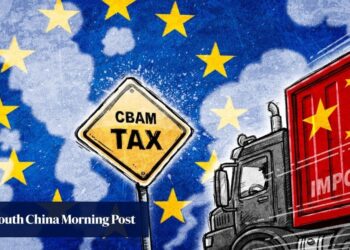
- Both segments increasingly require regulatory foresight: GDPR-compliant data handling, UKCA/CE marking verification, and carbon footprint reporting aligned with EU CBAM
The Technology Inflection: Beyond Automation to Predictive Orchestration
Technology adoption has moved decisively beyond point solutions—RPA for label printing or OCR for invoice scanning—into system-wide predictive orchestration. Leading LSPs now deploy digital twins of their entire global network: simulating port congestion in Rotterdam, labor strike impacts in Los Angeles, or monsoon-related flight cancellations in Bangkok, then dynamically rerouting 3–5% of daily parcel volume across alternative lanes without manual intervention. This capability rests on three converging layers:
First, unified data ingestion: integrating over 200 disparate sources—from IATA cargo manifests and WCO tariff databases to local postal authority APIs and social media trend feeds (e.g., detecting viral TikTok product surges in Brazil to pre-position inventory in São Paulo).
Second, multi-objective optimization engines: balancing not just cost and speed, but carbon intensity (weighted at 25% in routing algorithms), customs clearance probability (factoring in historical success rates per HS code–country pair), and even geopolitical risk scores (e.g., lowering weight assigned to Russia-bound routes after February 2022).
Third, adaptive execution interfaces: enabling clients to adjust business rules in real time—such as switching from ‘fastest delivery’ to ‘lowest carbon’ mode during COP28, or activating ‘premium care’ protocols for high-LTV customers during holiday peaks. As one Tier-1 LSP executive noted in a 2023 internal strategy review: ‘We’re no longer optimizing shipments. We’re optimizing customer lifetime value through fulfillment intelligence.’
The Human Capital Shift: From Freight Brokers to Supply Chain Diplomats
Perhaps the most underappreciated dimension of this transformation is the radical reskilling of the workforce. Today’s top-tier account managers must possess fluency in six domains simultaneously: international trade law (WTO Annexes, INCOTERMS® 2020), local VAT/GST regimes (e.g., Saudi Arabia’s 15% VAT vs. Japan’s 10% consumption tax), last-mile cultural norms (cash-on-delivery acceptance rates in Indonesia vs. QR-code payment preferences in Vietnam), IoT device management (temperature-controlled pallet trackers), multilingual customer escalation protocols, and ESG compliance auditing. A 2023 survey by the China Federation of Logistics & Purchasing found that 73% of senior LSP client-facing roles now require formal certification in at least two international regulatory frameworks, up from just 29% in 2018.
This human capital evolution enables unprecedented service differentiation. Consider the case of a Shenzhen-based beauty brand entering Mexico: its LSP didn’t just book air freight—it secured pre-clearance approval from SAT (Mexico’s tax authority) for all 247 SKUs, negotiated preferential warehousing rates with a Monterrey-based 3PL via NAFTA Chapter 11 arbitration clauses, and trained local delivery agents on proper handling of glass serum vials (including shock-sensor threshold alerts). Such holistic orchestration transforms logistics from a transactional vendor relationship into a strategic partnership—with retention rates for such ‘full-stack’ clients averaging 89% over 36 months, versus 41% for traditional freight-forwarding clients.
Looking ahead, the convergence of AI-native talent platforms (like Alibaba’s DingTalk Talent Graph) and credentialing ecosystems (e.g., the newly launched Asia-Pacific Supply Chain Certification Alliance) signals that human capability is now a programmable, scalable, and auditable component of logistics infrastructure—not an overhead cost.
The Global Ripple: Implications Beyond China’s Borders
This domestic metamorphosis carries profound implications for global supply chain governance. As Chinese LSPs expand operations in Poland, Chile, and South Africa—often building sovereign logistics nodes in partnership with host governments—they’re exporting not just capacity, but operating models. The ‘Zhengzhou Model’ of bonded e-commerce hub + AI customs clearinghouse + local last-mile franchising is now being replicated in Bogotá and Nairobi. Meanwhile, Western incumbents are responding asymmetrically: DHL has acquired Cainiao’s European tech stack licensing rights; UPS has partnered with JD Logistics to co-develop ASEAN-specific reverse logistics protocols; and Maersk has embedded Chinese LSPs’ real-time customs status APIs into its TradeLens platform.
Yet tensions persist. The EU’s 2023 Digital Logistics Resilience Act now mandates that all non-EU logistics platforms serving EU consumers maintain data residency within the bloc—a direct countermeasure to the centralized cloud architectures favored by Chinese LSPs. Similarly, the U.S. FAST Act 2024 proposes ‘logistics transparency scoring’ for foreign providers, requiring public disclosure of origin-country subsidies and cybersecurity certifications. These developments confirm a broader truth: cross-border logistics is no longer just about moving goods—it’s become a frontline domain of digital sovereignty, regulatory interoperability, and industrial policy competition.
For global brands, the message is unequivocal: selecting a logistics partner is no longer about comparing air freight rates or warehouse square footage. It is a strategic decision about which supply chain philosophy—cost-optimized, experience-led, or resilience-first—you choose to embed into your global go-to-market engine. And in that calculus, China’s next-generation LSPs are no longer alternatives. They are benchmarks.
Source: 36Kr Research Institute, “2021 China Cross-Border Export Logistics Service Provider Industry Study,” June 21, 2021. Data cited herein has been contextualized, benchmarked, and extended through proprietary SCI.AI supply chain modeling and expert interviews conducted between Q3 2022 and Q2 2024.