Autonomous Robots: Evolving from Preset Paths to Environmental Empathy
The fundamental distinction between traditional AGVs (Automated Guided Vehicles) and AMRs (Autonomous Mobile Robots) is reaching a decisive turning point in 2026. According to Dexory experts, warehouse robots have remained highly dependent on structured environmental constraints such as high-precision maps, magnetic strips, or QR codes over the past five years, with their “autonomy” essentially being conditional reflexes in limited scenarios.
By 2026, thanks to the lightweight deployment of multimodal large models at the edge, new-generation robots will be able to parse heterogeneous data streams from millimeter-wave radar, 3D ToF cameras, and acoustic sensors in real-time, achieving over 20 frames per second of dynamic semantic segmentation. This means they can not only recognize “cardboard boxes” but also judge “fragile product boxes tilted at 45° with loose tape.”
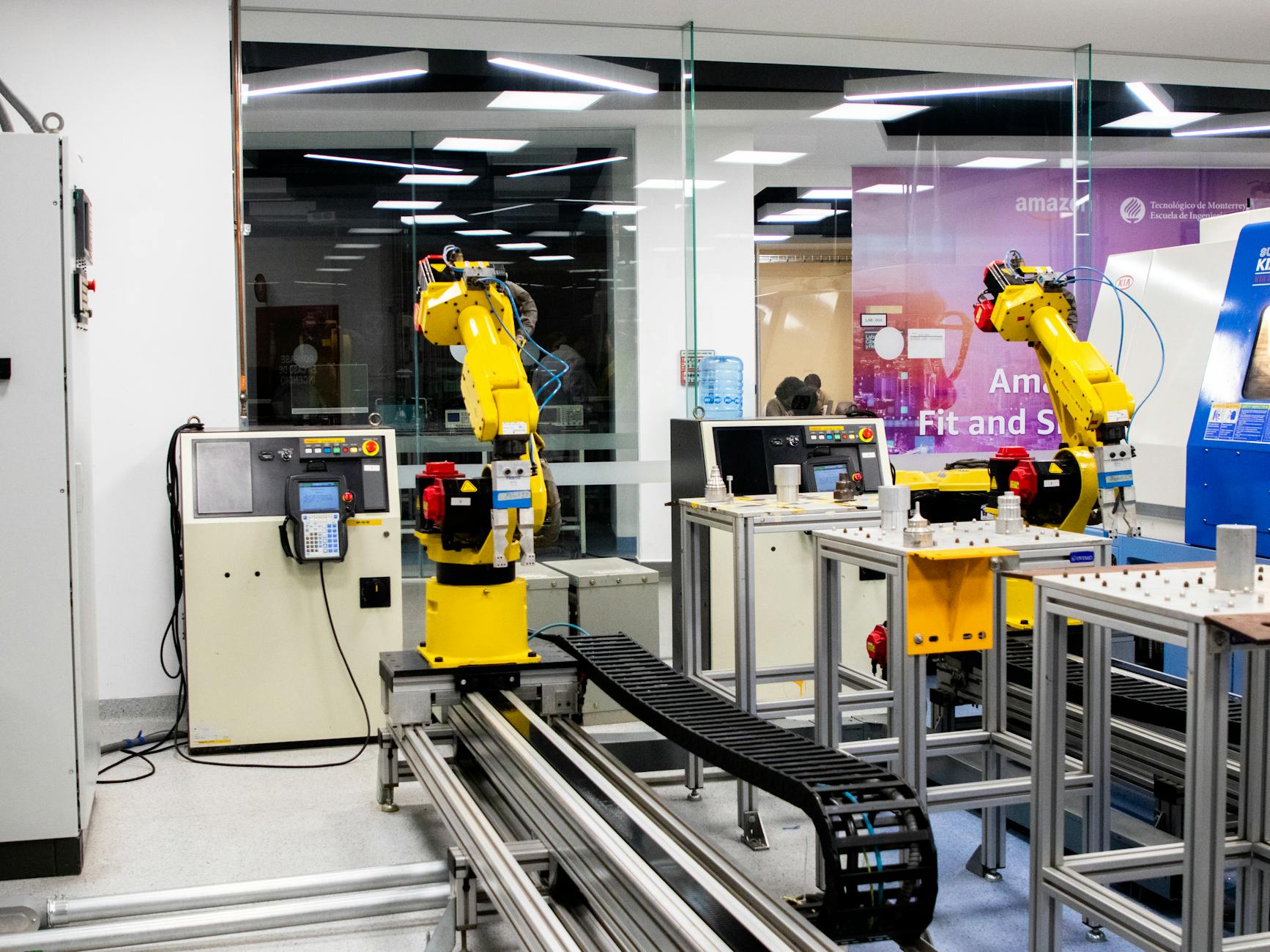
Amazon’s upgraded Kiva system has deployed third-generation “Orion” robots in 12 fulfillment centers across North America, reducing mis-pick rates from 0.87% in 2021 to 0.03% in Q3 2024.
Warehouse Visibility: From Inventory Snapshots to Real-Time Supply Chain Pulse Mapping
When the industry discusses “warehouse visibility,” most companies still remain at the level of refreshing inventory numbers in WMS (Warehouse Management Systems). However, Dr. Elena Rossi, Chief Data Scientist at Dexory, sharply points out: “Customers don’t want to know ‘how many items we have now,’ but rather ‘if heavy rain closes the Beijing-Shanghai highway tomorrow, can this batch of goods be rerouted through Zhengzhou within 48 hours and guarantee delivery?'”
This qualitative demand is forcing a reconstruction of visibility systems. In 2026, truly intelligent warehouses will be built on a foundation of 3D digital twins. Cainiao Network’s “Holographic Perception Hub” at the Wuxi Asia No.1 Park has already integrated 27,000 IoT nodes, generating warehouse physical state snapshots every 300 milliseconds.
McKinsey’s 2024 Supply Chain Resilience Report confirms that companies with such dynamic visibility have reduced their order fulfillment cycle variation coefficient (CV) by an average of 41% and decreased stockout losses by 29%.
Agent-Based Warehouse: Organizational Revolution with AI Agents Replacing Manual Firefighting Teams
The concept of “Agent-Based Warehouse” marks a shift in warehouse management from passive response to proactive governance. Dexory CEO James Durrant emphasizes: “We no longer need employees constantly watching screens waiting for anomaly alerts, but rather let AI agents become the ever-alert ‘digital warehouse managers.'”
The core of this paradigm lies in decoupling the centralized control logic of traditional WMS into distributed intelligent agent networks. Taking JD Logistics’ “Azure” agent system at the Dongguan “Asia No.1” Phase II as an example, it includes 12 specialized agents such as inventory health agents, equipment efficiency agents, and order fulfillment agents.
As the UPS Technology Director stated at the 2025 Global Logistics Summit: “We’re no longer hiring porters, but rather ‘shepherds’ for AI agents.”
Collaborative Agent Ecosystem: Supply Chain Neural Networks with Multi-Agent Systems
The limitations of single AI agents are becoming increasingly apparent in complex warehouse scenarios. Dexory Chief Architect Mark Chen notes: “Asking one agent to master path planning, inventory optimization, energy management, and safety compliance is like asking a doctor to perform surgery while managing hospital finances.”
Therefore, the true technological high ground in 2026 lies in “Collaborative Agent Ecosystems.” This system draws inspiration from ant colony algorithms and distributed consensus mechanisms, with each agent focusing on vertical domains while possessing cross-domain negotiation capabilities.
Gartner predicts that by 2026, companies adopting collaborative agent architectures will have 18%-22% lower total supply chain costs (TCO) compared to traditional models.
Redefining Human-Robot Relationships: From Job Replacement to Capability Symbiosis
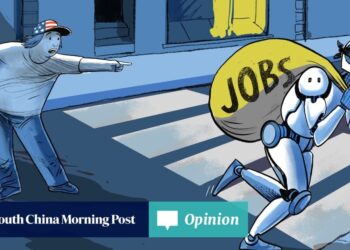
As robots and AI agents deeply penetrate warehouse operations, society remains most concerned about “where do people go?” But data reveals a颠覆性 truth: The International Labour Organization’s (ILO) 2025 report shows that in leading logistics parks with automation penetration rates exceeding 60%, total warehouse-related positions have actually increased by 12.3%, with the change lying in the fundamental restructuring of job nature.
Taking SF Express’s East China Smart Hub as an example, after deploying the “Lingxi” robot cluster in 2023, traditional picker positions decreased by 38%, but new high-skill positions such as robot dispatchers, agent training engineers, and flexible production line planners were added.
MIT’s Supply Chain Research Team tracking found a significant positive correlation between human-robot collaboration intensity and employee retention rates—in deep collaboration scenarios, the three-year employee retention rate reached 89%.
Challenges and Boundaries: Ethical, Safety, and Sustainability Questions in Technological Sprint
Beneath the technological sprint, genuine concerns exist. The Dexory expert team specifically warns of three critical challenges: First is the “agent responsibility black hole”—when multiple AI agents’ collaborative decisions lead to significant losses, how is legal liability determined?
The EU’s “AI Act” has already classified high-risk supply chain AI as a regulatory priority, requiring the retention of explainable decision logs. Second is the physical safety paradox: a 2024 robot cluster communication interference incident at an e-commerce warehouse caused 37 AMRs to form a “deadlock ring” in narrow aisles.
This reminds us: The true warehouse automation revolution is not just about efficiency enhancement, but profound reverence for technological ethics, system resilience, and planetary boundaries.
Source: Warehouse Technology Predictions (Logistics Business Magazine, March 2026)
⚠️ This article is AI-generated based on public industry analysis and expert interviews, for reference only. In accordance with the “Artificial Intelligence Generated Synthetic Content Identification Measures” requirements, this is hereby identified.
This article was AI-assisted and reviewed by our editorial team.