Record U.S.-Mexico Trade Fuels Nearshore Manufacturing Boom
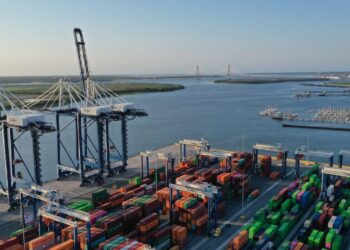
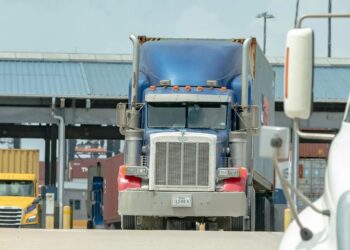
U.S.–Mexico bilateral trade hit a record $872.8 billion in 2025, marking the third consecutive year Mexico has ranked as America’s top trading partner. Cross-border freight volumes are at all-time highs, driven by the accelerating nearshore manufacturing boom that is generating unprecedented logistics complexity. Most U.S. brokerages and third-party logistics providers (3PLs) are understaffed to handle this surge, creating both challenges and opportunities in the cross-border logistics sector.
Simultaneously, the domestic freight market is emerging from one of the most brutal downturns in modern memory. The freight recession has now exceeded three years, longer than any prior downcycle, leaving visible scars on brokerage balance sheets nationwide. While signs of recovery are beginning to emerge, the margin environment remains punishingly tight, forcing logistics companies to rethink their operational strategies fundamentally.
Brutal Margin Math: Most Brokers Losing Money Per Shipment
A December 2025 FreightWaves analysis of mid-market brokerage unit economics revealed alarming figures: the average broker earns just $189 in gross margin per load on approximately $1,912 in revenue, representing a slim 9.9% margin. The critical problem? The cost to service that load runs approximately $205, meaning many brokerages are effectively losing money on every shipment they move.
The deeper insight from this analysis highlights why nearshore staffing has become strategically vital: payroll and personnel costs consume roughly 79% of gross margin per load. Labor has emerged as the decisive variable determining whether a brokerage survives the next 12 months in this hyper-competitive environment.
Industry Exodus Expected: 67% of Brokers Predict More Exits in 2026
FreightWaves CEO Craig Fuller articulated the industry’s precarious position in a November 2025 analysis, describing the current operating environment as combining “anemic volumes with a melt-up in spot rates”—the worst possible combination for operators already running on razor-thin margins. Fuller reported conversations with a major broker CEO who was tracking dozens of companies effectively operating while insolvent.
“The current operating environment combines anemic volumes with a melt-up in spot rates—the worst possible combination for operators already running on thin margins.” — Craig Fuller, CEO of FreightWaves
A February 2026 Truckstop/Bloomberg Intelligence survey confirmed this widespread anxiety: 67% of brokers expect more industry exits in 2026. The brokerages positioned to survive—and capture market share when freight demand eventually recovers—will be those that solved their cost structure before the competitive window closed completely.
The Labor Paradox: Job Cuts Amid Critical Skill Shortages
The freight market’s workforce dynamics present a complex paradox. Bureau of Labor Statistics data shows transportation and warehousing shed approximately 104,000 jobs in 2025 as companies downsized during the prolonged downturn. Yet simultaneously, 308,000 logistics positions remained unfilled, highlighting a critical mismatch between available workers and required skills.
This labor paradox underscores structural issues within the industry: while companies are cutting headcount to reduce costs, they continue to struggle filling positions requiring specialized logistics expertise, technological proficiency, and cross-border operational knowledge.
Nearshore Staffing: From Cost-Cutting Experiment to Core Strategy
Against this challenging backdrop, nearshore staffing has evolved from a peripheral cost-cutting experiment to a core operational strategy for forward-thinking logistics companies. The distinction between a good nearshore partner and an exceptional one has never been more consequential, with training emerging as the decisive factor determining nearshore logistics team success or failure.
Effective training programs must extend beyond technical skills to encompass cross-cultural communication, process optimization, risk management, and regulatory compliance. In an era of increasing supply chain disruption risks in 2026, possessing a well-trained nearshore team represents a significant competitive advantage.
Implications for Global Supply Chain Resilience
The nearshore logistics trend carries important implications for companies worldwide, particularly Chinese enterprises expanding globally. For electric vehicle manufacturers like BYD, battery producers like CATL, and e-commerce platforms like SHEIN and Temu, establishing localized logistics teams and investing in comprehensive training programs can substantially mitigate supply chain disruption risks.
As geopolitical tensions and trade barriers continue to escalate, businesses must prioritize supply chain resilience through strategic nearshoring. Nearshore manufacturing and logistics operations not only reduce transportation costs but also enhance responsiveness and flexibility—critical attributes in today’s volatile business environment where disruption has become the new normal.
Source: freightcaviar.com
This article was AI-assisted and reviewed by our editorial team.