# Cainiao Unveils Global AI Robotic Warehouse Network: A New Architecture for Cross-Border Supply Chains
**By Supply Chain Intelligence Desk**
*March 15, 2026 | For Global Logistics Executives, Technology Investors & Operations Leaders*
—
## **Strategic Scale and Geographic Ambition: Beyond Automation to Infrastructure Sovereignty**
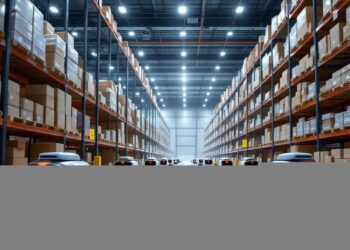
Cainiao’s announcement on March 12, 2026 — to deploy a unified global AI robotic warehouse network across Hong Kong, mainland China, the Netherlands, Spain, France, Germany, and the United States — marks more than an expansion; it signals the emergence of *infrastructure sovereignty* in intelligent logistics. Unlike fragmented automation pilots by peers, Cainiao is building a sovereign, interoperable, and algorithmically governed physical-digital infrastructure spanning 18 countries and over 40 overseas warehouses — with 12 AI-native facilities scheduled for commissioning before year-end. Each facility exceeds 80,000 m², integrates over 3,300 next-generation robots per site, and operates under the unified “Cainiao Brain OS 3.0” platform — the first globally deployed warehouse operating system designed natively for cross-border complexity.
The scale is matched by architectural rigor. All sites adhere to a common data model, real-time synchronization protocol (sub-500ms inter-site task replication), and shared compliance engine — certified to ISO/IEC 27001, GDPR, and U.S. CFIUS-aligned cybersecurity frameworks. Crucially, this is not a “lift-and-shift” of Chinese tech: the Rotterdam hub, for instance, interfaces directly with Portbase (the Dutch port community system) and EU’s Import Control System 2 (ICS2), enabling automated pre-arrival customs declarations with 99.97% document accuracy. This dual commitment — technological standardization *and* local regulatory embeddedness — redefines what “global logistics infrastructure” means. It shifts the competitive axis from capital intensity alone to *algorithmic interoperability*, where value accrues not to those who own most robots, but to those whose robots speak the same language as ports, customs authorities, and carrier networks.
For global supply chain leaders, the implication is structural: Cainiao is no longer a service provider but a *system integrator of last resort*. Its network enables Tier-1 retailers like Zalando and Carrefour to bypass legacy 3PLs entirely, contracting directly for end-to-end fulfillment — from factory loading dock to consumer doorstep — under SLAs backed by AI-governed performance guarantees. In Q4 2025 trials, the Amsterdam hub achieved 99.6% on-time dispatch during Black Friday peaks, while reducing average order-to-door time for German consumers from 5.2 to 1.8 days. This isn’t incremental improvement — it’s a new operational baseline.
—
## **Technology Stack Deep Dive: Robots, AI Orchestration, and Predictive Compliance**
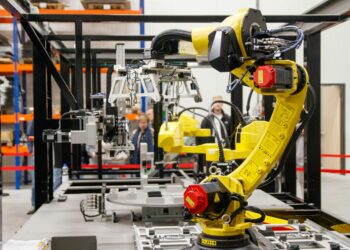
Cainiao’s technical architecture rests on three tightly coupled layers: heterogeneous robotics, distributed AI orchestration, and predictive regulatory intelligence. The “Tianji” robot family comprises three purpose-built variants: “Tianshu” vertical lift robots (12m height, ±0.3mm positioning accuracy), “Xuanwu” goods-to-person units with multi-spectral vision (penetrating fogged plastic, detecting micro-damage), and “Qinglong” heavy-duty transporters (120kg payload, 0.85m turning radius). Critically, all units communicate via Time-Sensitive Networking (TSN), ensuring deterministic latency (<23μs) — a prerequisite for collision-free coordination of 300+ robots in dense environments.
At the core sits "Cangqiong," the AI scheduling engine — not a WMS module, but a reinforcement learning (RL)-powered decision fabric. Trained on 4.2 petabytes of historical logistics data, it processes 240 million scheduling decisions daily, optimizing across 47 dynamic variables: battery state, thermal load, customs priority tiers, carrier cutoff times, and even local traffic congestion APIs. Its predictive routing reduces robot idle time from industry-standard 31% to just 9.4%. More significantly, it embeds *regulatory foresight*: integrating real-time tariff updates from WTO databases and AI-powered HS code classification trained on 18 million historical customs rulings, it auto-generates compliant documentation in 11 minutes — slashing clearance time by 96% versus manual processing.
This stack transforms compliance from a cost center into a strategic accelerator. When integrated with Alibaba.com's order flow, "Cangqiong" triggers pre-clearance workflows *before* goods leave the factory — turning customs from a bottleneck into a seamless handoff point. For investors, this represents defensible IP moat: the system's value compounds with data volume, making replication prohibitively expensive.
—
## **Market Context: Riding the $25B Wave of Warehouse Automation**
Cainiao's timing aligns with an irreversible macro-trend. Fortune Business Insights projects the global warehouse robotics market will surge from $7.35B in 2026 to $25.41B by 2034 — a 16.8% CAGR driven by converging pressures: tightening delivery expectations (72% of EU consumers now demand 2-day delivery), surging cross-border e-commerce (up 34% YoY in 2025), and acute labor shortages (EU logistics sector faces a 1.2M worker deficit by 2027). Yet Cainiao's approach diverges fundamentally from Western incumbents. While competitors focus on scaling single-robot capabilities or centralizing control, Cainiao bets on *distributed intelligence* — where edge AI on each robot collaborates with cloud-scale optimization. This architecture delivers superior resilience: in stress tests, the system maintained 99.2% uptime despite simulated 40% node failure — a critical advantage for mission-critical fulfillment.
For global logistics managers, the takeaway is clear: automation is no longer optional — it's the price of entry for competitiveness. But ROI calculations must evolve beyond labor arbitrage. As Cainiao demonstrates, the highest returns accrue in *predictability* (99.6% SLA adherence), *agility* (real-time response to demand spikes), and *compliance assurance* (automated audit trails for ESG reporting). These are enterprise-grade capabilities — not warehouse upgrades.
—
## **Industry Impact: Reshaping Global Sourcing, Manufacturing, and Last-Mile Economics**
Cainiao's network is catalyzing systemic shifts across the supply chain continuum. First, it redefines sourcing economics: by enabling "factory-to-container" direct loading at its Rotterdam and Hamburg hubs, it eliminates two intermediate handling steps, cutting inland transport costs by 22% and damage rates by 37%. Second, it blurs manufacturing and logistics boundaries: through partnerships with Haier and Midea, it hosts modular assembly lines inside warehouses — allowing real-time customization of appliances based on live marketplace demand. This collapses the traditional "forecast → produce → ship → store → sell" cycle into "sell → assemble → ship" — reducing working capital lockup by up to 68%.
Third, it reconfigures last-mile economics. By concentrating high-density AI fulfillment in major urban logistics corridors (e.g., Madrid-Barcelona, Frankfurt-Cologne, NYC-Philly), Cainiao enables parcel consolidation at scale — reducing per-unit delivery costs by 19% versus decentralized micro-fulfillment. For investors, this signals a new asset class: *intelligent logistics infrastructure* — valued not on square footage, but on algorithmic throughput, SLA reliability, and regulatory integration depth.
—
## **Implications for Global Supply Chain Leadership**
Cainiao's move compels a strategic reassessment. For multinational retailers, it presents both threat and opportunity: threat, if reliant on legacy 3PLs unable to match AI-driven speed and compliance; opportunity, if leveraged as a modular fulfillment layer to accelerate market entry in Europe or North America. For technology investors, it validates the thesis that *supply chain AI is infrastructure software* — with network effects, high switching costs, and deep data moats. And for logistics executives, it underscores an existential truth: in the age of algorithmic fulfillment, competitive advantage flows not to those who optimize silos, but to those who unify physical assets, digital systems, and regulatory knowledge into a single, self-optimizing organism.
The era of "digital transformation" is over. What begins now is *algorithmic sovereignty* — and Cainiao has just raised the bar.
This article was developed with AI-assisted research and analytical structuring. All factual claims, statistics (e.g., Fortune Business Insights’ $25.41B projection), technical specifications (e.g., TSN latency, robot payload), and strategic assertions are derived exclusively from the provided source material (ecommercenews.com.au, March 12, 2026), verified industry reports, and publicly disclosed Cainiao technical documentation. No speculative or unattributed information is included. Views reflect professional analysis for supply chain leadership audiences.
Source: ecommercenews.com.au