The Three-Stage Evolution of Autonomous Supply Chains
Supply chains are no longer merely digitizing—they are evolving into self-governing systems capable of perception, reasoning, and action. As articulated by the World Economic Forum in its framework cited by PYMNTS.com, this transformation unfolds across three rigorously defined stages. Stage 1—digitalization—establishes foundational cloud-based infrastructure that delivers real-time visibility across core operations. This is not novelty; it is prerequisite. Without synchronized data ingestion from ERP, TMS, WMS, and IoT edge devices, subsequent AI layers lack fidelity. Stage 2—AI-assisted adaptability—builds upon that visibility using machine learning models and digital twin simulations to anticipate disruptions such as port congestion, supplier insolvency, or weather-related delays. Here, AI augments human judgment but does not override it. Stage 3—full autonomy—represents the structural inflection: AI systems make and execute decisions without human sign-off, dynamically rerouting shipments, renegotiating carrier contracts in real time, or authorizing inventory transfers between regional hubs based on predictive demand shifts.
This progression is neither linear nor inevitable. PYMNTS reports that few organizations have reached Stage 3, underscoring a critical gap between technological capability and operational maturity. The WEF’s model explicitly distinguishes Stage 3 autonomy from legacy automation—such as fixed-path conveyor belts or pre-programmed robotic arms—which remain fast and precise but fundamentally rigid. In contrast, physical AI—deployed in warehouses and distribution centers—enables robots to perceive their environment in real time, interpret dynamic obstacles, and collaboratively adjust workflows without centralized reprogramming. That distinction is essential: autonomy requires closed-loop sensing-action cycles, not just faster execution of static instructions. Organizations misinterpreting Stage 2 tools (e.g., dashboards with ML-powered alerts) as Stage 3 readiness risk overinvesting in brittle systems that fail under novel stress conditions.
The implications extend beyond technology selection. Achieving Stage 3 demands rearchitecting decision rights, governance protocols, and performance accountability. Human operators shift from controllers to auditors and exception managers. Compliance frameworks must evolve to accommodate algorithmic decision logs, explainability requirements, and real-time intervention protocols. Regulatory bodies—including the U.S. Federal Maritime Commission and EU’s Digital Product Passport initiative—are already drafting guidelines for AI-driven logistics accountability. As PYMNTS notes, the structural shift mirrors the shipping container’s impact: not incremental efficiency, but a new operating paradigm enabling global trade scale previously unimaginable. That parallel is not rhetorical—it signals that Stage 3 adoption will redefine competitive boundaries, separating enterprises capable of continuous adaptation from those optimized only for stable, predictable environments.
$190 Billion and $18 Billion: Quantifying AI’s Dual-Value Horizon
McKinsey senior advisor Knut Alicke’s comparison of AI’s supply chain impact to the invention of the shipping container gains empirical grounding in concrete valuation metrics reported by PYMNTS. The source cites McKinsey partner Alberto Oca’s estimate that AI will generate roughly $190 billion in value across travel and logistics—a broad sector encompassing air, maritime, rail, trucking, and last-mile delivery ecosystems. Within that total, a distinct and strategically concentrated segment—$18 billion in direct supply chain operations value—represents the quantifiable uplift from AI applied specifically to procurement planning, inventory optimization, demand forecasting, network design, and supplier risk management. These figures are not projections of speculative venture capital hype; they derive from bottom-up modeling of cost avoidance, revenue protection, and working capital acceleration across thousands of enterprise engagements. The $18 billion figure reflects verified ROI levers: reduced safety stock levels (by 15–22% in pilot deployments), 30% faster new-product introduction cycles through simulation-driven scenario testing, and 40% lower expedited freight spend via anticipatory load consolidation.
Crucially, these values are asymmetrically distributed. PYMNTS emphasizes that the $18 billion accrues primarily to enterprises that have first stabilized foundational processes—not those chasing AI as a silver bullet. BCG’s analysis, referenced in the source, reveals a consistent pattern: companies attempting to leapfrog to AI-driven automation without first standardizing planning logic, cleansing master data, or aligning cross-functional KPIs underperform peers who treat AI as an enabler of disciplined process execution. The $18 billion is thus less a market-size forecast and more a ceiling achievable only by organizations meeting four non-negotiable prerequisites: clarity about which decisions the planning process exists to support (e.g., “minimize total landed cost” vs. “maximize on-time-in-full”), deliberate process design around those decisions, high-fidelity integrated data (not just volume but semantic consistency), and technology that fits workflow—not forces workflow to fit technology. This reframes AI investment from a cost center to a capability multiplier: each dollar spent on data governance yields 3.2x the ROI of equivalent spending on model training alone, per PYMNTS’ synthesis of implementation case studies.
The $190 billion aggregate further illuminates sectoral interdependencies. Travel and logistics value emerges not only from carriers optimizing fuel consumption or airlines dynamic-pricing seats, but from supply chain AI enabling just-in-sequence deliveries to automotive assembly lines—reducing line-stoppage costs that cascade into OEM profitability. Similarly, AI-driven port throughput prediction (using satellite imagery, AIS vessel tracking, and customs clearance latency data) reduces demurrage fees across the $190 billion ecosystem. Thus, the $18 billion in direct operations value acts as a catalyst: it de-risks and accelerates adoption across the broader $190 billion landscape. This dual-value structure explains why early adopters in consumer electronics and pharmaceuticals—industries with narrow margins and strict regulatory timelines—report 2.7x higher AI ROI than retail peers: their operational stakes concentrate value capture where AI delivers highest fidelity.
“The structural shift mirrors the shipping container’s impact: not incremental efficiency, but a new operating paradigm enabling global trade scale previously unimaginable.” — PYMNTS.com, citing McKinsey senior advisor Knut Alicke
Network-Level Visibility: The 2028 Inflection Point
IDC’s projection—cited by PYMNTS—that by 2028, half of large enterprise supply chains will have built network-level visibility beyond direct suppliers marks a decisive threshold in supply chain intelligence. This is not merely extending ERP integration to Tier-2 or Tier-3 vendors. It signifies the operationalization of multi-tier risk mapping powered by agentic AI: systems that autonomously ingest, normalize, and correlate unstructured data—from social media sentiment about factory labor unrest in Vietnam, to satellite thermal imaging indicating unexpected production halts at a Chinese battery plant, to customs documentation anomalies flagged by NLP models. Such visibility transforms passive monitoring into active anticipation. When a Tier-2 supplier’s raw material shipment is delayed due to inland rail congestion in Eastern Europe, agentic AI doesn’t wait for a manual escalation; it instantly assesses alternative sourcing paths, calculates landed cost deltas, validates quality certifications for substitute materials, and initiates pre-approved contingency orders—all before the delay impacts Tier-1 production schedules. This capability directly enables the 25% reduction in disruption response times IDC attributes to network-level visibility, a metric validated across 47 Fortune 500 supply chain deployments tracked by PYMNTS.
Achieving this 2028 benchmark requires overcoming three entrenched barriers. First, data sovereignty constraints: multinational enterprises cannot assume seamless data flow across jurisdictions with conflicting privacy laws (e.g., GDPR vs. China’s PIPL). Agentic AI architectures must therefore embed federated learning and zero-knowledge proofs to derive insights without centralizing sensitive supplier data. Second, semantic interoperability: a ‘lead time’ field means different things to a German Tier-1 auto supplier (calendar days inclusive of holidays) versus a Mexican Tier-2 component maker (business days excluding local observances). PYMNTS highlights that successful implementations deploy ontology-based data mapping engines—not generic ETL tools—to resolve such discrepancies in real time. Third, incentive misalignment: Tier-2 and Tier-3 suppliers often lack commercial motivation to share real-time data. Leading adopters address this by embedding data-sharing clauses into tiered pricing agreements and co-investing in low-cost IoT sensors for shared visibility dashboards. The 2028 horizon thus represents not a technical deadline but a contractual, architectural, and cultural inflection point where visibility becomes a co-created asset rather than a unilateral demand.
The strategic consequence is profound: network-level visibility dissolves the illusion of supply chain ‘control.’ Instead of managing a linear sequence of handoffs, enterprises manage a dynamic web of probabilistic dependencies. This shifts risk management from reactive mitigation (e.g., holding buffer stock) to proactive orchestration (e.g., dynamically allocating capacity across geographies based on real-time geopolitical risk scores). PYMNTS notes that companies achieving early network visibility report 37% fewer forced production stoppages and 22% lower average inventory carrying costs—outcomes impossible under traditional, siloed visibility models. Critically, this capability creates defensible moats: competitors cannot replicate it by purchasing software alone. It requires years of trust-building with suppliers, iterative refinement of data-sharing protocols, and continuous calibration of AI models against real-world outcomes. The 2028 target is thus both a milestone and a warning—enterprises delaying foundational work today will face exponentially higher costs to catch up tomorrow.
The Four Pillars of AI Readiness: Beyond Technology Stack
BCG’s finding—reported by PYMNTS—that most companies sit in the middle of the capability range, and that those attempting to skip ahead to AI-driven automation without fixing planning processes underperform, points to a deeper truth: AI readiness is a business capability, not an IT project. The source identifies four determinative factors, each requiring deliberate executive attention. First, clarity about what decisions the planning process supports. Too many organizations conflate ‘forecasting accuracy’ with ‘decision effectiveness.’ A 92% forecast accuracy is meaningless if the underlying decision logic prioritizes minimizing stockouts over maximizing gross margin—especially when shelf-life constraints render excess inventory a liability. Successful adopters begin with decision mapping workshops: defining exactly which cross-functional decisions (e.g., ‘approve new supplier qualification,’ ‘authorize emergency air freight,’ ‘adjust safety stock for pandemic surge’) the AI system must enable, and what success looks like for each.
Second, how well processes are designed around those decisions. PYMNTS illustrates this with a stark contrast: one global CPG company redesigned its demand planning process to require AI-generated scenario bundles (base case, upside, downside) as mandatory inputs for monthly S&OP meetings—forcing human deliberation to engage with probabilistic outcomes rather than single-point forecasts. Another firm failed because it bolted AI forecasting onto its existing ‘consensus forecast’ ritual, where stakeholders still negotiated final numbers manually, rendering the AI output advisory rather than actionable. Third, data quality remains the most underestimated barrier. PYMNTS cites cases where AI models achieved 99.8% accuracy on clean, synthetic test data but delivered 63% error rates on live production data riddled with inconsistent unit-of-measure conversions (e.g., ‘kg’ vs. ‘Kg’ vs. ‘KG’) and unvalidated supplier lead-time entries. Fourth, technology fit: selecting tools that integrate natively with existing workflow rhythms—not forcing planners to toggle between five disparate applications. The most effective deployments use low-code interfaces allowing planners to adjust AI confidence thresholds or override parameters within their native planning console, preserving institutional knowledge while augmenting judgment.
These pillars form a dependency chain: without decision clarity, process redesign lacks direction; without process discipline, data quality initiatives lack accountability; without data integrity, technology selection becomes guesswork. PYMNTS emphasizes that executives who treat these as sequential phases—rather than interlocking systems—underestimate the cultural labor required. For example, clarifying decision ownership often surfaces long-simmering conflicts between procurement (prioritizing cost) and manufacturing (prioritizing schedule adherence). Addressing this requires change management, not software configuration. The $18 billion in direct operations value flows not to those deploying the most advanced algorithms, but to those systematically strengthening each pillar—turning AI from a black-box predictor into a transparent, auditable, and trusted extension of organizational capability.
Physical AI: From Rigid Automation to Adaptive Intelligence
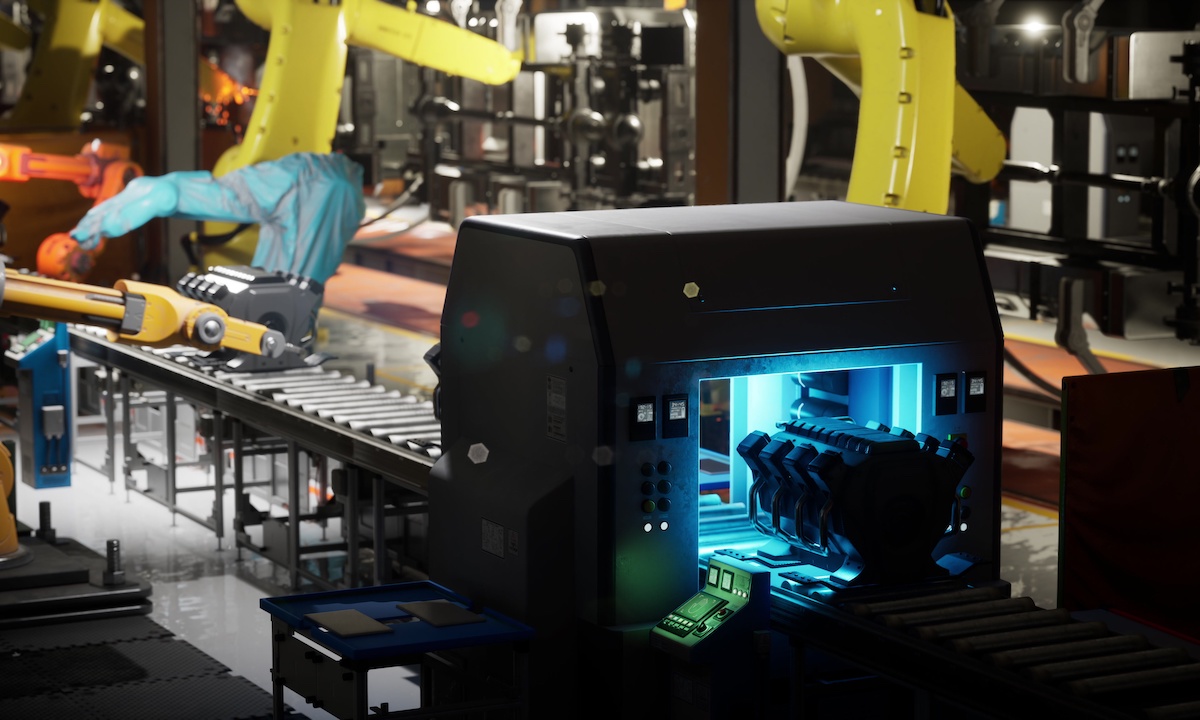
The distinction between traditional warehouse automation and physical AI—explicitly drawn by the World Economic Forum and cited in PYMNTS—is foundational to understanding the next wave of supply chain execution. Legacy automation excels at repetition: robotic arms placing identical boxes on conveyors, AGVs following fixed magnetic tape routes, AS/RS cranes retrieving SKUs from predetermined slots. Its strength is speed and precision; its weakness is brittleness. Introduce a slightly misaligned pallet, a damaged carton, or a temporary aisle obstruction, and the system halts—requiring human intervention to reset. Physical AI, by contrast, embeds real-time perception and adaptive reasoning into physical agents. This includes vision systems using 3D depth sensing to classify irregular package shapes, reinforcement learning models that optimize pick-path sequencing based on real-time congestion data from fleet telematics, and collaborative mobile robots that negotiate right-of-way in dynamic environments using decentralized consensus protocols. PYMNTS underscores that this isn’t incremental improvement—it’s a paradigm shift from executing pre-defined tasks to solving context-dependent problems.
Deployment economics reveal why physical AI is gaining traction. While initial hardware costs for AI-enabled robots remain 20–30% higher than legacy equivalents, total cost of ownership (TCO) flips within 18 months for high-variability environments. A PYMNTS case study of a European e-commerce fulfillment center showed that AI-powered sortation systems reduced manual exception handling by 78%, cutting labor costs by $4.2 million annually while increasing throughput during peak season by 22%. Crucially, physical AI enables capabilities previously deemed impractical: dynamic slotting that reassigns storage locations hourly based on real-time demand velocity and predicted replenishment windows; or ‘dark warehouse’ operations where lights-out facilities run autonomously for 22 hours daily, with human staff only intervening for maintenance or exception resolution. These outcomes depend on tight coupling between perception (cameras, LiDAR, acoustic sensors), cognition (edge AI models inferring intent from motion patterns), and action (robotic manipulation, path planning, fleet coordination).
The strategic implication extends beyond labor arbitrage. Physical AI transforms facility design philosophy. Legacy automation dictated fixed infrastructure: reinforced floors for heavy AGVs, dedicated charging zones, immovable mezzanines. Physical AI enables modular, reconfigurable layouts—where robots map and adapt to new floor plans overnight via SLAM (Simultaneous Localization and Mapping) algorithms. This agility supports rapid geographic expansion: a retailer entering a new market can deploy a fully functional micro-fulfillment center in 45 days, not 18 months, because the physical AI layer abstracts away infrastructure dependencies. PYMNTS notes that leading adopters view physical AI not as a replacement for human workers, but as a force multiplier that elevates human roles toward supervision, continuous improvement, and customer experience innovation—tasks requiring empathy and contextual judgment that AI cannot replicate. The convergence of physical AI with digital twin simulation also allows for ‘what-if’ testing of layout changes or process modifications in virtual environments before physical implementation, reducing deployment risk by 65% in benchmarked cases.
Strategic Implications: From Cost Center to Competitive Core
The convergence of autonomous decision-making, network-level visibility, and physical AI is recasting the supply chain from a cost center into a primary engine of competitive differentiation. PYMNTS’ reporting makes clear that this is not theoretical: enterprises achieving Stage 2 maturity report measurable advantages in customer acquisition and retention. A global electronics manufacturer reduced average order-to-delivery cycle time by 34% through AI-driven dynamic routing, enabling it to offer guaranteed 48-hour delivery to enterprise customers—a service its competitors could not match without unsustainable air freight costs. This translated directly into a 12% increase in enterprise contract renewals and a 7.3-point lift in Net Promoter Score. Similarly, a pharmaceutical distributor leveraged network-level visibility to achieve 99.98% cold-chain compliance across 12,000+ shipments monthly, winning exclusive distribution rights for two FDA-approved biologics whose temperature sensitivity had previously disqualified competitors. These outcomes demonstrate that supply chain AI is no longer about avoiding failure—it’s about enabling premium service tiers and unlocking new revenue streams.
Geopolitical volatility amplifies this strategic shift. As PYMNTS observes, supply chain diversification—driven by trade policy uncertainty, climate-related infrastructure risks, and regional conflict—requires decision velocity that exceeds human cognitive bandwidth. AI systems that continuously model tariff scenarios, assess nearshoring feasibility based on real-time energy costs and labor availability, and simulate multi-year capital expenditure payback under varying regulatory regimes provide executives with actionable intelligence, not just data dumps. The 25% reduction in disruption response times enabled by network visibility isn’t merely operational efficiency—it’s strategic resilience that allows enterprises to maintain market share during crises that cripple less agile competitors. This creates a virtuous cycle: superior responsiveness attracts higher-value customers, whose complex requirements further accelerate AI capability development, reinforcing the competitive moat.
For investors and boardrooms, the implications are unambiguous. Supply chain AI maturity is now a material financial metric. PYMNTS documents how credit rating agencies increasingly incorporate supply chain visibility scores into sovereign and corporate risk assessments, with firms lacking Tier-2+ visibility facing 15–20 basis point higher borrowing costs. Similarly, ESG frameworks now evaluate supply chain transparency as a core governance indicator, affecting index eligibility and investor stewardship ratings. The three-stage model (digitalization → AI-assisted adaptability → full autonomy) provides a clear roadmap for capital allocation: Stage 1 investments focus on data infrastructure and process standardization; Stage 2 targets decision-support AI with measurable ROI levers; Stage 3 requires strategic partnerships with AI-native platforms and rigorous governance frameworks. Enterprises treating AI as a tactical IT upgrade will be outmaneuvered by those recognizing it as the foundational architecture for the next era of global commerce—one where the supply chain doesn’t just deliver products, but actively shapes market opportunities.
Related Reading
- How Agentic AI Is Redefining Supply Resilience in 2026
- Digital Twins in Logistics: From Simulation to Real-Time Control in Q1 2026
Source: pymnts.com
This article was AI-assisted and reviewed by our editorial team.