Agility Deficit: The Structural Vulnerability Exposed in U.S. Warehousing
The warehouse automation landscape in the United States is confronting a systemic mismatch between technological deployment and operational reality. According to a targeted survey of 114 U.S. supply chain executives conducted by Lucas Systems and reported by DC Velocity, over half—51%—of respondents confirmed their automation systems are unprepared to respond to unforeseen changes, new requirements, or operational disruptions. This represents a foundational gap in how automation is architected, integrated, and governed across distribution centers. While capital investment in automation has surged post-pandemic, the underlying design philosophy remains anchored in static throughput models rather than dynamic resilience frameworks. Warehouses optimized for predictable volume and stable labor availability are now operating in environments defined by volatility—labor attrition, demand fragmentation, regulatory shifts, and infrastructure intermittency.
This agility deficit manifests most acutely during unplanned events. The survey reveals that 85% of respondents experienced up to 10 significant, unplanned disruptions in the past year alone, while an additional 7% reported suffering more than 10 such incidents. System downtime, equipment failure, labor shortages, and unexpected demand spikes are explicitly cited as paralyzing events. When automation lacks adaptive logic, each disruption triggers cascading manual interventions: resequencing pick paths, rerouting pallets manually, and overriding control systems—all actions that inflate error rates and delay SLA compliance. The consequence is a measurable degradation in service reliability, which directly impacts customer retention and contractual penalties.
What makes this structural vulnerability especially concerning is its persistence. The finding suggests the issue lies less in implementation fidelity and more in architectural assumptions baked into legacy and even newer-generation systems. Traditional automation—including AS/RS, fixed conveyors, and monolithic WMS platforms—was engineered for repeatability, not responsiveness. As Lucas Systems’ CMO Ken Ramoutar observed, “Unplanned warehouse disruptions are on the rise since the Covid pandemic. If your automation can’t quickly adapt to in-the-moment shifts, then your warehouses are at a real disadvantage.”
Rigidity as Cost Driver: How Inflexible Systems Inflate Operating Expenses
The financial toll of automation rigidity is substantial and precisely measured. 77% of surveyed executives reported that at least half of their deployed hardware or software systems are too rigid to respond effectively to unplanned disruptions. This ranges from conveyor lanes requiring physical reconfiguration to WMS modules lacking API-driven orchestration, and AMR fleets without dynamic traffic optimization layers. Crucially, rigidity compounds when systems are siloed—when warehouse control systems (WCS), warehouse management systems (WMS), and execution layers operate with minimal interoperability, a single point of failure cannot be mitigated by intelligent rerouting because the system lacks real-time visibility and autonomous decision logic.
“Disruptions such as system downtime, equipment failure, labor shortages, and unexpected demand spikes can paralyze a warehouse.” — Lucas Systems official statement
The economic impact is direct and severe. 60% of respondents who identified rigidity in their systems reported incurring 11%–25% additional operating costs or losses specifically attributable to lack of adaptability. These costs are not one-time incident expenses but recurring drains: overtime labor, expedited freight for missed commitments, inventory write-downs from mis-allocated stock, and SLA penalty fees. These figures reflect self-reported, bottom-line impacts felt by finance teams and operations leaders alike. The cost burden falls disproportionately on mid-tier enterprises where razor-thin margins mean an 11% cost increase can eliminate profitability on entire customer contracts.
This cost structure reveals a hidden ROI trap. Many organizations justify automation through labor substitution metrics but neglect the full cost of maintaining rigidity. When 72% of respondents stated it would take considerable effort to reconfigure their automation in response to disruption, they are describing engineering hours, system downtime, validation cycles, and training overhead—all of which constitute non-trivial CapEx and OpEx. Rigidity does not merely raise costs during crises—it inflates baseline operational complexity year-round, making continuous improvement initiatives harder to launch and sustain.
Adaptability as Strategic Imperative: Why 86% Demand It Now
The consensus among U.S. supply chain leadership is unequivocal: adaptability is no longer optional. 86% of respondents affirmed that adaptable warehouse technology is critical to their operations. This figure transcends industry verticals—retail logistics, pharmaceutical distribution, automotive aftermarket, and food and beverage all registered near-identical urgency. What distinguishes this sentiment from prior waves of automation enthusiasm is its grounding in empirical experience. Executives aren’t calling for adaptability because it sounds innovative; they’re demanding it because they’ve lived through three consecutive years of escalating disruption frequency. In fact, 51% of respondents reported experiencing more unplanned operational disruptions than three years ago, directly linking the post-Covid environment to heightened system stress.
This imperative reshapes procurement criteria and technology evaluation frameworks. Where legacy RFPs emphasized throughput velocity and uptime percentages, today’s evaluations increasingly prioritize modularity, API richness, simulation fidelity, and retraining latency. Vendors are now asked not only “How fast can you move 10,000 units per hour?” but “How quickly can you reroute those units when Zone B loses power?” Each scaling phase must include stress-testing against disruption scenarios—equipment failure modes, labor absenteeism thresholds, demand volatility bands—to validate adaptability claims. Without that validation loop, scaling simply amplifies fragility.
Crucially, adaptability is being reframed as a labor multiplier, not a labor replacement lever. While automation historically focused on eliminating headcount, adaptable systems enable existing personnel to manage greater complexity with higher precision. A supervisor using a dynamic task-allocation dashboard can rebalance workloads across zones during a sudden staffing shortfall, preserving throughput without sacrificing accuracy. This human-system symbiosis separates tactical flexibility from strategic resilience. And it explains why 26% of respondents using adaptable automation reported reducing operational costs by more than 25%—that reduction was realized through better resource alignment, reduced exception handling, and accelerated problem resolution cycles.
Self-Optimizing Systems vs. Static Infrastructure: A Functional Comparison
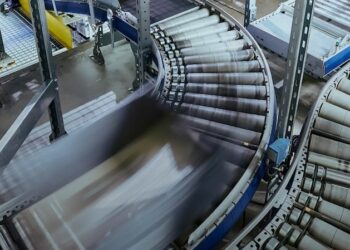
The distinction between rigid and adaptable automation is grounded in concrete functional architecture. Lucas Systems’ research draws a clear line between traditional warehouse infrastructure and next-generation self-optimizing solutions. AS/RS systems, fixed conveyors, and monolithic WMS platforms are engineered for high-volume, low-variability workflows. Their strength is deterministic repeatability; their weakness is that same determinism: when inputs deviate, the system cannot autonomously recalibrate. A conveyor jam halts the entire line; an AS/RS cell assigned to slow-moving SKUs cannot instantly repurpose itself for flash-sale velocity items without code-level intervention.
In contrast, self-optimizing systems integrate three core capabilities: real-time sensing, adaptive decision logic, and autonomous actuation. AMR fleets coordinated by cloud-based orchestration layers continuously model traffic flow, battery state, task priority, and zone congestion—then dynamically reassign missions without human input. AI-powered WCS ingests live labor availability, order profile shifts, and equipment health telemetry to re-optimize slotting and wave building in near real time. Key functional differences include:
- Rigid systems require pre-defined rules, physical reconfiguration, and IT-led change cycles measured in days or weeks.
- Self-optimizing systems execute software-defined reconfiguration in minutes via intuitive interfaces accessible to frontline staff.
- Rigid systems degrade nonlinearly under stress, with performance collapsing beyond threshold loads.
- Self-optimizing systems maintain baseline throughput while reallocating capacity to highest-value tasks during constraint periods.
This functional hierarchy directly correlates with business outcomes. Facilities deploying self-optimizing architectures report faster time-to-value on new automation investments, higher asset utilization across shifting demand curves, and significantly lower mean-time-to-recovery after incidents. Most importantly, they demonstrate measurable gains in labor productivity: supervisors spend less time firefighting and more time coaching, while associates engage with higher-cognitive tasks like exception resolution and process refinement.
ROI Quantification: From Labor Substitution to Systemic Resilience
Return on investment for warehouse automation is undergoing fundamental recalibration. Historically, ROI calculations centered on labor substitution—estimating FTE equivalents replaced and mapping those savings against CAPEX and maintenance costs. But when 60% of respondents incur 11%–25% additional operating costs due to rigidity, those costs directly offset any labor savings claimed in the original ROI model. Finance teams often see rising overtime budgets or expedited freight charges as “operational variances,” not as symptoms of automation architecture failure. The result is a distorted view that masks true TCO and delays corrective action.
A more rigorous ROI framework incorporates resilience-adjusted metrics: cost of disruption exposure, MTTR reduction, labor utilization elasticity, and service-level attainment delta. When these factors are included, adaptable automation demonstrates superior net value despite sometimes lower headline labor savings. Each time such a system absorbs a disruption without degradation, it preserves customer trust, avoids penalty clauses, and strengthens contract renewals—intangible benefits that accrue long after the five-year depreciation cycle ends. This is where the 26% of respondents reporting over 25% operational cost reduction through adaptable automation find their advantage: not in isolated efficiency gains, but in systemic stability that enables predictable growth.
For investors and boardrooms, adaptable warehouse technology functions as operational insurance—a hedge against volatility that pays dividends in margin protection, brand reputation, and strategic optionality. The 72% of respondents who say reconfiguration requires considerable effort are, in effect, carrying uninsured operational risk. In 2026, the most financially disciplined supply chain leaders won’t ask “How much labor can we replace?” They’ll ask “How much volatility can we absorb—and at what cost?” The answer determines not just quarterly earnings, but long-term market relevance.
Labor Strategy in 2026: From Substitution to Augmentation
The labor substitution narrative is reaching its functional limits. While early adopters achieved clear wins replacing repetitive tasks, the next frontier demands augmentation, not replacement. The Lucas Systems data confirms this pivot: 72% of respondents acknowledge that reconfiguring automation is labor-intensive, implying human expertise remains indispensable—not as manual labor to be eliminated, but as cognitive orchestrators of adaptive systems. Automation ceases to be valuable merely when it reduces headcount, and becomes essential when it multiplies human judgment, accelerates decision velocity, and extends workforce reach under volatile conditions.
This human-centric scaling model operates through three interlocking mechanisms. First, decision delegation: adaptable systems handle real-time micro-decisions (e.g., optimal robot path, best pick location), freeing supervisors to focus on macro-strategy (e.g., labor planning, SKU rationalization). Second, skill amplification: frontline workers use guided interfaces to diagnose equipment anomalies and adjust task parameters—transforming maintenance technicians into predictive analytics interpreters. Third, role evolution: as routine tasks automate, roles shift toward exception management and continuous improvement facilitation—skills inherently resistant to full automation and highly valued in resilient organizations. The 26% achieving over 25% cost reduction did so not by shrinking teams, but by redeploying them into higher-leverage activities.
Looking ahead, this evolution will accelerate. Labor markets remain tight, wage inflation persists, and workers increasingly prioritize tech-enabled roles over rote repetition. Automation that cannot adapt becomes a recruitment liability. Conversely, adaptable systems serve as talent magnets: they signal investment in modern tooling, respect for worker agency, and commitment to sustainable operations. Organizations that embed adaptability into their automation DNA don’t just outperform competitors operationally—they attract, retain, and develop the human capital required to navigate uncertainty. The 51% of systems deemed unprepared for disruption represent not just technical gaps, but strategic vulnerabilities that undermine workforce strategy, customer promise, and long-term viability.
Related Reading
- Dynamic WMS and Agentic AI: The Real-Time Revolution in Warehouse Fulfillment (2026)
- From Giants to SMEs: How RaaS Is Democratizing Warehouse Robotics Across Supply Chains
- Unlocking the ROI of Mobile Robots: Roboteon’s Warehouse Investment Impact Analysis (2026)
Source: dcvelocity.com
This article was AI-assisted and reviewed by our editorial team.