Strategic Stakes: Why 74% of EU External Trade Flows Through Maritime Gateways
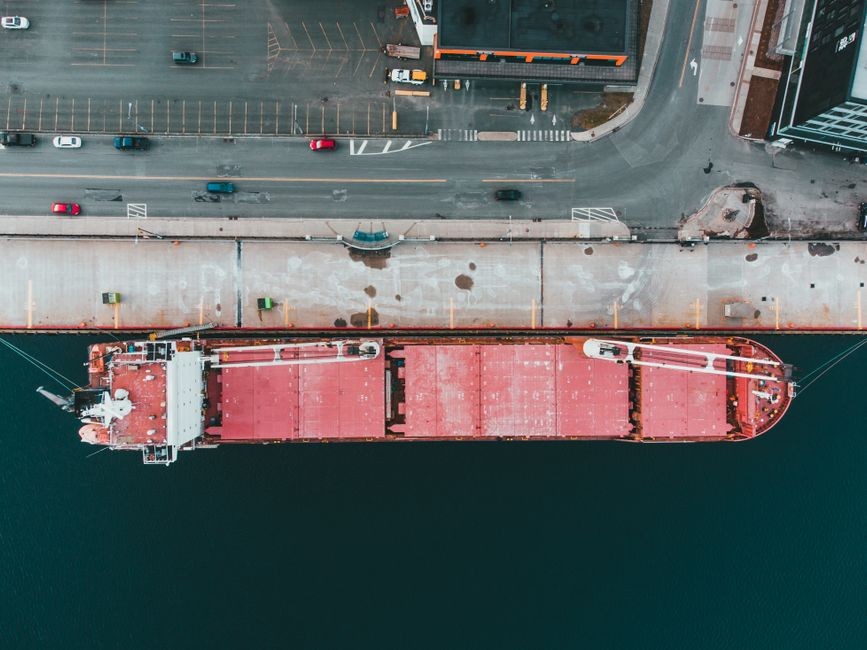
The European Commission’s March 4, 2026 announcement of the EU Ports Strategy is not a routine sectoral update—it is a systemic recalibration of Europe’s economic sovereignty. With EU ports handling approximately 74% of EU external trade, maritime gateways are the primary circulatory system for Europe’s global commerce. This figure, cited directly in the official Commission release, translates into tangible macroeconomic exposure: every disruption at Rotterdam, Hamburg, or Piraeus ripples across manufacturing supply chains from Bavarian auto suppliers to Polish electronics assemblers. The Commission frames ports not as passive infrastructure but as ‘strategic nodes’ where competitiveness, security, and sustainability converge—and where failure to modernise risks cascading inefficiencies across the Single Market.
This dependency is underpinned by staggering volume: EU ports handle 3.4 billion tonnes of goods annually. That encompasses everything from lithium batteries imported from South Korea to grain exports to North Africa, wind turbine components shipped across the Atlantic, and pharmaceutical intermediates moving between Ireland and India. Crucially, this volume does not include the nearly 395 million passengers annually who transit through EU ports—ferry services linking island regions like Corsica, Crete, or the Azores to mainland networks. Passenger mobility underpins regional cohesion and tourism revenue, both vital for EU cohesion policy objectives. The 74% external trade share is therefore not merely a customs statistic; it reflects deep structural integration with global value chains that demands coordinated modernisation.
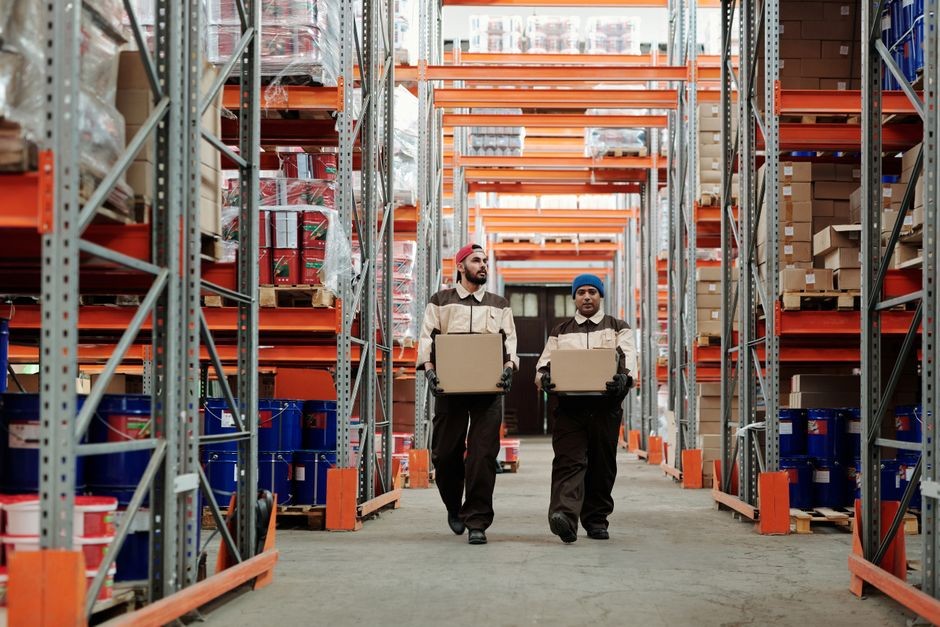
Underpinning all five strategic priorities is a workforce reality: EU ports directly support more than 423,000 direct jobs, concentrated in technical specialisms—crane operations, vessel piloting, hazardous goods supervision, digital platform management. The strategy recognises that port modernisation is not equipment replacement but human capital transformation. The Blue Generational Renewal Strategy and the Pact for Skills for the ports sector are designed to reorient this workforce toward green port technicians, AI-driven operations specialists, and cybersecurity professionals—the competencies that will determine whether Europe’s port infrastructure delivers on its dual-fuel vessel ecosystem or falls short of the energy transition.
Digital Friction: 1,200 Data Elements and the Path to 2.5 Million Saved Hours
Digital fragmentation remains the single largest operational tax on EU maritime logistics—a hidden cost buried in administrative overhead. The Commission’s strategy confronts this by elevating the EU Maritime Single Window (MSW) to foundational infrastructure. According to the source, ships currently submit up to 1,200 data elements for a single port call. These declarations flow to customs, health authorities, environmental agencies, port authorities, and national maritime safety bodies—often via separate portals, incompatible formats, and redundant validations. The result is staff time diverted from core operations: port planners reconciling duplicate manifests, terminal operators chasing missing certificates, shipping line compliance officers managing version-controlled paper trails across jurisdictions.
The MSW aims to collapse that complexity into one secure, standardised digital entry point. When fully implemented, the Commission and World Shipping Council both indicate it will save 2.2–2.5 million staff hours annually. Yet implementation remains uneven across Member States. As the World Shipping Council noted on the same day as the strategy launch—March 4, 2026—the MSW was ‘due last August’ but is ‘not yet fully implemented across Member States’. This gap reveals a structural tension: the EU sets ambitious digital targets, but national administrative capacities and legacy IT architectures vary widely. Without binding harmonisation deadlines or conditional funding tied to MSW rollout, the savings projection risks remaining aspirational rather than operational.
The implications extend beyond efficiency. Fragmented data systems undermine security and sustainability goals simultaneously. Customs agencies cannot detect illicit cargo patterns without cross-port analytics; environmental regulators cannot verify clean fuel usage without real-time bunker delivery logs shared across jurisdictions. WSC CEO Joe Kramek articulated the systemic risk directly: ‘European ports and maritime supply chains are only as secure as their weakest link.’ That weakest link is often the least digitised port authority, where paper-based declarations create analytical blind spots. The MSW is therefore less about administrative convenience and more about establishing a common digital immune system for Europe’s maritime domain—one that connects the EUR 2.5 trillion of EU trade moved annually by liner services into a coherent, visible, and auditable network.
“In a true single market, moving goods by ship within Europe should be as seamless as moving them by truck.” — Joe Kramek, CEO, World Shipping Council, March 4, 2026
Capital Deployment: CEF Projects Reshape European Port Geography
The Connecting Europe Facility (CEF) functions as the strategy’s geographic steering mechanism—not merely a funding instrument but a tool to rebalance infrastructure investment across the Union. Three projects announced in the March 4, 2026 release illustrate this approach. The Amsterdam Port OPS project receives EUR 5,877,621 in EU funding to develop onshore power supply for cruise ships, allowing vessels to connect to the local electricity grid while docked and switch off diesel engines—significantly reducing port-area air pollution and emissions. Already completed and operational, with five connection points installed along the quay, this project demonstrates the practical impact of CEF investment in enabling green port operations at scale.
In Poland, the Świnoujście port secures EUR 38,017,413 to deepen the port channel and create offshore wind farm terminal facilities—positioning this Baltic coast port as a key hub for offshore wind energy supply chains. The project enables large vessels to safely carry and service major offshore wind farm components, directly supporting clean energy development and economic growth in the region. Meanwhile, in Romania, the Constanța port obtains EUR 43,515,752 to modernise the Valu lui Traian marshalling yard—upgrading tracks, electrifying lines, and installing modern signalling systems to enable smoother, faster freight movements between the Black Sea and Central Europe, while simultaneously strengthening defence transport capacity.
The combined public investment of approximately EUR 87.4 million across these three projects reflects deliberate diversification toward strategic resilience. Each operates under strict CEF eligibility criteria that embed the strategy’s five priorities—demonstrating measurable CO2 reduction pathways, cybersecurity compliance, and workforce upskilling plans. For third-country investors considering EU port assets, these conditions are non-negotiable. The Commission explicitly references ‘guidance on foreign ownership and control, focusing on ports identified as strategic dual-use infrastructure’—a signal that equity stakes in terminals handling defence-related cargo or critical materials will trigger enhanced regulatory scrutiny regardless of investor origin, applying uniform rules across all third countries.
Security Architecture: Drug Trafficking, Cybersecurity, and Strategic Governance
Port security in the EU is undergoing a paradigm shift—from reactive law enforcement to proactive systemic resilience. The Commission’s strategy introduces layered mechanisms treating ports as integrated security domains. The European Ports Alliance (EPA) Public-Private Partnership on drug trafficking represents formal institutionalisation of intelligence cooperation between authorities and terminal operators. The strategy mandates establishing ‘frameworks for third-country port assessments’ and ‘background checks for port workers’—applying not only to operations staff but also to third-party contractors with access to sensitive areas. This positions security as a collaborative data function embedded in daily port operations, rather than a periodic enforcement activity.
At the digital layer, the strategy requires establishing a ‘forum for Member States’ cybersecurity and port authorities to exchange best practices’, alongside an ‘EU-wide security risk assessment to identify the most pressing cybersecurity risks and appropriate measures to mitigate them’. Port operational technology—berth allocation algorithms, terminal operating systems, automated equipment controllers—presents distinct attack surfaces from standard corporate IT. A compromised terminal system can delay vessel departures, disrupt just-in-time supply chains, and generate cascading economic costs. The cybersecurity framework, embedded across all five strategic priorities, creates accountability: ports accessing digital transformation funding must demonstrate adequate security postures as a precondition.
The foreign ownership provisions represent perhaps the strategy’s most consequential governance innovation. The Commission plans ‘guidance on foreign ownership and control, focusing on ports identified as strategic dual-use infrastructure’. This parallels EU approaches to other strategic assets: investment is not prohibited, but ownership structures must be transparent and control over critical functions limited. For global port operators with stakes in EU terminals, the 2026 strategy signals a tightening environment that evaluates investment through a lens of strategic autonomy—not as protectionism, but as principled application of the same criteria governing critical digital, energy, and defence infrastructure across the Union.
Energy Transition: Matching EUR 125 Billion Fleet Investment with Port Electrification
The EU’s maritime decarbonisation agenda rests on two converging pillars: vessel-side innovation and port-side enablement. The World Shipping Council’s data confirms that liner operators have invested EUR 125 billion in 1,100 dual-fuel vessels. These vessels require compatible fuel supply chains at ports—LNG bunkering, methanol storage, green hydrogen refuelling. The strategy’s Electrification Action Plan focuses on near-term enablers: shore power for berthed vessels, electrified heavy-duty equipment, and grid upgrades. The Amsterdam OPS project (EUR 5.9M) demonstrates this at scale—allowing cruise ships to connect to shore power and eliminate diesel engine operation entirely while docked, improving air quality for both port workers and city residents.
WSC’s March 4 response highlighted the critical complementarity: ‘Liner shipping has invested more than EUR 125 billion in over 1,100 dual-fuel vessels delivered or on order. Port infrastructure must match fleet investment with fuel supply and electrification.’ This positions public CEF funding not as subsidy but as infrastructure that unlocks returns on private capital already deployed. An LNG-capable vessel unable to bunker at its destination port loses the financial justification for its green premium. The strategy’s commitment to ‘accelerating permit-granting for strategic energy and environmental port projects’ directly addresses a known constraint—lengthy permitting processes in many EU jurisdictions delay commercial deployment of green port infrastructure and erode first-mover advantages for early-adopting operators.
WSC notably welcomes the strategy’s recognition of the need to simplify requirements under EU ETS and FuelEU Maritime, supporting a global IMO measure to avoid double payment. Shipping companies accept carbon pricing in principle but resist frameworks that layer EU-specific charges on top of global levies without proportional environmental benefit. The Commission’s commitment to global-first approaches on carbon markets will be critical for maintaining EU port competitiveness, particularly in the context of EUR 2.5 trillion of EU trade moved annually by liner services—a volume where routing decisions respond sensitively to total logistics cost signals, including regulatory overhead.
Three Supply Chain Scenarios: Implementation Pace Determines Port Network Leadership
Scenario 1 — Accelerated Implementation: If MSW achieves full Member State compliance, all three CEF projects deliver on schedule, and the cybersecurity framework is uniformly enforced, the strategic impact could be transformative. Intra-EU short-sea shipping costs could fall materially through reduced administrative friction and predictable berth allocation—validating WSC’s vision of maritime logistics as seamless as road transport. Ports like Constanța and Świnoujście could emerge as multimodal anchors capturing significant new trade flows in the Black Sea and Baltic corridors. Liner operators would benefit from standardised green fuel pricing across the network, improving ROI on EUR 125 billion dual-fuel fleet investment. The projected 2.2–2.5 million annual staff hours saved would represent measurable productivity gains for European maritime commerce.
Scenario 2 — Partial Implementation: The most probable near-term trajectory. MSW achieves high but incomplete compliance—national administrative exceptions persist in specific data categories. CEF projects deliver in Baltic and Black Sea regions, while Electrification Action Plan rollouts face grid constraints in Southern Europe. The result is a bifurcated network: northern ports achieve near-zero emissions berthing and AI-optimised operations, while some Mediterranean ports continue operating conventional equipment and fragmented declaration systems. Third-country investors adopt wait-and-see positions, delaying acquisition decisions until regulatory clarity emerges on the foreign ownership guidelines. Supply chain cost divergence becomes a market signal—cargo routes increasingly concentrate on high-performing green corridors.
Scenario 3 — Systemic Delay: If geopolitical disruptions interrupt funding continuity, or Member States fail to transpose strategy directives into national law, vulnerabilities compound. The 74% external trade dependency becomes a structural liability: port slowdowns amplify global supply chain volatility, and competitive positioning relative to non-EU gateways erodes. More critically, the 423,000 direct jobs supported by EU ports face structural pressure from automation without corresponding reskilling programs. The strategy’s social cohesion pillar would shift from proactive talent development to reactive displacement mitigation—a fundamental change in character. For global supply chain operators, this scenario would accelerate contingency routing strategies and multi-hub hedging, reducing the leverage that EU ports can exert as strategic chokepoints of European commerce.
Source: transport.ec.europa.eu
This article was AI-assisted and reviewed by our editorial team.