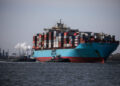
The maritime logistics sector—responsible for nearly 3% of global anthropogenic CO₂ emissions (IMO, 2023) and over 80% of world trade by volume—faces intensifying regulatory, investor, and customer pressure to decarbonize. Against this backdrop, the February 2026 announcement of an expanded green shipping partnership between Hapag-Lloyd and DSV stands out not merely as another corporate sustainability pledge, but as a concrete, operationally mature demonstration of how large-scale, commercially viable emission reductions can be transacted, verified, and scaled across complex global supply chains. The agreement secures 18,000 tonnes of CO₂e emission reductions on a well-to-wake basis, generated exclusively from second-generation biofuels used in Hapag-Lloyd’s owned and operated fleet beginning in 2026. Crucially, this is not a pilot or one-off trial—it is a structured, two-year Ship Green framework agreement, built upon a proven book-and-claim chain-of-custody mechanism and anchored in real fuel consumption data. This marks a pivotal inflection point: the transition from aspirational targets to auditable, bankable, and transferable carbon mitigation units within ocean freight.
The Book-and-Claim Breakthrough: Decoupling Physical Fuel from Financial & Environmental Claims
Historically, sustainable shipping initiatives faced a fundamental bottleneck: the physical limitation of biofuel availability. In 2025, global production of marine-grade advanced biofuels remains below 500,000 tonnes per year, representing less than 0.2% of total marine fuel demand (IEA, 2024). Direct physical blending—where a shipper contracts for biofuel to be loaded onto specific vessels serving their cargo—is logistically fragmented, route-dependent, and severely constrained by bunkering infrastructure. The Hapag-Lloyd–DSV agreement sidesteps this constraint through a rigorously defined book-and-claim model. Under this system:
- Only biofuel that has already been consumed in Hapag-Lloyd’s fleet—verified via onboard fuel logs, third-party audits, and mass-balance accounting—is allocated to DSV’s claim;
- No physical fuel is earmarked for DSV’s shipments; instead, DSV receives verified, standardized, and traceable emission reduction certificates (ERCs) tied to real-world fuel use;
- The chain-of-custody is certified under internationally recognized standards, ensuring no double-counting and enabling transparent reporting against Scope 3 emissions (Category 11: Use of Sold Products);
- This model allows DSV to offer its multinational clients—many with stringent SBTi-aligned net-zero commitments—a scalable, auditable pathway to reduce freight-related emissions without requiring them to reconfigure routing, renegotiate carrier contracts, or wait for port-by-port biofuel availability.
This operational elegance transforms biofuels from a niche, vessel-specific experiment into a tradable, portfolio-level decarbonization instrument. It mirrors the maturity seen in renewable energy attribute certificates (RECs) and represents the first major institutional adoption of such a mechanism at scale in deep-sea container shipping. As DSV’s Chief Sustainability Officer noted in internal briefings, “Book-and-claim removes the friction of geography and timing—it lets us deliver verifiable impact today, while the physical infrastructure catches up.”
Second-Generation Biofuels: Why Waste Feedstocks Are the Strategic Imperative
The agreement specifies that all 18,000 tonnes of CO₂e reductions will derive exclusively from second-generation biofuels produced from waste- and residue-based feedstocks. This is not a semantic distinction—it is a critical strategic and regulatory choice. First-generation biofuels (e.g., biodiesel from palm or soy oil) face mounting scrutiny due to indirect land-use change (ILUC) risks, competition with food crops, and lifecycle GHG savings that often fall short of IMO’s 65% minimum threshold for ‘advanced’ fuels. In contrast, second-generation marine biofuels—primarily hydroprocessed esters and fatty acids (HEFA) derived from used cooking oil (UCO), animal tallow, and non-food-certified waste greases—deliver well-to-wake GHG reductions of 80–90% compared to very low-sulfur fuel oil (VLSFO), according to the EU’s RED II certification framework and independent LCA studies by DNV and RightShip.
Hapag-Lloyd’s deliberate focus on these feedstocks reflects both environmental responsibility and long-term commercial foresight. Global UCO collection volumes are projected to grow from ~4.2 million tonnes in 2024 to >7.5 million tonnes by 2030 (IndexBox, 2025), driven by municipal collection mandates in the EU, China, and Southeast Asia. Meanwhile, tallow supply is tightly linked to global meat processing output—stable, predictable, and inherently waste-derived. Critically, these feedstocks avoid ILUC concerns entirely, granting them eligibility under emerging regulatory regimes like the EU’s FuelEU Maritime regulation, which imposes binding GHG intensity reduction targets starting in 2025 and escalates sharply through 2050. By anchoring its Ship Green program in HEFA from certified waste streams, Hapag-Lloyd ensures its emission reductions are not only scientifically robust but also future-proofed against tightening compliance requirements.
Strategic Alignment: Net-Zero Timelines, Customer Demand, and Competitive Differentiation
The timing and scale of this expansion reflect deeper strategic convergence. Hapag-Lloyd’s ambition to achieve net-zero fleet operations by 2045 requires a multi-pronged technology pathway: near-term biofuel scaling, mid-term ammonia/methanol trials, and long-term fleet renewal. With biofuels currently representing the only drop-in, zero-capex solution available at commercial scale, securing committed offtake partners like DSV de-risks investment in fuel procurement, supplier development, and crew training. For DSV, achieving net-zero across its own operations and value chain by 2050 hinges critically on Scope 3 emissions—which constitute over 92% of its total carbon footprint (DSV CDP Report, 2024). Ocean freight alone accounts for ~68% of those Scope 3 emissions. Thus, the Hapag-Lloyd partnership is not peripheral—it is central to DSV’s entire climate strategy.
Moreover, this move responds directly to escalating customer demand. A 2025 McKinsey survey of 120 Fortune 500 shippers found that 78% now require verified, route-specific Scope 3 emission data for tender evaluations, and 61% have mandated biofuel-based decarbonization pathways for key suppliers by 2027. Companies like Unilever, Nestlé, and IKEA are embedding contractual clauses requiring carriers to report and mitigate emissions using recognized frameworks like GLEC and Sea Cargo Charter. DSV’s ability to bundle verified ERCs with its end-to-end logistics solutions—backed by Hapag-Lloyd’s operational credibility—transforms sustainability from a cost center into a competitive differentiator and revenue driver. Early adopters report a 12–18% premium acceptance rate for green logistics offerings when backed by auditable, book-and-claim mechanisms.
Industry-Wide Implications: From Bilateral Deals to Systemic Infrastructure
While the Hapag-Lloyd–DSV deal is bilateral, its implications ripple across the ecosystem. First, it validates the economic viability of the book-and-claim model for marine fuels—potentially catalyzing similar agreements among Maersk, MSC, CMA CGM, and their top-tier logistics partners. Second, it accelerates investment upstream: biofuel producers like Neste, World Energy, and Diamond Green Diesel are expanding HEFA capacity with explicit reference to maritime offtake demand. Neste’s Singapore refinery expansion (coming online Q3 2026) adds 1 million tonnes/year of marine biofuel capacity, directly aligned with such framework agreements. Third, it pressures classification societies and verification bodies—DNV, LR, ABS—to standardize ERC issuance protocols, paving the way for interoperability and potential integration into digital platforms like the Global Shipping Initiative’s (GSI) proposed blockchain ledger for fuel attributes.
Yet significant challenges remain. The current cost premium for certified HEFA marine fuel remains 2.5–3.5x VLSFO, meaning the true cost of the 18,000-tonne reduction is estimated at $12–$18 million—borne primarily by DSV’s customers through green surcharges. Scaling requires cost convergence, which hinges on policy support (e.g., EU ETS maritime inclusion, US Inflation Reduction Act tax credits), feedstock diversification (e.g., algae, lignocellulosic residues), and cross-industry collaboration. Without coordinated action, fragmentation threatens progress: over 14 competing biofuel certification schemes currently exist, creating administrative overhead and verification uncertainty. The industry urgently needs harmonized global standards—akin to the IATA’s CORSIA framework for aviation—to unlock liquidity and attract institutional capital.
In conclusion, the Hapag-Lloyd–DSV agreement transcends a simple procurement contract. It embodies the maturation of green shipping from voluntary experimentation to systemic, commercially embedded decarbonization. By combining verified second-generation biofuels, a robust book-and-claim architecture, and alignment with science-based net-zero timelines, it delivers a replicable blueprint—one that balances environmental integrity, operational pragmatism, and financial scalability. As more carriers and forwarders follow suit, the question shifts from whether green shipping can scale, to how quickly the supporting infrastructure, standards, and investment will coalesce to make 18,000 tonnes the norm—not the exception.
Source: IndexBox, “Hapag-Lloyd and DSV Expand Decarbonization Partnership with Biofuel Agreement,” February 26, 2026. Available at https://www.indexbox.io/blog/hapag-lloyd-and-dsv-expand-decarbonization-partnership-with-biofuel-agreement/