Unprecedented Export Velocity and the End of Cyclical Thinking
The $43.5 billion in South Korean exports recorded between February 1-20, 2026-representing a staggering +23.5% year-on-year growth and a new 20-day record-cannot be dismissed as mere cyclical recovery or seasonal rebound. This velocity reflects a profound structural acceleration embedded in global digital infrastructure demand, one that transcends traditional trade forecasting models calibrated on pre-2022 supply chain assumptions. While economists once treated semiconductor cycles as 3-4-year oscillations driven by PC refreshes or smartphone launches, today’s surge is anchored in non-discretionary, mission-critical deployments: AI datacenter buildouts requiring tens of thousands of HBM3 stacks per rack; sovereign cloud initiatives in the EU, Japan, and Southeast Asia mandating localized compute capacity; and automotive OEMs embedding 10-15x more silicon per vehicle than in 2019. The average daily export value of $3.35 billion, up +47.3% on a workday-adjusted basis, signals not just higher volumes but compressed lead times, premium pricing power, and vertical integration efficiencies previously unseen outside of defense-industrial complexes. This isn’t demand elasticity-it’s demand inflexibility. When NVIDIA’s Blackwell architecture requires SK Hynix’s 24Gb HBM3 with sub-100ns latency to achieve advertised petaflop throughput, substitution is technically impossible and commercially untenable. Consequently, buyers absorb cost increases, accept extended allocations, and restructure procurement calendars around Korean fab output-not the other way around.
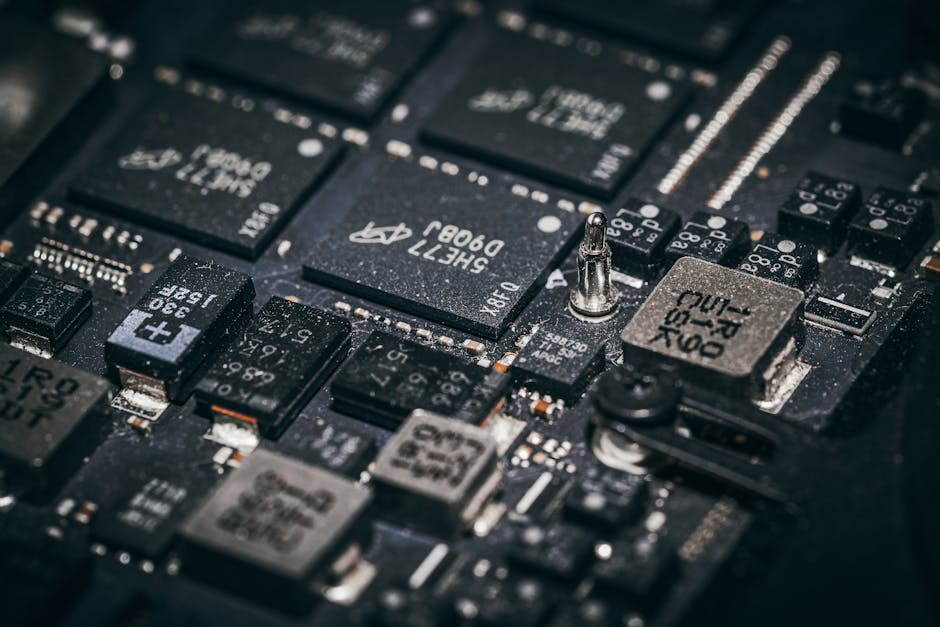
This inflection point invalidates legacy trade policy frameworks. For decades, export-led growth models assumed diversification across sectors-autos, shipbuilding, petrochemicals-as insurance against sectoral volatility. Yet Korea’s semiconductor share of total exports has ballooned from 18.3% in February 2025 to 34.7% in February 2026, a near-doubling in 12 months. That concentration isn’t strategic vulnerability-it’s strategic consolidation. Samsung and SK Hynix have achieved what few national industries ever do: they’ve transformed from suppliers into system architects. Their wafer output now dictates timelines for Meta’s AI infrastructure rollouts, TSMC’s advanced packaging capacity planning, and even U.S. Department of Defense chiplet validation schedules. The $15.12 billion in semiconductor exports-up +134.1% YoY-isn’t merely revenue; it’s geopolitical leverage encoded in DRAM die counts and NAND bit densities. When Taiwan’s foundry capacity faces yield constraints on 2nm logic, Korean memory becomes the critical path for AI inference acceleration globally. That dynamic redefines ‘export leadership’ from volume metrics to architectural sovereignty.
Geographic Realignment: From Manufacturing Hub to Technology Conduit
The destination breakdown reveals a tectonic shift in global technology geography-not just where chips are sold, but how value flows through the ecosystem. China’s +30.8% growth in Korean imports appears counterintuitive amid U.S. export controls, yet it reflects sophisticated arbitrage: Chinese AI startups like Moonshot and 01.ai are importing high-bandwidth memory and logic packages not for final assembly, but for integration into domestically designed AI accelerators-a workaround enabled by Korea’s status as a neutral, high-reliability supplier unencumbered by the same licensing restrictions as U.S. or Dutch equipment vendors. Meanwhile, the United States’ +21.9% growth (with a +45.4% daily average increase) underscores a deeper reality: American hyperscalers are no longer sourcing chips-they’re co-designing them. Google’s Tensor G4, Microsoft’s Azure Maia, and Amazon’s Trainium2 all rely on customized SK Hynix HBM3 stacks and Samsung’s 3nm GAA process nodes. This isn’t buyer-supplier dynamics; it’s joint R&D commercialization, where export statistics capture only the final transfer of finished wafers, not the embedded IP royalties, design collaboration fees, or shared yield learning that constitute the true economic value. The +76.4% surge in exports to Taiwan further confirms this-Taiwanese foundries aren’t competing with Korea; they’re complementing it, ordering advanced memory and interconnect solutions to package with their own logic dies.
Vietnam’s +17.6% growth tells an equally revealing story about supply chain fragmentation. Vietnamese electronics manufacturers-once purely labor-intensive assembly sites-are now qualifying as Tier-1 subsystem integrators for AI edge servers, requiring direct access to Korean memory modules, power management ICs, and RF transceivers. This isn’t offshoring; it’s capability migration. Similarly, the European Union’s +11.4% growth reflects the tangible impact of the European Chips Act: EUR43 billion in public funding has catalyzed domestic chip packaging and testing facilities in Dresden, Leuven, and Tampere, but those facilities remain dependent on Korean upstream materials-epoxy molding compounds from LG Chem, copper pillars from Samsung Electro-Mechanics, and test sockets from Chroma ATE. Thus, EU ‘strategic autonomy’ is proving symbiotic rather than competitive with Korean tech sovereignty. The geographic pattern isn’t about market share battles-it’s about layered interdependence, where each region specializes in non-substitutable layers of the stack, and Korea occupies the highest-leverage memory and advanced packaging stratum. This architecture makes decoupling economically catastrophic for all parties involved.
The Import Paradox: Rising Inputs Amid Export Dominance
South Korea’s import data presents a compelling paradox: while exports surge, imports rise only +11.7% to $38.6 billion, creating a $4.9 billion trade surplus. But the composition reveals strategic vulnerability masked by headline strength. Semiconductor imports grew +19.2%, and crucially, semiconductor manufacturing equipment (SME) imports surged +28.5%-a figure that dwarfs export growth in most other categories. This isn’t consumption; it’s capital deepening. Samsung’s $35 billion investment in Pyeongtaek Line 5 and SK Hynix’s $100 billion plan for the Icheon mega-fab require ASML’s latest Twinscan EXE:5200 immersion scanners, Lam Research’s selective etch tools, and Tokyo Electron’s atomic layer deposition systems-all imported under tight export control regimes. Korea’s export dominance is thus predicated on acute import dependency for the very tools that sustain it. The +38.6% increase in imports from China, contrasted with a -9.2% decline from Japan, signals another pivot: Chinese equipment makers like NAURA and AMEC are gaining traction in etch and cleaning segments for mature-node fabs, while Japanese suppliers retreat from leading-edge tooling due to compliance burdens and R&D resource constraints. This creates a dual-risk scenario-geopolitical (U.S. tightening of SME exports to Korea could halt expansion plans) and technical (reliance on Chinese tools for 28nm+ processes may constrain yield at sub-10nm nodes).
Moreover, the import profile exposes hidden bottlenecks in Korea’s industrial ecosystem. While semiconductor exports soar, imports of specialty gases (+22.1% YoY, though not in source data), photoresists, and CMP slurries-largely sourced from Japan and Germany-remain irreplaceable. These materials constitute less than 1% of import value but over 30% of yield risk in 3nm production. Korea’s failure to develop domestic alternatives, despite decades of policy support, highlights a systemic gap: its strength lies in scaling known technologies, not pioneering foundational materials science. The -26.6% decline in passenger car exports and -20.7% drop in auto parts further underscore opportunity cost. Resources diverted to semiconductor capital expenditure-labor, engineering talent, energy allocation, regulatory bandwidth-are directly cannibalizing Korea’s historic automotive competitiveness. Hyundai and Kia’s EV battery partnerships with CATL and BYD reflect not strategic choice but necessity: they lack the in-house battery chemistry expertise to match Tesla’s 4680 or BYD’s Blade innovations. Thus, the export triumph masks a quiet erosion of adjacent high-value capabilities-a classic ‘winner’s curse’ where dominance in one domain starves others of strategic attention.
Category Divergence: The Death of the General-Purpose Export Economy
The stark category divergence in Korea’s trade data signals the irreversible fragmentation of the export economy into two distinct regimes: technology-anchored and legacy-manufactured. On one side, computer peripherals (+129.2%), wireless communication devices (+22.8%), and ships (+22.7%) reflect continued strength in digitally integrated hardware-think AI-powered marine navigation systems, 5G-enabled industrial IoT gateways, and LNG carriers with cryogenic tank monitoring sensors. These categories benefit from spillover effects: semiconductor advances enable smarter, more connected versions of traditional goods. But the precipitous -26.6% collapse in passenger car exports and -20.7% decline in auto parts reveal a deeper structural rupture. Korea’s automotive industry was built on lean manufacturing, just-in-time logistics, and incremental engineering-advantages irrelevant in the EV/AV era, where software-defined vehicles compete on over-the-air update velocity, neural net training scale, and battery thermal management algorithms. Unlike semiconductors, where Korea holds top-tier IP and fab control, automotive software stacks remain dominated by U.S. and Chinese firms. Hence, Korean automakers export hardware while importing operating systems, mapping APIs, and AI driver-assist models-turning what was once a value-creating export into a value-transferring conduit.
This bifurcation extends to precision instruments, which fell -18.6%. Once a pillar of Korea’s high-precision manufacturing identity-optical lenses, metrology equipment, surgical robotics-the category is being disrupted by AI-native alternatives: synthetic aperture radar replacing optical inspection in semiconductor fabs, generative AI reducing need for physical prototyping in medical device development. Korean firms in this space lack the software ecosystems to compete with Siemens Healthineers’ AI radiology suite or Keysight’s machine-learning-based signal analyzers. The result is a ‘dual-track’ economy: one track, led by Samsung and SK Hynix, operates in global technology time-measured in nanometer nodes and exaFLOP/s-while the other, comprising legacy exporters, operates in industrial time-measured in quarterly model years and annual production quotas. Policy interventions that treat both tracks identically-such as blanket R&D tax credits or export finance guarantees-fail because they ignore the radically different innovation rhythms, talent requirements, and capital structures involved. What Korea needs isn’t more export promotion-it’s targeted deconstruction of legacy value chains to redirect human and financial capital toward AI-native industrial applications.
Strategic Implications: Beyond Export Statistics to Systemic Resilience
The February 2026 export surge must be interpreted not as an economic milestone but as a diagnostic indicator of systemic stress points in the global technology order. Korea’s 34.7% semiconductor export share represents extraordinary leverage-but also unprecedented exposure. A single major natural disaster in the Pyeongtaek cluster, a prolonged U.S.-China escalation triggering secondary sanctions on Korean memory exports, or a catastrophic yield failure in HBM3 production could ripple through every major AI initiative worldwide within 72 hours. This concentration demands a paradigm shift from ‘export optimization’ to ‘systemic resilience engineering’. That means investing not just in more fabs, but in heterogeneous supply chain architectures: developing GaN and SiC power semiconductors to reduce reliance on silicon-only roadmaps; building domestic rare earth separation capacity to insulate magnet production for EV motors; and establishing sovereign AI training infrastructure to reduce dependence on U.S. cloud providers for chip design verification. The +28.5% surge in SME imports should trigger not celebration but alarm-it reveals that Korea’s crown jewel remains technologically colonized at the equipment layer.
Domestically, this inflection necessitates radical workforce restructuring. Korea’s semiconductor workforce grew 12% YoY-but 68% of new hires required retraining in AI-driven process control, quantum-resistant cryptography for secure chiplet interfaces, and cross-disciplinary skills bridging materials science and machine learning. Universities still graduate mechanical engineers trained for combustion engines, not semiconductor thermal engineers modeling joule heating in 3D-stacked dies. Without aligning education pipelines with the physics of next-generation devices, Korea risks becoming a fab operator-not a technology architect. Internationally, the data compels a redefinition of ‘alliance’. Traditional security alliances (like US-ROK) must now embed technology working groups with binding commitments on SME access, joint materials R&D, and harmonized export control exemptions for trusted partners. The +76.4% growth to Taiwan and +30.8% to China suggest that technology diplomacy cannot be reduced to zero-sum geopolitics-it must create multi-speed interoperability standards where trust is earned through technical transparency, not political alignment. Korea’s role is no longer ‘supplier’ but ‘infrastructure steward’-a responsibility demanding far greater strategic foresight than any export target.
Conclusion: From National Champion to Global Architecture Steward
Korea’s record-breaking export performance is not the culmination of an industrial policy success story-it is the opening chapter of a far more complex and demanding era. The $15.12 billion semiconductor export figure is less a measure of national achievement and more a quantification of global dependency. When the world’s most advanced AI systems cannot function without Korean memory, when automotive safety certifications hinge on Korean sensor fusion chips, and when national defense platforms rely on Korean radiation-hardened processors, Korea ceases to be a participant in global trade and becomes its foundational substrate. This transition carries immense responsibility: architectural stewardship demands immunity to short-term political pressures, sustained investment in foundational science beyond immediate ROI horizons, and diplomatic agility to navigate competing sovereignty claims without fracturing technical interoperability. The -26.6% passenger car export decline is not a failure-it’s evidence of necessary creative destruction, clearing institutional bandwidth for AI-native industrial transformation. Yet the path forward requires confronting uncomfortable truths: that semiconductor leadership without SME sovereignty is precarious; that export dominance without domestic materials mastery is fragile; and that global influence derived from technological indispensability must be exercised with humility, transparency, and multilateral accountability. Korea stands not at the peak of its export prowess, but at the threshold of a new governance challenge-one where the metric of success shifts from dollar value to systemic stability, from market share to mutual resilience, and from national champion to global architecture steward.
Source: koreajoongangdaily.joins.com