India’s Boldest Trade Finance Gambit: The ₹25,060-Crore Export Promotion Mission
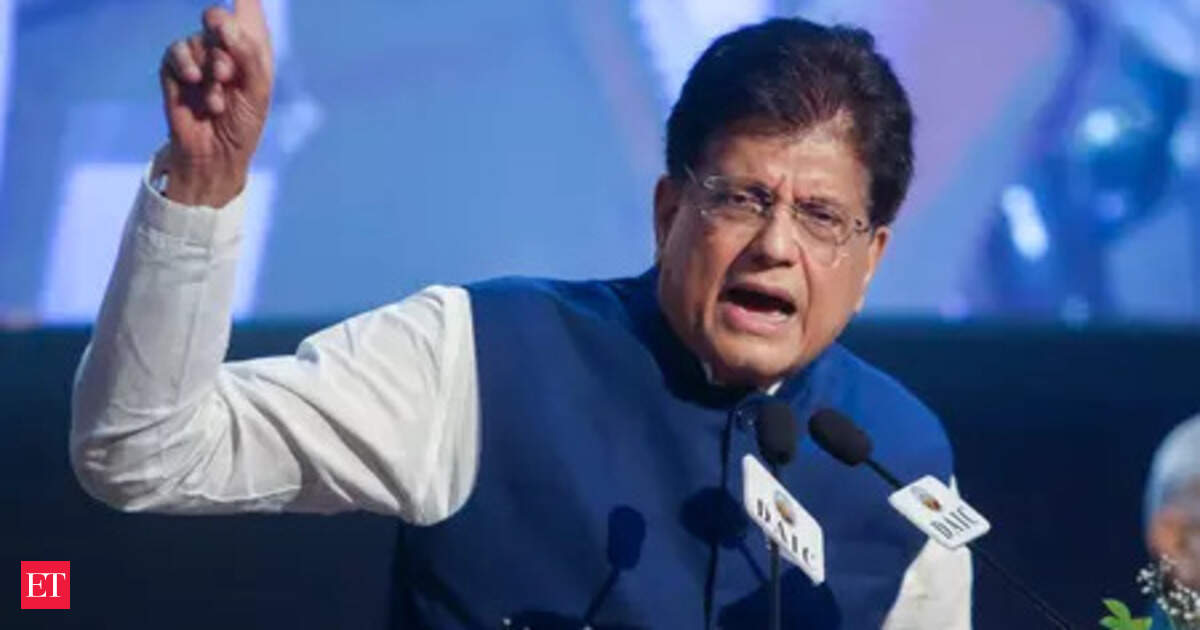
On February 20, 2026, India’s Commerce Minister Piyush Goyal formally launched seven new interventions under the Export Promotion Mission (EPM), a six-year, ₹25,060-crore (approximately $2.9 billion) programme designed to systematically overhaul the country’s export support architecture. The EPM is not merely an incremental funding increase — it represents a fundamental restructuring of how India supports its micro, small and medium enterprises (MSMEs) in accessing global markets, with trade finance innovation at its core. By consolidating over a dozen previously fragmented export-support schemes into a single digitally driven framework, the Indian government is making its most ambitious play yet in the global competition for supply chain finance modernisation.
The timing is anything but coincidental. The Asian Development Bank’s 2025 Trade Finance Gap Survey pegged the global shortfall at $2.5 trillion, with MSMEs in emerging markets bearing the brunt. India, home to more than 63 million MSMEs that account for over 45% of the country’s export revenues, has long struggled with a paradox: its small enterprises are globally competitive on cost but systematically disadvantaged in financing. Average payment terms for Indian MSME exporters have stretched from 60 days in 2020 to over 90 days in 2025, creating working capital gaps that traditional banking channels have been unwilling or unable to fill. The EPM aims to break this cycle through a combination of factoring subsidies, credit guarantees, and digital infrastructure investments that collectively address the full spectrum of trade finance barriers.
Export Factoring Subsidies: Unlocking Working Capital Through Receivables Monetisation
The centrepiece of the EPM’s trade finance package is a 2.75% interest subvention on export factoring transactions processed through entities recognised by the Reserve Bank of India (RBI) or the International Financial Services Centre Authority (IFSCA). Each MSME exporter can claim up to ₹50 lakh (approximately $58,000) annually in subsidised factoring costs. Unlike traditional bank loans that require collateral and lengthy approval processes, factoring allows exporters to sell their receivables to a third-party factor in exchange for immediate cash — typically within 2-5 business days — without encumbering their balance sheets.
India’s choice to prioritise seller-side factoring over buyer-led supply chain finance (reverse factoring) is strategically significant. Reverse factoring programmes, such as those offered by major platforms like C2FO, Taulia, or PrimeRevenue, depend on anchor buyers with strong credit ratings. For India’s predominantly small-scale exporters selling to fragmented buyer bases across Africa, the Middle East, and Southeast Asia, this model is often impractical. Seller-side factoring, by contrast, can function without buyer cooperation, making it far more accessible to the millions of MSMEs that constitute the backbone of India’s export economy. However, factoring penetration in India remains dismally low at just 1.2% of GDP, compared to 5.8% in China and 13.5% in the UK (FCI Global Factoring Statistics 2025). Whether a 2.75% subsidy can meaningfully move the needle on institutional participation remains an open question.
A critical and often overlooked aspect of the policy is its mandatory digital processing requirement. All subsidised factoring transactions must flow through approved digital platforms, creating a data trail that serves multiple purposes: fraud prevention, credit scoring enrichment, and the gradual construction of a national export trade finance data infrastructure. Globally, the digitalisation of trade finance has accelerated rapidly — from Singapore’s Networked Trade Platform to the UAE’s MAQASA initiative — and India’s digital-first approach positions it to leapfrog legacy paper-based systems that still dominate trade finance in many emerging markets.
Dual-Track Digital Credit: E-Commerce Lending and Overseas Inventory Finance
Recognising that cross-border e-commerce is fundamentally reshaping trade finance demand patterns, the EPM introduces a dual-track credit architecture specifically designed for digital exporters. The first track — the Direct E-Commerce Credit Facility — offers loans of up to ₹50 lakh with an unprecedented 90% government guarantee, reducing lender risk exposure to just 10% and dramatically lowering the barrier to credit approval. The second track — the Overseas Inventory Credit Facility — targets exporters maintaining stock abroad, providing up to ₹5 crore (approximately $580,000) in financing with 75% guarantee coverage and the same 2.75% interest subvention, capped at ₹15 lakh annually.
The dual-track design reflects a sophisticated understanding of how cross-border e-commerce differs from traditional B2B trade. Traditional trade finance instruments — letters of credit, documentary collections, bank guarantees — were designed for high-value, low-frequency transactions between known counterparties. Cross-border e-commerce, by contrast, involves high-frequency, low-value, multi-SKU transactions with rapid inventory turnover. Amazon Global Selling data indicates that Indian cross-border e-commerce exports exceeded $12 billion in 2025, but over 60% of sellers reported cash conversion cycles of 3-6 months. The Overseas Inventory Credit Facility directly addresses this bottleneck by enabling sellers to finance their FBA (Fulfilled by Amazon) or equivalent overseas warehouse inventory at subsidised rates.
In the broader competitive landscape, China’s cross-border e-commerce financing ecosystem is considerably more advanced. Alibaba International’s credit guarantee services, SHEIN’s seller financing programmes, and Temu’s working capital solutions have created a comprehensive support infrastructure for Chinese exporters. India’s government-subsidised approach represents a different model — less market-driven but potentially more inclusive — and the competition between these two paradigms will be one of the defining narratives in global trade finance over the coming years.
Credit Enhancement for High-Risk Markets: Confirmed Letters of Credit and Beyond
One of the EPM’s most strategically important but least discussed measures is the introduction of confirmed letter of credit (L/C) and credit enhancement mechanisms to facilitate exports to new and high-risk markets. The structural challenge is well understood: when buyers are located in markets with weak banking systems — much of Sub-Saharan Africa, Central Asia, and parts of Latin America — the issuing bank’s credit rating is often too low for international confirming banks to add their guarantee. Without confirmation, exporters cannot obtain pre-shipment or post-shipment finance, effectively locking them out of these high-growth markets.
India’s approach mirrors programmes long operated by peer export credit agencies: Japan’s NEXI, South Korea’s K-Sure, and China’s Sinosure all provide similar credit enhancement services. However, India’s coverage for MSMEs in this space has historically been negligible, with the Export Credit Guarantee Corporation (ECGC) focusing primarily on large corporates. The EPM’s explicit inclusion of MSME-targeted credit enhancement fills a critical gap and could unlock significant export volumes to Africa and Southeast Asia — two regions where India has substantial diaspora-driven trade relationships but limited financial infrastructure to support them. The International Chamber of Commerce (ICC) estimates that 40% of rejected trade finance applications globally involve transactions with counterparties in emerging markets, suggesting the addressable opportunity is enormous.
FLOW and LIFT: Logistics Infrastructure as a Trade Finance Risk Mitigant
The relationship between logistics efficiency and trade finance risk is direct and quantifiable: longer transit times and higher logistics costs expand the risk window for financiers, leading to higher pricing and lower approval rates. The EPM addresses this nexus through two complementary programmes. FLOW (Facilitating Logistics, Overseas Warehousing and Fulfilment) provides up to 30% cost support for overseas warehousing and fulfilment infrastructure projects over three years. LIFT (Logistics Interventions for Freight and Transport) reimburses up to 30% of eligible freight costs for exporters in India’s northeastern and hilly regions, capped at ₹20 lakh annually.
The World Bank’s 2025 Logistics Performance Index (LPI) ranked India 38th globally, an improvement from 47th in 2023 but still significantly behind China (7th) and Vietnam (23rd). India’s logistics costs remain stubbornly high at approximately 14% of GDP, compared to the developed-economy average of 8%. For remote-area MSMEs, domestic transportation from production sites to ports can consume 15-25% of total export costs, making many otherwise competitive products economically unviable for international markets. FLOW and LIFT are modest in scale — the subsidies alone will not transform India’s logistics landscape — but they signal a welcome shift in policy thinking from isolated financial interventions toward holistic supply chain competitiveness.
The overseas warehousing dimension deserves particular attention. China has built a global network of over 2,500 overseas warehouses spanning more than 200 countries, providing Chinese exporters with a decisive advantage in delivery speed and customer experience. India’s overseas warehouse infrastructure is embryonic by comparison. FLOW represents the first systematic government effort to close this gap, and its success will be closely watched by other emerging-market economies seeking to replicate the model.
Challenges Ahead: From Policy Blueprint to Ground-Level Impact
The EPM’s seven measures constitute an impressive policy architecture, but India’s track record with export support schemes warrants cautious optimism. Previous programmes — including MEIS (Merchandise Exports from India Scheme) and its successor RoDTEP (Remission of Duties and Taxes on Exported Products) — suffered from chronic implementation delays, with some exporters waiting 12-18 months for subsidy disbursements. The EPM’s digital-first design may mitigate some of these issues, but institutional capacity, inter-agency coordination, and financial literacy among MSMEs remain significant barriers. The government’s stated ambition of achieving $2 trillion in total exports by 2030 — more than double the current level — will require not just policy innovation but sustained execution excellence.
For global supply chain finance practitioners, the EPM represents a significant data point in the broader evolution of trade finance policy. The International Chamber of Commerce’s 2025 Global Trade Finance Survey identified digitalisation, inclusion, and platformisation as the three defining trends in trade finance reform. India’s EPM addresses all three dimensions: digital platform processing for factoring, inclusive subsidies reaching down to micro-enterprises, and a unified framework consolidating fragmented schemes. If executed effectively, the EPM could establish India as a model for how large emerging economies can leverage public-sector intervention to close the trade finance gap — a template that countries from Bangladesh to Nigeria to Indonesia will be watching with keen interest. The next 18 months will be decisive in determining whether this ambitious blueprint translates into measurable impact on the ground.
Source: economictimes.indiatimes.com