The 30% Tariff Wall: Africa’s Agricultural Export Crisis
The year 2026 marks a watershed moment for African agricultural exporters navigating the United States market. The so-called “Liberation Day” reciprocal tariffs, imposed in August 2025, slapped a uniform 30% levy on African goods entering the US, fundamentally altering the cost structure of the Africa-US trade corridor. The competitive distortion is starkest in the citrus sector: a South African orange grower shipping to Newark pays 30% at the border, while a Chilean competitor unloading identical navel oranges at the same New Jersey pier pays just 10%. This 20-percentage-point differential is not a rounding error — it represents the difference between a thriving export relationship and a slow-motion liquidation of market share. Wandile Sihlobo, chief economist of the Agricultural Business Chamber of South Africa and senior fellow at Stellenbosch University, notes that without AGOA, some South African goods would face roughly 33% rather than 30%, as the additional 3% represents the US Most-Favoured Nation tariff.
Yet paradoxically, South African agricultural exports hit an all-time record of $15.1 billion in 2025, a 10% increase over the previous year. Even as US-bound shipments declined 11% in Q3 and plunged 39% in Q4, the full-year total to the US still reached $504 million. This apparent contradiction reveals the central dynamic of the 2026 trade landscape: Africa is not retreating from the American market — it is reconfiguring its entire export architecture, product by product, logistics corridor by logistics corridor, trade agreement by trade agreement. The survival playbook being written in real time across the continent will reshape African supply chains for the next decade.
AGOA’s Hollow Extension: Preference Without Protection
President Trump’s February 3, 2026 extension of the African Growth and Opportunity Act was greeted with public relief that masks private despair. AGOA, the 25-year-old trade preference program granting duty-free access to more than 6,500 product lines from 32 eligible sub-Saharan nations, was renewed only through December 31, 2026 — a single-year patch retroactively covering the lapse since September 2025, but emphatically not the three-to-five-year runway that exporters and investors had demanded. South Africa’s Trade Minister Parks Tau stated diplomatically that “the current renewal, while short, provides the necessary relief to companies in the context of the tariffs implemented by the US.” His “while short” parenthesis speaks volumes about the limited strategic value of this extension.
The arithmetic of AGOA’s hollowing is unforgiving. Under the original framework, a South African citrus exporter paid zero tariff. Today, that same exporter pays 30% under the Liberation Day levy. AGOA’s duty-free waiver now applies to a zero-dollar tariff line that has been replaced by a 30% emergency tax. The preference exists on paper but has been functionally gutted in practice. US Trade Representative Jamieson Greer made Washington’s expectations explicit: “AGOA for the 21st century must demand more from our trading partners and yield more market access for US businesses, farmers, and ranchers.” The message is clear — reciprocity requirements are coming, and African nations face not just tariff barriers but political pressure to open their own domestic markets to American agricultural exports.
The Continental Pivot: Africa’s 53% Solution
With the US market contracting, African agricultural exporters are making a historic turn — toward each other. The data is striking: in Q4 2025, Africa accounted for 53% of South Africa’s agricultural exports, a dramatic leap from 44% across the full year of 2024. The United States, by contrast, represented just 4% of South Africa’s agricultural shipments in the same period. This is not cyclical fluctuation — it is structural transformation. Wolfe Braude, fruit desk manager at Agbiz, confirms that South Africa’s fruit sector, historically oriented toward Rotterdam, Felixstowe, and Philadelphia, is redirecting containers to Lagos, Mombasa, and Dar es Salaam. The infrastructure remains imperfect and payment systems are fragmented, but the direction of travel is unmistakable and irreversible.
The African Continental Free Trade Area (AfCFTA), long confined to policy white papers and ministerial communiqués, has suddenly become an operational imperative rather than an aspirational framework. Ironically, AGOA’s 2026 extension may be remembered less for what it preserved in the US market than for what it accelerated within Africa. Minister Tau’s subtext is unmistakable: if Washington will not offer predictable, multi-year access, African exporters will build their own single market. This transformation demands massive investment in intra-African supply chain infrastructure — cold chain logistics networks, cross-border electronic customs clearance systems, regional warehousing hubs, and digital trade finance platforms. The companies and investors who position themselves at the nexus of this intra-African trade buildout stand to capture enormous value over the coming decade.
Asia’s Open Door: New Trade Corridors from Seoul to Shanghai
The diversification push extends well beyond the African continent. After 20 years of negotiations, South Korea agreed on January 23, 2026 to permit imports of South African table grapes. The timing reflects Seoul’s recalibration of agricultural trade policy in an era of geopolitical competition — but unlike Washington, Seoul is not erecting 30% tariff barriers. China has also signed new phytosanitary protocols facilitating expanded fruit imports from South Africa, while the Middle East is steadily increasing its share of African agricultural exports. Asia and the Middle East together accounted for 17% of South Africa’s agricultural exports in Q4 2025, more than quadruple the US share. These numbers represent a fundamental reorientation of African trade flows toward the Global South and the Indo-Pacific region.
Braude offers measured optimism: “We expect to see these markets play an increasing role in SA’s export basket, but building volumes and consumer demand in new destinations takes time.” The caution is warranted — a phytosanitary protocol is not a purchase order, and market access is not market presence. But for African exporters facing US trade barriers in 2026, diversification is no longer a strategic option; it is a survival requirement. From a supply chain perspective, this reorientation demands redesigning international logistics networks: establishing new shipping routes, building trade transit capabilities at Asian ports, and adjusting packaging and quality standards to meet diverse market requirements. The cold chain infrastructure investments needed to serve Asian and Middle Eastern markets differ significantly from those optimized for transatlantic routes, creating both challenges and opportunities for logistics providers.
Kenya’s Textile Dilemma: Jobs, Food Safety, and Bilateral Negotiations
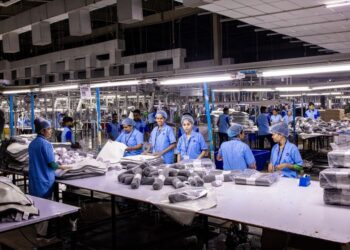
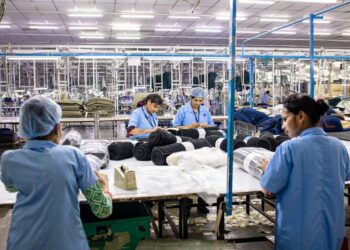
East Africa’s most deeply integrated AGOA beneficiary faces a particularly complex calculus. Kenya’s export profile to the United States is dominated not by citrus or wine but by apparel and textiles. The “third-country fabric” provision — a technical but existential clause allowing least-developed AGOA beneficiaries to source textiles globally while still exporting duty-free to the US — has sustained an estimated 68,000 direct jobs and nearly 700,000 dependents in Kenya’s export processing zones. When AGOA lapsed between September 2025 and February 2026, Kenyan manufacturers faced full duties of 15% to 42% on shipments to American retailers. Margins evaporated instantly and orders were cancelled, devastating communities dependent on the garment industry.
Kenya’s response has been characteristically pragmatic: pursue a bilateral free trade agreement with Washington. Negotiations first opened under the Trump administration in February 2020, were shelved under Biden in favor of a narrower Strategic Trade and Investment Partnership (STIP), and after eight inconclusive rounds remain only 50% complete. But US demands extend beyond aggregate trade balances. American trade officials have repeatedly flagged Kenya’s sanitary and phytosanitary standards as barriers — particularly restrictions on bovine embryos, beef, dairy, poultry, and corn. The specific flashpoint: Kenya imposes a 10 parts per billion aflatoxin limit on corn versus the US domestic standard of 20 ppb, alongside a stricter 13.5% maximum moisture content requirement. From Nairobi’s perspective, these are science-based food safety protections; from Washington’s, they are non-tariff barriers denying American farmers market access. This tension between food sovereignty and trade liberalization will define Kenya-US relations for years to come.
Survival Strategies and the Future of African Supply Chains
Confronting the multi-layered challenges of US trade barriers in 2026, African exporters are developing a systematic survival playbook. The first imperative is to aggressively exploit the US product exemption list — coffee, tea, fruit juices, cocoa, spices, avocados, bananas, citrus, mangoes, and other food categories exempted from the 30% levy. These exemptions reflect not American generosity but supply chain necessity: Southern Hemisphere oranges arrive during the Northern winter, and macadamias are not commercially grown in the continental US. Understanding that a product’s strategic value to American consumers determines its tariff fate — more than any preference program — is essential for export strategy formulation.
The second pillar is accelerating intra-African trade and Asian market development, requiring massive investment in cold chain logistics infrastructure, cross-border electronic customs systems, and regional trade finance platforms. From a broader supply chain perspective, 2026 marks a historic inflection point in African trade patterns. The continent is no longer treating the United States as an irreplaceable end market but as one component of a diversified export network. The profound implications will unfold over the next five to ten years: the rise of intra-African trade corridors, deeper South-South cooperation with Asia, and the formation of entirely new regional supply chain ecosystems. For global supply chain professionals, Africa’s market reconfiguration represents not just new commercial opportunities but a structural transformation of the global trading system — from a Western-centric hub-and-spoke model toward a more multipolar, regionalized trade architecture. Africa’s exporters are fighting for survival, but their battle is a microcosm of the broader reshaping of global trade order.
Source: The Exchange Africa