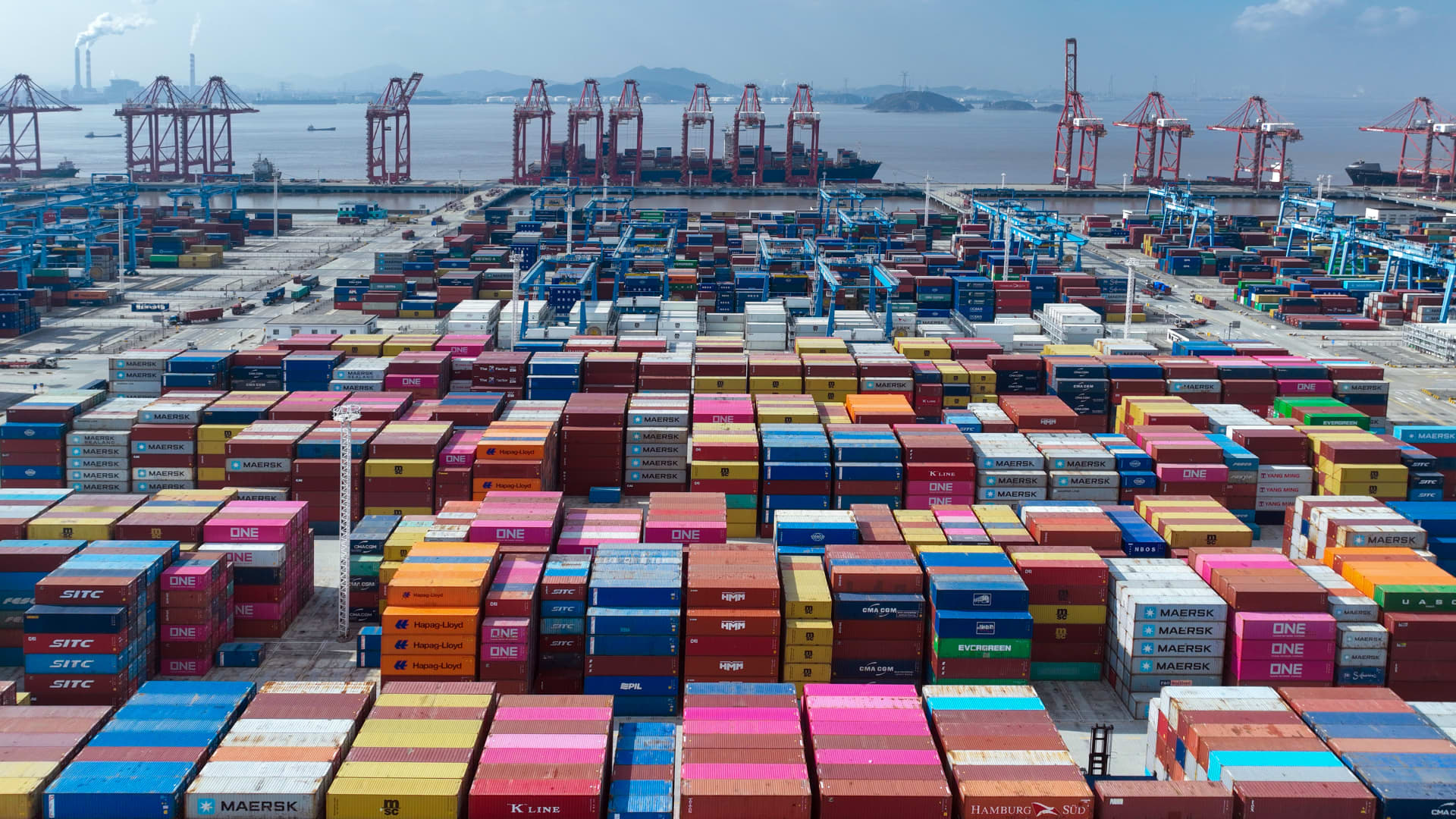
A year after the imposition of Trump-era tariffs on China, a notable resurgence in activity is evident across the manufacturing and logistics sectors. Despite initial concerns over potential slowdowns, major factories and ports are experiencing unprecedented levels of operation. This article delves into the intricate dynamics shaping the current landscape of Chinese supply chains, analyzing key data points and trends that underscore this remarkable turnaround.
Factory Output Surges
In Dongguan, a significant manufacturing hub, factories are operating at near-full capacity with over 50% of their output destined for the U.S. market. This surge in production is indicative of a strong demand from American consumers and businesses, despite tariffs that were expected to dampen such exports.
The resilience shown by these manufacturers points towards an ability to absorb costs and continue operations at high levels, suggesting robust supply chain management practices are in place. Additionally, it highlights the deep integration of Chinese manufacturing within global trade networks, making disruption challenging without significant alternative capacities.
Port Activity Soars
Major ports across China have seen a substantial increase in container handling volumes. For instance, during the week ending February 1st, major ports handled over 40% more containers compared to the same period last year. This growth is attributed partly to accelerated shipments ahead of the Lunar New Year celebrations and the ongoing trade truce secured in October 2025.
- Ningbo’s port terminals are reported to be beyond their capacity, with vessels overbooked by more than 20%.
- The Shanghai Containerized Freight Index (SCFI) has climbed to between 1,400 and 1,656, surpassing the 15-year average range of 1,337-1,568. Rates have peaked three weeks earlier than usual.
The heightened activity at ports not only reflects increased trade volumes but also suggests a strong logistical infrastructure capable of handling such surges effectively.
Transportation Costs and Logistics
In line with the surge in demand for shipping services, there has been a notable increase in transportation costs. Trucking rates have risen by 80%, reflecting an imbalance between supply and demand within logistics networks. This escalation is likely to be felt across various sectors as it adds further cost pressures on already strained supply chains.
Air freight rates are also higher year-over-year, indicating a broader trend of increased costs in the logistics sector. The rise in transportation expenses underscores the need for continued investment and innovation within these networks to maintain efficiency and competitiveness.
Market Outlook and Future Trends
The recent data from China Beige Book reveals that both output and orders are accelerating sharply, suggesting a robust market outlook for Chinese manufacturers and exporters. The one-year trade truce secured in October 2025 has provided a crucial window of stability for businesses to plan and operate without the threat of sudden tariff hikes.
- Manufacturers are leveraging this period to further integrate advanced technologies and streamline operations, positioning themselves for sustained growth even as global trade dynamics evolve.
- The resilience demonstrated by Chinese supply chains in the face of tariffs underscores their adaptability and capacity for innovation. This is crucial as future challenges, including potential changes in international trade policies, continue to loom on the horizon.
As we move forward, the ability of these supply chains to navigate through changing geopolitical landscapes will be critical. The current surge in activity may provide a strong foundation for continued growth and expansion into new markets globally.