In-Depth Analysis
Why Fashion Companies Adopt Supplier Scorecards
===============================================
This tool helps establish more transparent procurement relationships and better measure supply chain metrics.
Published Date: October 17, 2024
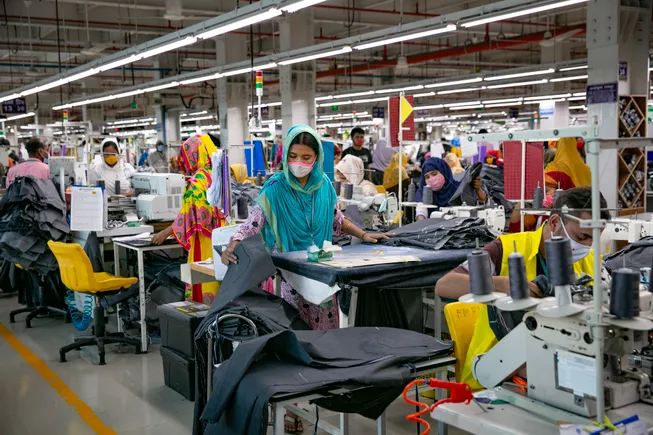
Transparency is crucial in the fashion industry, which has faced accusations of overproduction, human rights violations, and unethical sourcing practices. With consumers and regulators pushing for more sustainable products and reduced emissions, fashion companies increasingly need to assess and document the impact of their operations and business partners, according to Sheng Lu, a professor and director of graduate programs in Fashion & Apparel Studies at the University of Delaware.
Supplier scorecards can be an important tool for achieving this visibility.
Experts told Supply Chain Dive that by using these scorecards, fashion companies can obtain standardized data that is both cost-effective to collect and easy to analyze. Scorecards also facilitate consistent and transparent conversations with brands like Patagonia on quantifiable performance metrics.
“We prefer using scorecards because other options may be more subjective, making it harder to accurately and objectively measure performance and its improvement over time,” said Elisabeth Mast, Senior Director of Supply & Production, and Wendy Savage, Director of Social Responsibility, Traceability & Animal Welfare, in a conversation with Supply Chain Dive.
### Selecting the Right Indicators
According to Robert Conradt, Vice President of Sourcing and Manufacturing at Brooks Running, scorecards can help companies build successful supplier partnerships by providing feedback pathways that improve relationships and align goals.
For this athletic equipment company, supplier scorecards are the go-to choice for informal feedback, as informal feedback during quarterly business meetings has proven ineffective.
Instead, Brooks uses an internal scorecard to evaluate the performance of its first- and second-tier footwear suppliers based on eight criteria, including manufacturing quality, responsible sourcing, and sustainability.
Conradt noted that the company selects these indicators based on factors most critical to their business and values, refining them over several years. Each indicator is measured throughout the calendar year or two product seasons (spring and fall).
“Our supply quality team first develops scorecard inputs by defining our internal key business needs, determining how to measure these needs, and then identifying which measurable parameters in suppliers impact or relate to these needs.”
Daniel Moral
Vice President of Supply Quality at Estée Lauder
However, Conradt pointed out that Brooks’ internal procurement practices may make it difficult for suppliers to comply with social and environmental laws, regulations, and their own codes of conduct.
To address this issue, Brooks collaborates with the non-profit Better Buying Institute, allowing suppliers to anonymously evaluate buyers’ purchasing behaviors, including demand planning and forecast accuracy. Brooks reviews these evaluations to identify areas needing improvement.
Like Brooks Running, cosmetics manufacturer Estée Lauder uses supplier scorecards to measure multiple factors, including quality, service, innovation, and sustainability performance, according to Daniel Moral, Vice President of Supply Quality at Estée Lauder.
He said, “Our supply quality team develops the inputs for the scorecard by first defining our internal key business needs, determining how to measure these needs, and then identifying which measurable parameters from suppliers impact or relate to these needs.” These metrics help the cosmetics company monitor its value chain to assess risks and opportunities for improvement.
Similarly, Patagonia uses supplier scorecards to evaluate production quality, product quality, and social and environmental impacts, according to Mast and Savage. “We do not want to measure performance in isolation; this is important to us.”
For this outdoor clothing company, this means assessing on-time delivery rates, defect rates, social and environmental audits, as well as efforts towards renewable energy.
### Implementation Details
Supplier scorecards require a unified system for sharing data and information. Creating such a framework can be challenging, but the key to successful implementation is transparent communication, according to industry executives.
For example, Patagonia had to decide how to provide effective feedback through face-to-face meetings or email. By taking a thoughtful and transparent approach, the company rarely sees “pushback” and has opportunities to support areas needing improvement.
“These two systems together allow us to have complete communication—we are not just evaluating them; they also share what needs improvement.”
Elisabeth Mast and Wendy Savage
Patagonia executives
However, compliance remains a challenge.
Patagonia cited two instances where the company had to work with suppliers to provide on-site support to correct issues.
While many suppliers are eager to improve and resolve problems, some still struggle to do so effectively even with support. In cases where relationships cannot align ideologically and threaten product quality, companies may choose to stop working with these suppliers.
### Bridging Gaps
Although supplier scorecards are a popular and often successful procurement tool, they are not perfect. According to Lu’s research, even large American fashion companies sometimes struggle to collect sustainability data beyond their first-tier suppliers.
This can lead to inconsistent data quality, especially in the absence of industry standards and due to data complexity, according to Lu.
However, there are ready-made solutions: third-party audits and sustainability certifications.
“Scorecards help us understand and evaluate supplier performance in a tangible, consistent, and scalable way,” Moral said.
Earlier this year, outdoor clothing and accessories brand Cotopaxi completed a remediation plan for a first-tier supplier after a 2022 third-party audit found unethical recruitment practices. To address the violation, Cotopaxi and other brands using the same supplier sought help from third-party auditors and remediation consultants.
Other companies opt for online scorecard and rating platforms like EcoVadis. For example, Estée Lauder uses this platform to evaluate suppliers’ ESG journeys, identify areas needing improvement, and navigate ESG risks, according to Mindi DeLeary, Vice President of Global Responsible Sourcing, Sustainability & Upstream Procurement.
While some companies have made progress, the journey towards a sustainable and ethical fashion supply chain remains long. However, supplier scorecards can be a useful tool in this process.
“Scorecards help us understand and evaluate supplier performance in a tangible, consistent, and scalable way,” Moral said.
—
Source: Supply Chain Dive