Skip to content

ESG & Regulation · Technology · Warehousing & Transport

Analysis

ShipStation scales global expansion to 5 new markets

ShipStation is expanding into five new markets — Canada, Mexico, Australia, the UK, and Germany — by Q3 2025. The rollout includes localized language support, tax compliance tools, and integrations with 12 regional carriers. The company will allocate 37% of its 2025 product development budget to cross-border automation. Internal data shows international orders from U.S. merchants rose 42% YoY in 2024, with 68% bound for the targeted countries. Merchants reportedly spend 11.5 hours weekly on manual cross-border logistics tasks.

Original source: Source information pending

ShipStation scales global expansion to 5 new markets

E-commerce facilitator ShipStation eyes major global expansion.

ShipStation plans to enter five new international markets as part of its global growth initiative. The company confirmed it will launch localized operations in Canada, Mexico, Australia, the United Kingdom, and Germany by Q3 2025. This expansion follows its acquisition by Stamps.com in 2019 and subsequent integration into the broader Pitney Bowes ecosystem in 2021.

Platform localization and carrier integrations

The rollout includes native language support, local tax compliance tools, and pre-negotiated shipping rates with regional carriers. ShipStation will integrate with Pitney Bowes’ global parcel network and add support for 12 new regional carriers, including Canada Post, Australia Post, Royal Mail, Deutsche Post DHL, and Correos de México.

Each market launch will feature dedicated customer onboarding teams staffed with bilingual logistics specialists based in Toronto, Mexico City, and London. The company stated it will deploy 37% of its 2025 product development budget toward cross-border automation features, including real-time duty and tax calculation engines compliant with EU VAT MOSS and UK IOSS frameworks.

Customer demand and strategic rationale

data cited by ShipStation’s chief product officer, Will O’Donnell, international orders from U.S.-based merchants grew 42% year-over-year in 2024, with 68% of that volume directed to the five target countries.

O’Donnell noted:

“Merchants told us they’re spending an average of 11.5 hours manually managing cross-border labels, customs forms, and carrier rate shopping — time we can eliminate with this release.” — Will O’Donnell, Chief Product Officer, ShipStation

Source: FreightWaves

Compiled from international media by the SCI.AI editorial team.

Ask SCI.AI Finished reading? Continue with SCI.AI. Explore the related policy, route, company and historical context. Continue asking
Ecommerce Air Cargo Growth Flattens to 0% Amid EU Regulatory Shift
ESG & Regulation

Ecommerce Air Cargo Growth Flattens to 0% Amid EU Regulatory Shift

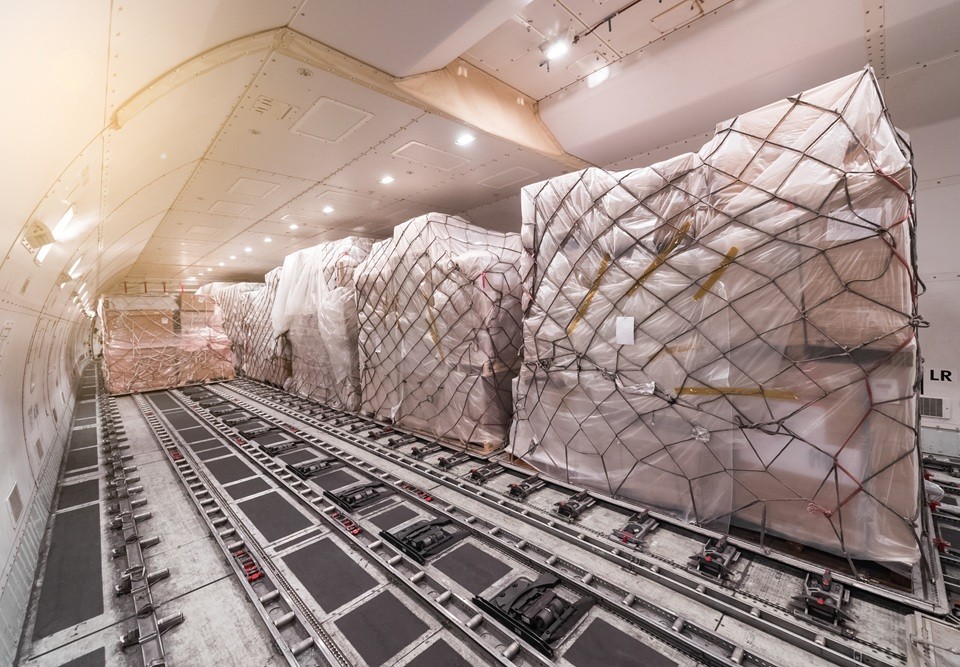
Global ecommerce air cargo growth has flattened to 0% year-over-year in 2024, down from 41% growth two years ago, according to Rotate CEO Ryan Keyrouse at the EU CBEC forum in Liège. New EU and US de minimis regulations triggered a 24% volume drop and 28% freighter capacity decline in July alone — equivalent to 5,000 annual flights lost. Budapest’s capacity fell nearly 60% between June and August. Rotate’s survey of 100+ industry respondents indicates no near-term rebound, with most forecasting recovery only after six months. Meanwhile, tech hardware now accounts for 68% of Asia-Pacific exports outside China, and total air cargo demand is forecast to rise 3% over the next year — matching capacity growth of 3.3%.

India’s Western Freight Corridor Cuts Logistics Costs to 7%
Warehousing & Transport

India’s Western Freight Corridor Cuts Logistics Costs to 7%

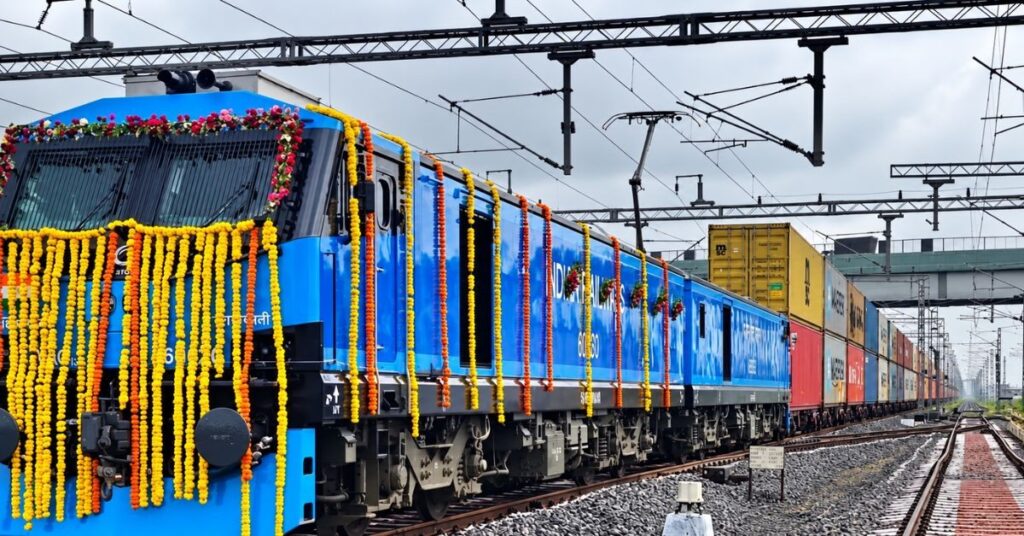
India’s Western Dedicated Freight Corridor (WDFC) is now fully operational after Prime Minister Narendra Modi inaugurated its final 326 km section, completing the rail link from Dadri, Uttar Pradesh, to JNPT in Maharashtra. Built at a cost of over Rs 20,700 crore as part of the Rs 1.3 lakh crore, 1,500 km corridor, it will cut national logistics costs to ~7% from ~14%. Maharashtra CM Devendra Fadnavis highlighted double-decker trains carrying cargo equal to 250 trucks each and noted 70–80% of capacity is reserved for ISO container traffic between North India and western ports like JNPT, Mundra, and Pipavav.

Global Air Cargo Demand Rises 6% in August Amid Rate Slowdown
Warehousing & Transport

Global Air Cargo Demand Rises 6% in August Amid Rate Slowdown

Global air cargo demand rose 6% year on year in August 2026, extending strong summer performance after a 5% gain in July. Spot rates averaged $3.13/kg — 24% above 2025 — though annual growth has eased from 41% in May to 28% in July and further in August. China’s e-commerce exports to Europe fell 25% YoY following the EU’s 1 July removal of the €150 duty-free threshold. China-to-Western Europe spot rates dropped another 6% MoM to $3.85/kg. Transpacific lanes strengthened, with Northeast Asia to North America averaging $5.76/kg (+2% MoM). Xeneta forecasts 4% global air cargo growth for 2026.

Welcome Back!

Login to your account below

Create New Account!

Fill the forms below to register

Retrieve your password

Please enter your username or email address to reset your password.

Scan to share via WeChat

Open WeChat and scan the QR code to share

QR Code

Add New Playlist