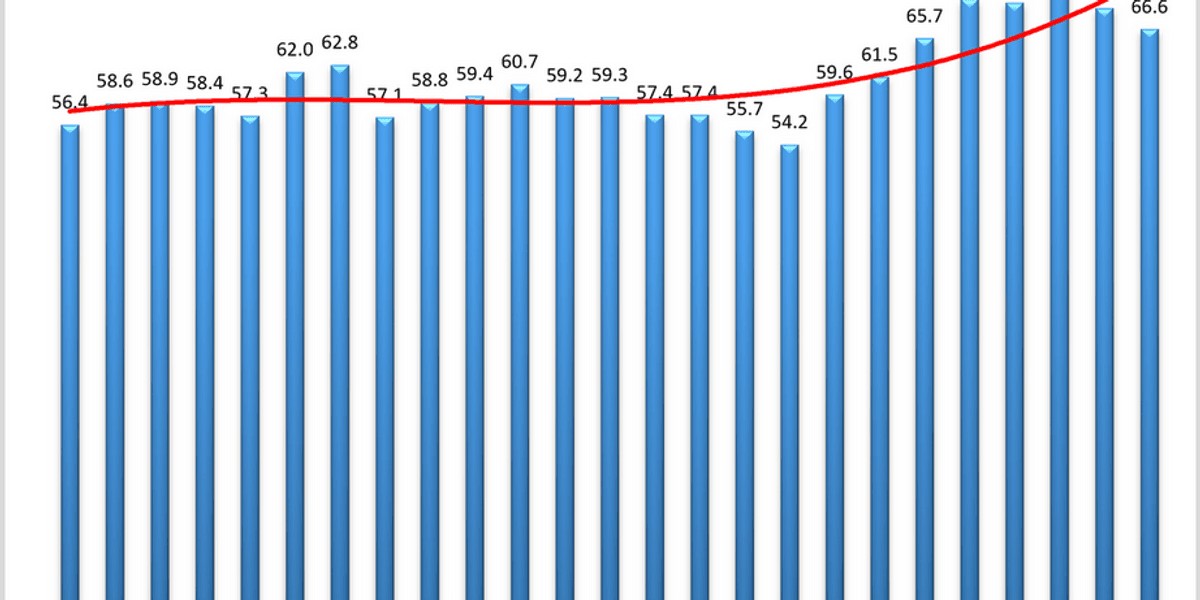
According to www.thescxchange.com, the Logistics Managers’ Index (LMI) declined to 66.6 in August — down more than two points from July’s 68.9 and more than four points from June’s four-year peak of 71.1.
Slowing expansion amid cooling inventories
The LMI, a monthly survey-based measure of U.S. warehousing and transportation activity, registered 66.6 in August — its second consecutive monthly decline. A reading above 50 indicates industry-wide expansion; below 50 signals contraction. Inventory levels fell more than two points to 52.8, marking the second straight month of cooling.
The slowdown reflects reduced stockpiling across the supply chain, with upstream firms reporting a mild contraction in inventory at 49.0. This shift follows aggressive inventory buildup in June and aligns with intensifying cost pressures cited in the report.
Researchers noted that the August reading continues a broader trend of deceleration after the index hit its highest level since 2022 in June. The report was released on Sep 02, 2026, and covers data collected during the month of August 2026.
Data-driven context for logistics performance
The LMI is compiled by logistics managers across the United States and serves as a leading indicator for freight volumes, warehousing demand, and transportation capacity utilization. Its August value of 66.6 remains well above the 50 expansion threshold but signals diminishing momentum compared to recent highs.
Inventory readings dropped sequentially for two months: from 55.0 in July to 52.8 in August. Upstream firms’ inventory index fell further — to 49.0 — indicating actual contraction in that segment.
While no specific dollar figures or investment amounts are tied directly to the LMI result itself, the broader editorial context on the same domain includes a $1 billion factory expansion plan announced by GE Appliances on Sep 03, 2026, underscoring continued capital deployment despite moderating logistics growth.
Source: thescxchange.com
Compiled from international media by the SCI.AI editorial team.