Skip to content

Southeast Asia Supply Chain

Analysis

Vietnam Proposes Far East–Vietnam–ASEAN Logistics Corridor

Vietnam’s Finance Minister Ngô Văn Tuấn proposed a Far East–Vietnam–ASEAN logistics corridor during the Russia–ASEAN Business Dialogue in Vladivostok. Bilateral trade hit $4.77 billion in 2025—25% of total Russia–ASEAN trade—and Vietnam is the first ASEAN nation to sign an FTA with the Eurasian Economic Union. Five cooperation pillars include supply chain integration, transport-logistics infrastructure, AI/digital collaboration, green energy, and financial/tourism expansion. Vietnam welcomed 21.2 million international tourists in 2025 and is developing international financial centers in Ho Chi Minh City and Da Nang. The minister urged implementation of the Russia–ASEAN Action Plan 2026–2030 through concrete, measurable projects.

Original source: Source information pending

Vietnam Proposes Far East–Vietnam–ASEAN Logistics Corridor

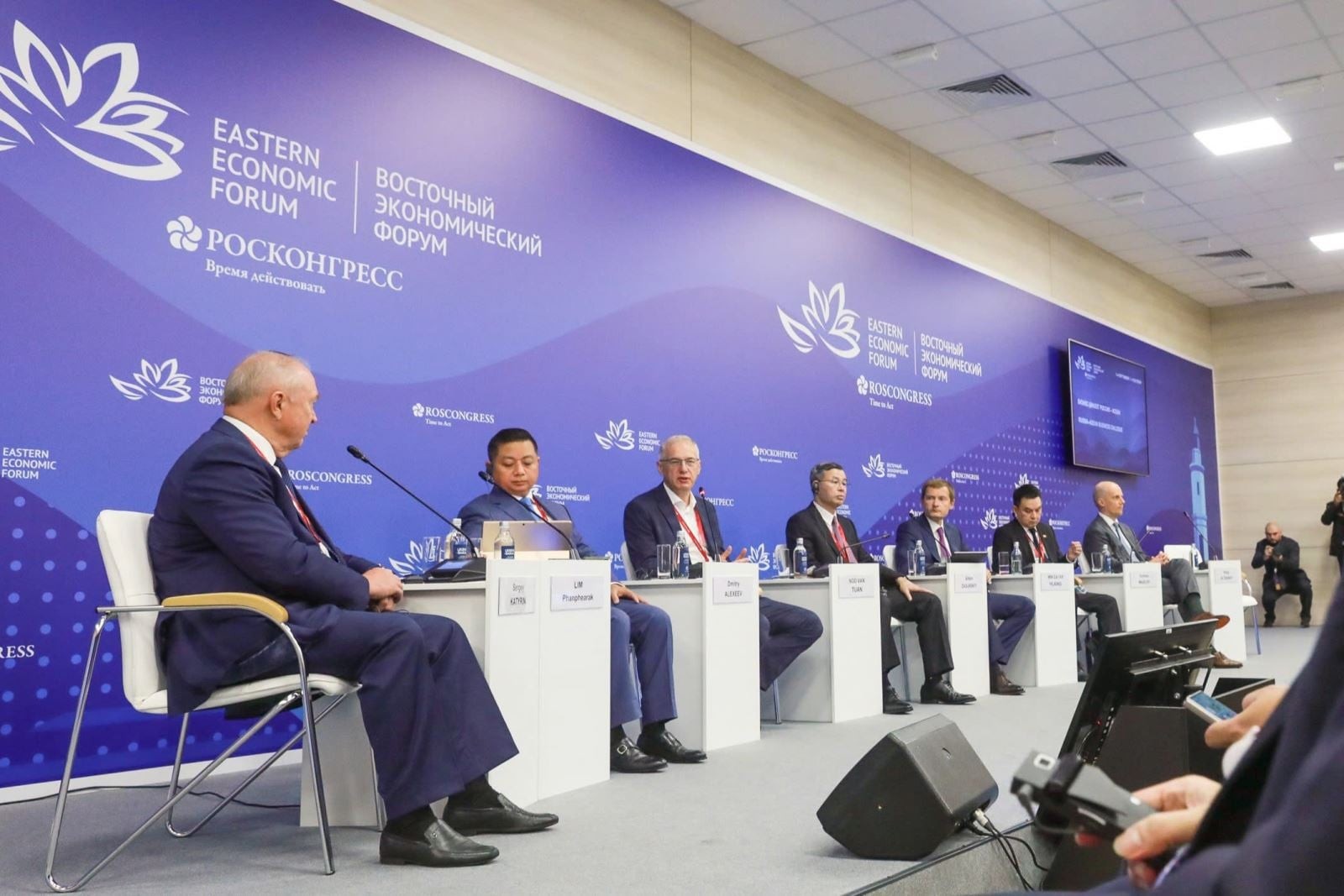
According to vietnam.vn, Vietnam’s Minister of Finance, Ngô Văn Tuấn, proposed establishing a Far East–Vietnam–ASEAN logistics corridor during the Russia–ASEAN Business Dialogue at the 11th Eastern Economic Forum in Vladivostok.

Strategic Trade and Investment Linkages

Vietnam holds a distinctive position in Russia–ASEAN relations: bilateral trade reached approximately $4.77 billion in 2025, representing roughly one-quarter of total Russia–ASEAN trade. Vietnam is also the first ASEAN member to sign a Free Trade Agreement (FTA) with the Eurasian Economic Union (EAEU). With its extensive FTA network, Vietnam aims to serve as a bridge enabling Russian enterprises to access ASEAN and broader international markets, while Russia’s Far East region offers Vietnamese and ASEAN businesses new entry points into Russian and Eurasian economic space.

Five Priority Cooperation Directions

Minister Ngô Văn Tuấn outlined five strategic cooperation directions. First, developing new supply chains and deepening trade–investment linkages—shifting from transactional trade to joint production and value-chain participation. Second, achieving breakthroughs in transport and logistics infrastructure, including maritime connectivity between Vladivostok and Vietnam/Southeast Asia, integrated with trans-Eurasian rail corridors.

Third, advancing science–technology, digital transformation, and artificial intelligence (AI) as core drivers: Vietnam is promoting AI, big data, cloud computing, semiconductors, automation, digital finance, and smart logistics; Russia contributes strong scientific foundations and high-quality human capital; ASEAN represents one of the world’s fastest-growing digital markets.

“Vietnam proposes that all sides promote cooperation programs on AI, cybersecurity, fintech, digital health, digital education, data centers, and smart manufacturing—aiming for joint research, technology transfer, workforce training, and product commercialization.” — Ngô Văn Tuấn, Minister of Finance of Vietnam

Green Energy, Finance, and People-to-People Ties

The fourth priority focuses on energy cooperation, green growth, and sustainability. Vietnam is accelerating clean and renewable energy—including offshore wind—and modernizing power infrastructure alongside circular and green economy initiatives. Russia’s energy and science–technology strengths could become a key pillar of future Russia–ASEAN collaboration. Fifth, expanding financial, investment, tourism, and people-to-people exchanges: Vietnam is developing free trade zones linked to seaports, logistics hubs, industry, and services, and building international financial centers in Ho Chi Minh City and Da Nang to attract global financial institutions and investment funds.

Vietnam welcomed nearly 21.2 million international visitors in 2025, laying favorable groundwork for enhanced tourism connectivity across Russia, Vietnam, and ASEAN. Minister Ngô Văn Tuấn emphasized the need to translate the Russia–ASEAN Action Plan 2026–2030 into concrete, addressable, partner-identified, and measurable projects.

“Vietnam always views Russia as an important partner and ASEAN as a strategic cooperation space. Vietnam stands ready to further leverage its role as an economic bridge between Russia and ASEAN—and between the EAEU and Southeast Asia—to jointly build new cooperation drivers for regional peace, stability, prosperity, and sustainable development.” — Ngô Văn Tuấn, Minister of Finance of Vietnam

Source: vietnam.vn

Compiled from international media by the SCI.AI editorial team.
Ask SCI.AI Finished reading? Continue with SCI.AI. Explore the related policy, route, company and historical context. Continue asking
Vietnam Proposes 5 ASEAN-Russia Cooperation Paths Amid $21B Trade
Southeast Asia Supply Chain

Vietnam Proposes 5 ASEAN-Russia Cooperation Paths Amid $21B Trade

At the 11th Eastern Economic Forum in Vladivostok on September 2, 2026 marking the 35th anniversary of ASEAN-Russia relations, Vietnamese Finance Minister Ngô Văn Tuấn proposed five priority cooperation paths. Russian-ASEAN trade rose 58% over the past decade to $21 billion in 2025. Vietnam’s bilateral trade with Russia hit $4.77 billion in 2025—roughly one-quarter of the bloc’s total with Russia. Vietnam aims for 10%+ annual growth in 2026–2030, targets $514 billion GDP and $930 billion trade turnover in 2025, and welcomed 21.2 million international tourists that year.

Indonesia Pushes 80% TKDN for EVs to Boost Local Supply Chain
Southeast Asia Supply Chain

Indonesia Pushes 80% TKDN for EVs to Boost Local Supply Chain

Indonesia is mandating an 80% domestic component content (TKDN) requirement for electric vehicles by 2026 to shift foreign automakers like BYD and VinFast from assembly-only operations to integrated local supply chains. BYD’s Subang plant inauguration is set for 3 September 2026, with government-facilitated supplier matching already underway. VinFast collaboration is expected to follow as TKDN targets phase in. Regulatory tools include Permenperin No. 36/2021 and No. 6/2022. GIAMM’s Rachmad Basuki notes 70% of vehicle value comes from components, while Kadin’s Saleh Husin urges redirecting incentives toward tier-2 and tier-3 local suppliers to ensure economic value addition stays in Indonesia.

Tay Ninh Hosts 4th Cross-Border Supply Chain Conference on Sep 5, 2026
Southeast Asia Supply Chain

Tay Ninh Hosts 4th Cross-Border Supply Chain Conference on Sep 5, 2026

Tay Ninh Province will hold its fourth Cross-Border Supply Chain and E-Commerce Conference on September 5, 2026, at Thong Nhat Hall. The event expects over 700 delegates, including nearly 150 international enterprises from 30 countries. Preparations — covering exhibitions, business matchmaking, security, and communications — are progressing on schedule. Two main sessions will address export market trends, Halal certification, logistics partnerships, and international market entry strategies. Site visits to local firms will support supply chain connectivity assessments.

Welcome Back!

Login to your account below

Create New Account!

Fill the forms below to register

Retrieve your password

Please enter your username or email address to reset your password.

Scan to share via WeChat

Open WeChat and scan the QR code to share

QR Code

Add New Playlist