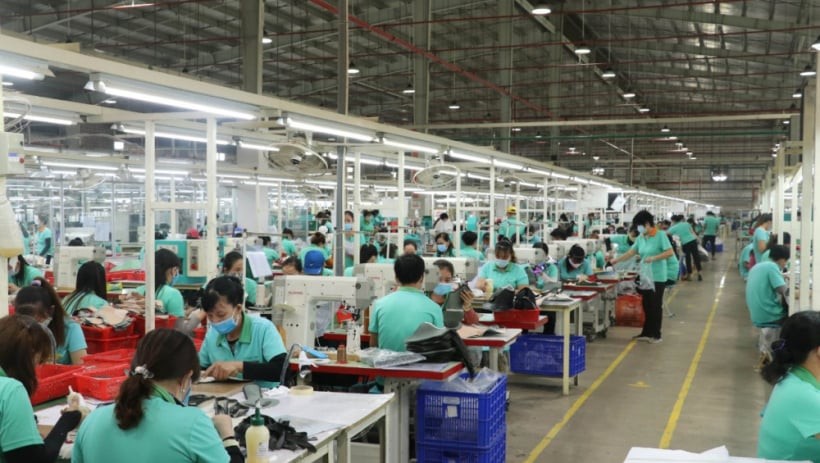
According to www.vietnam.vn, Tay Ninh Province in Vietnam has outlined a phased strategy to strengthen its supporting industrial sector and deepen integration into global supply chains.
Strategic Prioritization and Alignment
The province identifies supporting industry as a top-tier priority to improve growth quality, enhance self-reliance in raw materials, components, and spare parts, reduce import dependency, and boost enterprise competitiveness. Development is explicitly targeted — focused on the province’s comparative advantages and aligned with demand from key local industries including electronics, mechanical engineering, energy equipment, high-tech manufacturing, textiles, and footwear.
Tay Ninh links industrial advancement directly to innovation, digital transformation, green transition, energy-efficient practices, and environmental protection. This integrated approach ensures that capacity-building efforts support both economic and sustainability objectives across the value chain.
The provincial government emphasizes demand-driven development: every initiative ties back to actual procurement needs of lead firms, foreign-invested enterprises, and international supply networks — not abstract capability targets.
Targeted Enterprise Support and Capacity Building
By 2030, Tay Ninh aims to cultivate several core supporting enterprises capable of meeting global supply chain requirements in strategic sectors. To achieve this, the province plans to support approximately 50 supporting industry enterprises through training, management and production consulting, scientific research and technology development, market expansion, and communications activities.
A parallel effort involves building and regularly updating a centralized database covering supporting enterprises, their products, production capacities, and supply–demand matching needs — a foundational step for transparent, efficient industrial matchmaking.
By 2035, the province projects that its supporting industry will reach an internationally competitive technological level — defined as ‘medium-advanced’ or higher — with growing domestic capability in R&D, design, and manufacturing, and with products certified to international standards.
Implementation Framework and Resource Allocation
To execute this vision, Tay Ninh outlines four priority action clusters: refining policies and investment incentives; advancing science, technology, innovation, digital transformation, and human capital; establishing and maintaining the supporting industry database while strengthening supply–demand linkages; and expanding markets, promoting investment, and intensifying outreach and communication.
During the 2035 phase, the province intends to assist roughly 70 supporting industry enterprises — prioritizing those whose products or production processes can integrate directly with lead enterprises, foreign-invested firms, and global supply chains.
This targeted scale-up — from 50 firms supported by 2030 to 70 by 2035 — reflects a deliberate, tiered expansion calibrated to infrastructure readiness, workforce capacity, and market absorption rates.
Source: vietnam.vn
Compiled from international media by the SCI.AI editorial team.