Skip to content

Strategic Sourcing

Analysis

Texmaco Rail inks $135M locomotive contract with Tsiko Africa

Texmaco Rail & Engineering has secured a $135 million (₹1,300 crore) international contract from Tsiko Africa Logistics and Barberry Holdings to supply 4,500 HP diesel-electric locomotives, with execution due within 20–24 months. The deal boosts its order book — which stood at ₹5,661 crore as of December 31, 2025 — alongside a ₹4,045 crore export order from May 2026. Texmaco is establishing its first overseas plant in South Africa with a ₹200–300 crore Phase 1 investment and recently restructured Texmaco Defence Technologies with a ₹200 crore infusion for a 30% stake.

Original source: Source information pending

Texmaco Rail inks $135M locomotive contract with Tsiko Africa

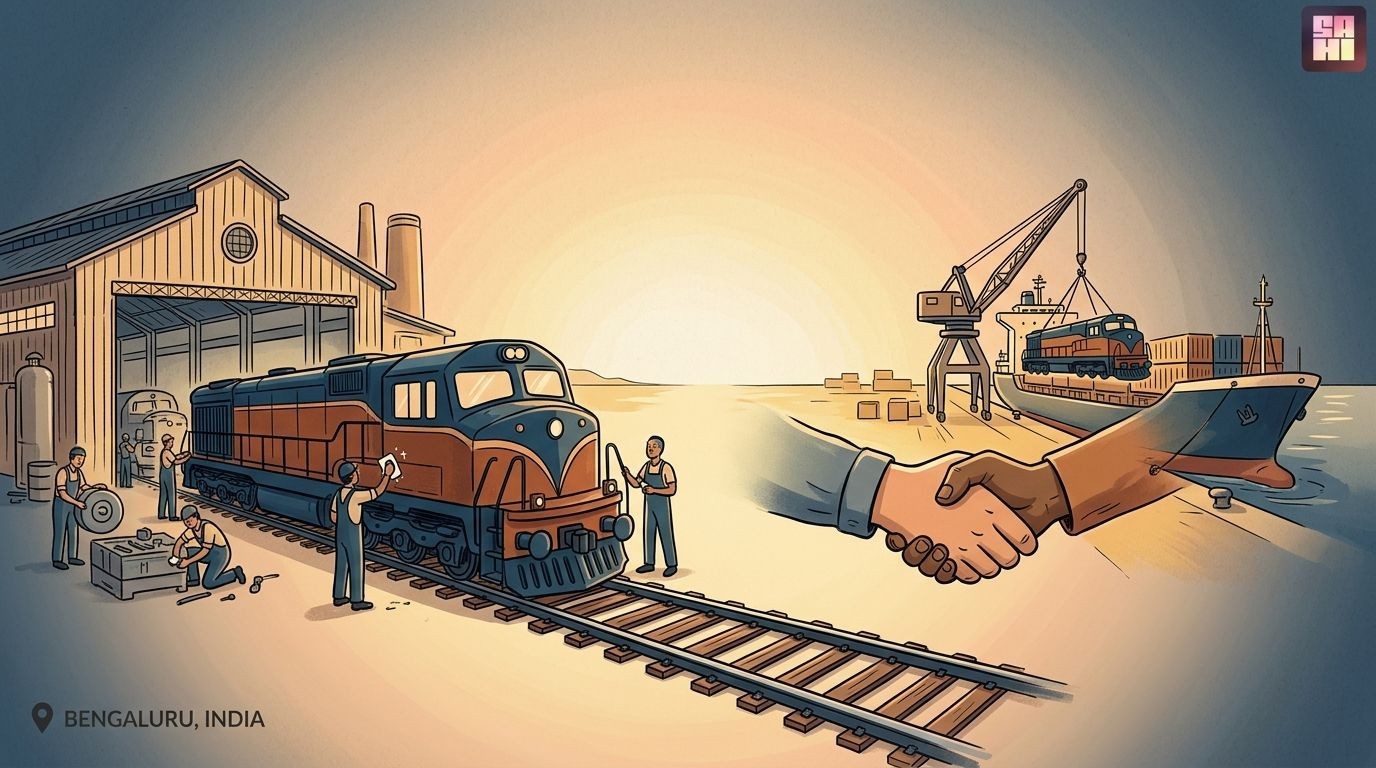
According to www.sahi.com, Texmaco Rail & Engineering has secured an international Letter of Award (LoA) valued at USD 135 million (approximately ₹1,300 crore) from South Africa’s Tsiko Africa Logistics (Pty) Ltd, in collaboration with Barberry Holdings (Pty) Ltd.

Contract Scope and Timeline

The agreement covers the design, manufacture, supply, and commissioning of Wabtec ES43ACi diesel-electric locomotives rated at 4,500 HP. Execution is scheduled to occur within 20 to 24 months following signing of the definitive agreement. The contract value excludes applicable taxes and duties, and delivery must be completed under this fixed-time window to avoid penalty clauses.

The order significantly bolsters Texmaco Rail’s international revenue visibility, particularly alongside its ₹4,045 crore export order announced in May 2026. As of December 31, 2025, the company’s consolidated order book stood at ₹5,661 crore, a figure now substantially reinforced by these recent wins.

This deal marks Texmaco’s strategic expansion beyond domestic freight wagon manufacturing into high-capacity locomotive engineering — a domain requiring advanced integration of propulsion systems, control architecture, and compliance with stringent African rail infrastructure standards.

Strategic and Financial Implications

The USD 135 million award validates Texmaco’s engineering capabilities on global terrain and aligns with South Africa’s open-access freight framework and structural rail reforms aimed at revitalizing mining logistics. It also supports EBITDA margin expansion, as export contracts typically yield higher realizations than domestic orders.

In July 2026, Texmaco announced plans to establish its first overseas manufacturing facility in South Africa, with an initial Phase 1 investment of ₹200–300 crore. That decision followed the mega export contract and reflects long-term commitment to local value addition and supply chain resilience across the continent.

Also in July 2026, CFO Kishor Kumar Rajgaria resigned. In August 2026, Texmaco Rail signed a Share Subscription and Shareholders’ Agreement (SSSA) enabling Calculus Defence Fund to invest up to ₹200 crore for a 30% stake in Texmaco Defence Technologies — reducing Texmaco’s holding in that subsidiary to 70%.

Risk and Market Positioning

Key execution risks include adherence to the tight 20-to-24-month delivery schedule and exposure to steel and component price volatility, given the contract’s fixed-value nature. Cross-border logistics and shipping oversight to South Africa present additional operational considerations.

The Indian railway rolling stock sector is experiencing an export boom, driven by global supply chain diversification and localization mandates. Texmaco’s early entry into South Africa positions it competitively for future infrastructure modernization bids across Africa — especially where capital expenditure requirements are rising rapidly.

This transition from domestic wagon supplier to global heavy engineering partner insulates Texmaco from policy-driven cyclicality in India while building high-margin, long-duration revenue streams backed by robust corporate governance — including arm’s-length transaction terms and no promoter-group interests involved.

Source: sahi.com

Compiled from international media by the SCI.AI editorial team.

Ask SCI.AI Finished reading? Continue with SCI.AI. Explore the related policy, route, company and historical context. Continue asking
90% of Brands’ Garments Contain Prohibited Cotton Despite Traceability
Strategic Sourcing

90% of Brands’ Garments Contain Prohibited Cotton Despite Traceability

A new Oritain report reveals a sharp reversal in cotton supply chain integrity: 90% of brands analysed had at least one garment containing cotton consistent with prohibited sources — despite high traceability investment. Consumer trust in sustainability claims has collapsed to just 3%, while 55% doubt leather authenticity due to opaque multi-jurisdictional processing. Regulatory pressure is mounting, with the EU Forced Labour Regulation taking full effect December 20, 2027. Forensic physical verification — not documentation alone — is now essential, as Oritain’s ecosystem of 1,800+ global partners demonstrates.

52% of Procurement Teams Adopt ‘Skimpflation’ Amid Rising Material Costs
Strategic Sourcing

52% of Procurement Teams Adopt ‘Skimpflation’ Amid Rising Material Costs

A report from Supply Chain Xchange Staff, published August 28, 2026, finds that 52% of 800 surveyed procurement professionals are adopting 'skimpflation'—substituting lower-cost or lower-specification components—to counter rising direct-material costs. Eighty percent observed at least one specification reduction in the past year, while only 2% increased specifications. The practice, first labeled in 2021, is now pervasive across industrial supply chains. Experts warn it may undermine product reliability and long-term cost control despite short-term margin protection.

Himachal Apple Growers Demand Probe into MIS Irregularities
Strategic Sourcing

Himachal Apple Growers Demand Probe into MIS Irregularities

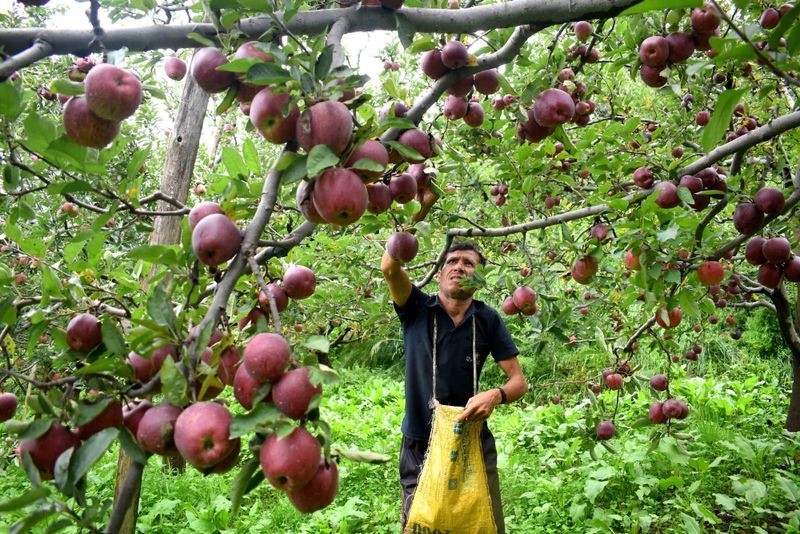
The Himachal Apple Growers Association has demanded a probe into alleged irregularities in apple procurement under India’s Market Intervention Scheme (MIS), citing possible collusion by officials from HPMC and Himfed. Sanjay Chauhan, a state committee member, said the Horticulture Minister confirmed the lapses in the Legislative Assembly. The group urged recovery of exchequer losses and restoration of MIS funding to Rs 1,500 crore. Meanwhile, Adani Agri Fresh Limited announced seasonal procurement rates ranging from Rs 20/kg for undersized apples to Rs 108/kg for premium fruit with 80–100% colour.

Welcome Back!

Login to your account below

Create New Account!

Fill the forms below to register

Retrieve your password

Please enter your username or email address to reset your password.

Scan to share via WeChat

Open WeChat and scan the QR code to share

QR Code

Add New Playlist