Skip to content

Strategic Sourcing

Analysis

52% of Procurement Teams Adopt ‘Skimpflation’ Amid Rising Material Costs

A report from Supply Chain Xchange Staff, published August 28, 2026, finds that 52% of 800 surveyed procurement professionals are adopting 'skimpflation'—substituting lower-cost or lower-specification components—to counter rising direct-material costs. Eighty percent observed at least one specification reduction in the past year, while only 2% increased specifications. The practice, first labeled in 2021, is now pervasive across industrial supply chains. Experts warn it may undermine product reliability and long-term cost control despite short-term margin protection.

Original source: Source information pending

52% of Procurement Teams Adopt ‘Skimpflation’ Amid Rising Material Costs

According to www.thescxchange.com, more than half of surveyed procurement professionals are substituting lower-specification or lower-cost components to offset surging direct-material expenses—a practice termed ‘skimpflation.’ The report draws on a Sapio Research survey of 800 supply chain and procurement professionals conducted on behalf of Ivalua.

Widespread Adoption Driven by Cost Pressures

Fifty-two percent of respondents confirmed that cost pressures are actively driving skimpflation behaviors within their organizations. This figure represents a clear majority—52%—and reflects mounting strain across global procurement functions as input costs remain elevated. The phenomenon is not isolated: the source states that procurement teams are making deliberate trade-offs in component quality, tolerances, or material grades to preserve gross margins without raising end-product prices.

The report notes that this shift is occurring amid broader inflationary conditions first widely labeled ‘skimpflation’ in 2021, as documented by NPR. While the term originated earlier, its application in procurement contexts has intensified recently—particularly since Aug 28, 2026, when the findings were published. According to the source, the practice now extends beyond discretionary consumer goods into industrial and B2B supply chains.

Survey data further reveals that 80% of respondents observed at least one instance of specification reduction in the past 12 months, while 20% reported no such changes. Only 2% indicated they had increased component specifications during the same period—underscoring the strong downward pressure on quality parameters.

Strategic Implications for Supply Chain Resilience

The report warns that repeated specification cuts may erode long-term reliability, increase warranty claims, and complicate supplier qualification processes. Though not quantified in absolute terms, the source emphasizes that these decisions are often made without full lifecycle cost analysis—potentially shifting expense from procurement to service, repair, or recall budgets. One respondent stated:

“We’re trading off upfront cost savings against downstream risk—and we don’t yet have the metrics to measure that trade-off accurately.”

This tension highlights a growing gap between short-term financial targets and operational resilience goals. The source states that procurement leaders are increasingly expected to balance cost containment with continuity assurance—a dual mandate intensified by volatile sourcing environments. No specific fiscal year or quarter is cited for future mitigation efforts, but the report references ongoing industry attention through events like CSCMP EDGE 2025.

Notably, the article appears alongside coverage of other cost-driven developments—including a report on last-mile inflation dated Sep 01, 2026, and U.S. robotics market forecasts extending to 2031. These contextual anchors reinforce the timing and scope of current procurement challenges.

Source: thescxchange.com

Compiled from international media by the SCI.AI editorial team.
Ask SCI.AI Finished reading? Continue with SCI.AI. Explore the related policy, route, company and historical context. Continue asking
90% of Brands’ Garments Contain Prohibited Cotton Despite Traceability
Strategic Sourcing

90% of Brands’ Garments Contain Prohibited Cotton Despite Traceability

A new Oritain report reveals a sharp reversal in cotton supply chain integrity: 90% of brands analysed had at least one garment containing cotton consistent with prohibited sources — despite high traceability investment. Consumer trust in sustainability claims has collapsed to just 3%, while 55% doubt leather authenticity due to opaque multi-jurisdictional processing. Regulatory pressure is mounting, with the EU Forced Labour Regulation taking full effect December 20, 2027. Forensic physical verification — not documentation alone — is now essential, as Oritain’s ecosystem of 1,800+ global partners demonstrates.

Texmaco Rail inks $135M locomotive contract with Tsiko Africa
Strategic Sourcing

Texmaco Rail inks $135M locomotive contract with Tsiko Africa

Texmaco Rail & Engineering has secured a $135 million (₹1,300 crore) international contract from Tsiko Africa Logistics and Barberry Holdings to supply 4,500 HP diesel-electric locomotives, with execution due within 20–24 months. The deal boosts its order book — which stood at ₹5,661 crore as of December 31, 2025 — alongside a ₹4,045 crore export order from May 2026. Texmaco is establishing its first overseas plant in South Africa with a ₹200–300 crore Phase 1 investment and recently restructured Texmaco Defence Technologies with a ₹200 crore infusion for a 30% stake.

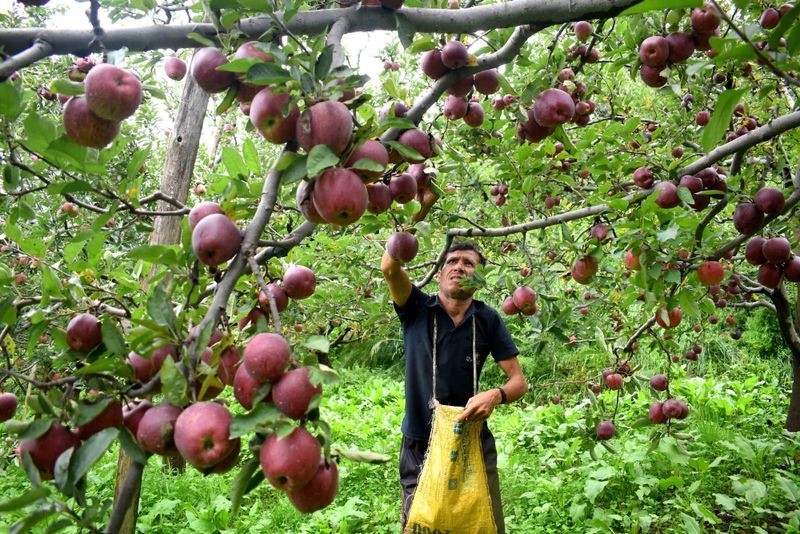
Himachal Apple Growers Demand Probe into MIS Irregularities
Strategic Sourcing

Himachal Apple Growers Demand Probe into MIS Irregularities

The Himachal Apple Growers Association has demanded a probe into alleged irregularities in apple procurement under India’s Market Intervention Scheme (MIS), citing possible collusion by officials from HPMC and Himfed. Sanjay Chauhan, a state committee member, said the Horticulture Minister confirmed the lapses in the Legislative Assembly. The group urged recovery of exchequer losses and restoration of MIS funding to Rs 1,500 crore. Meanwhile, Adani Agri Fresh Limited announced seasonal procurement rates ranging from Rs 20/kg for undersized apples to Rs 108/kg for premium fruit with 80–100% colour.

Welcome Back!

Login to your account below

Create New Account!

Fill the forms below to register

Retrieve your password

Please enter your username or email address to reset your password.

Scan to share via WeChat

Open WeChat and scan the QR code to share

QR Code

Add New Playlist