Skip to content

Strategic Sourcing

Analysis

Adani Agri Fresh raises apple procurement rates to Rs 108/kg in Himachal Pradesh

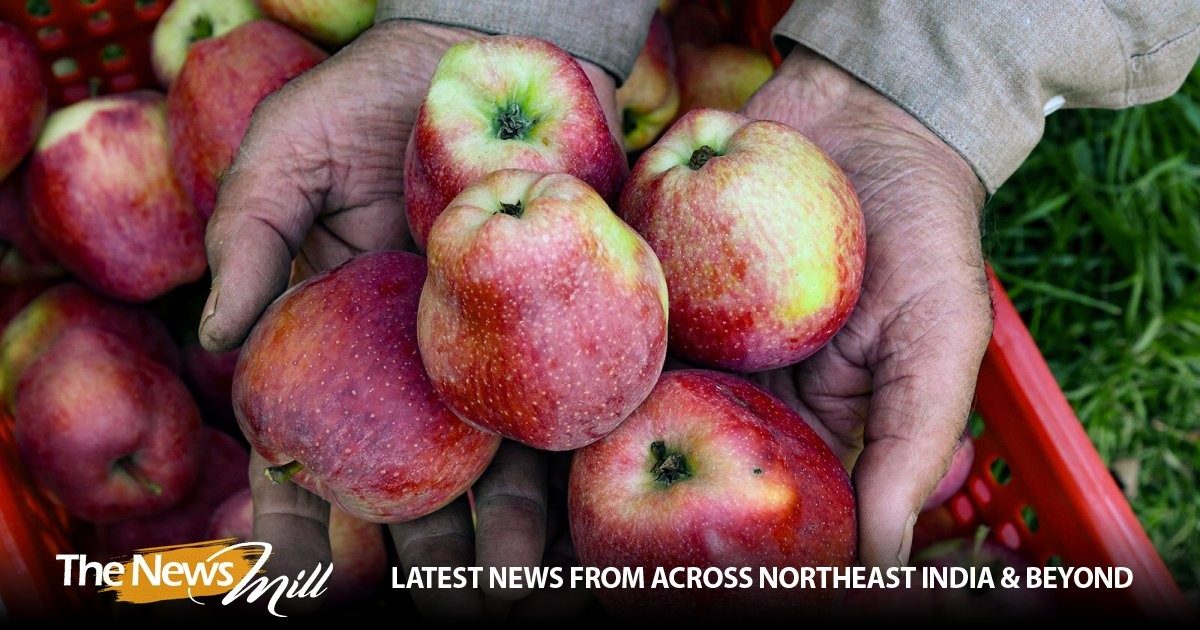
Adani Agri Fresh has raised apple procurement prices effective August 31, 2026, across Himachal Pradesh centres. Premium LMS apples now fetch Rs 108/kg — up Rs 23 from Rs 85/kg last year. Supreme Grade LMS apples command Rs 80/kg, while lower-colour and undersized categories range from Rs 26/kg to Rs 20/kg. Meanwhile, open-market rates of Rs 175–200/kg (Rs 3,500–4,000 per 20-kg box) are drawing growers away from AAFL’s channels despite the hike.

Original source: Source information pending

Adani Agri Fresh raises apple procurement rates to Rs 108/kg in Himachal Pradesh

According to thenewsmill.com, Adani Agri Fresh (AAFL) has announced revised apple procurement prices effective August 31, 2026, across its procurement centres in Himachal Pradesh’s Shimla and Kullu districts.

Revised Rates by Grade and Size

The new pricing structure applies to centres in Rampur, Rohru, Sainj, Jarol Tikkar, and Tutu Pani. For the 2026 season, AAFL set the price for premium-grade Large, Medium, and Small (LMS) apples at Rs 108 per kilogram — an increase of Rs 23 from Rs 85 per kilogram in the prior year. Extra Small (ES) apples will be procured at Rs 89 per kilogram, Extra Extra Small (EES) at Rs 73 per kilogram, and Extra Large (EL) and PITTU categories at Rs 60 per kilogram.

Supreme and Lower-Grade Pricing Tiers

For Supreme Grade apples — defined by 60–80% colour coverage — AAFL offers Rs 80 per kilogram for LMS, Rs 67 for ES, Rs 54 for EES, and Rs 43 for EL and PITTU. Apples with 0–60% colour, regardless of size, will be purchased at Rs 26 per kilogram. The same rate applies to Extra Extra Large (EEL) apples with 0–100% colour and ROL apples, while undersized apples fetch Rs 20 per kilogram.

Market Context and Farmer Response

The revised rates come amid a robust open market, where growers reportedly receive Rs 175 to Rs 200 per kilogram — equivalent to Rs 3,500 to Rs 4,000 for a 20-kilogram box. Since this open-market range substantially exceeds AAFL’s highest procurement price, the source states that fewer farmers are expected to sell to AAFL this season compared with the previous one, despite the company’s price increases.

Source: thenewsmill.com

Compiled from international media by the SCI.AI editorial team.
Ask SCI.AI Finished reading? Continue with SCI.AI. Explore the related policy, route, company and historical context. Continue asking
90% of Brands’ Garments Contain Prohibited Cotton Despite Traceability
Strategic Sourcing

90% of Brands’ Garments Contain Prohibited Cotton Despite Traceability

A new Oritain report reveals a sharp reversal in cotton supply chain integrity: 90% of brands analysed had at least one garment containing cotton consistent with prohibited sources — despite high traceability investment. Consumer trust in sustainability claims has collapsed to just 3%, while 55% doubt leather authenticity due to opaque multi-jurisdictional processing. Regulatory pressure is mounting, with the EU Forced Labour Regulation taking full effect December 20, 2027. Forensic physical verification — not documentation alone — is now essential, as Oritain’s ecosystem of 1,800+ global partners demonstrates.

Texmaco Rail inks $135M locomotive contract with Tsiko Africa
Strategic Sourcing

Texmaco Rail inks $135M locomotive contract with Tsiko Africa

Texmaco Rail & Engineering has secured a $135 million (₹1,300 crore) international contract from Tsiko Africa Logistics and Barberry Holdings to supply 4,500 HP diesel-electric locomotives, with execution due within 20–24 months. The deal boosts its order book — which stood at ₹5,661 crore as of December 31, 2025 — alongside a ₹4,045 crore export order from May 2026. Texmaco is establishing its first overseas plant in South Africa with a ₹200–300 crore Phase 1 investment and recently restructured Texmaco Defence Technologies with a ₹200 crore infusion for a 30% stake.

52% of Procurement Teams Adopt ‘Skimpflation’ Amid Rising Material Costs
Strategic Sourcing

52% of Procurement Teams Adopt ‘Skimpflation’ Amid Rising Material Costs

A report from Supply Chain Xchange Staff, published August 28, 2026, finds that 52% of 800 surveyed procurement professionals are adopting 'skimpflation'—substituting lower-cost or lower-specification components—to counter rising direct-material costs. Eighty percent observed at least one specification reduction in the past year, while only 2% increased specifications. The practice, first labeled in 2021, is now pervasive across industrial supply chains. Experts warn it may undermine product reliability and long-term cost control despite short-term margin protection.

Welcome Back!

Login to your account below

Create New Account!

Fill the forms below to register

Retrieve your password

Please enter your username or email address to reset your password.

Scan to share via WeChat

Open WeChat and scan the QR code to share

QR Code

Add New Playlist