Skip to content

Strategy & Planning

Analysis

Air Cargo Demand Rises 3.9% YoY in July

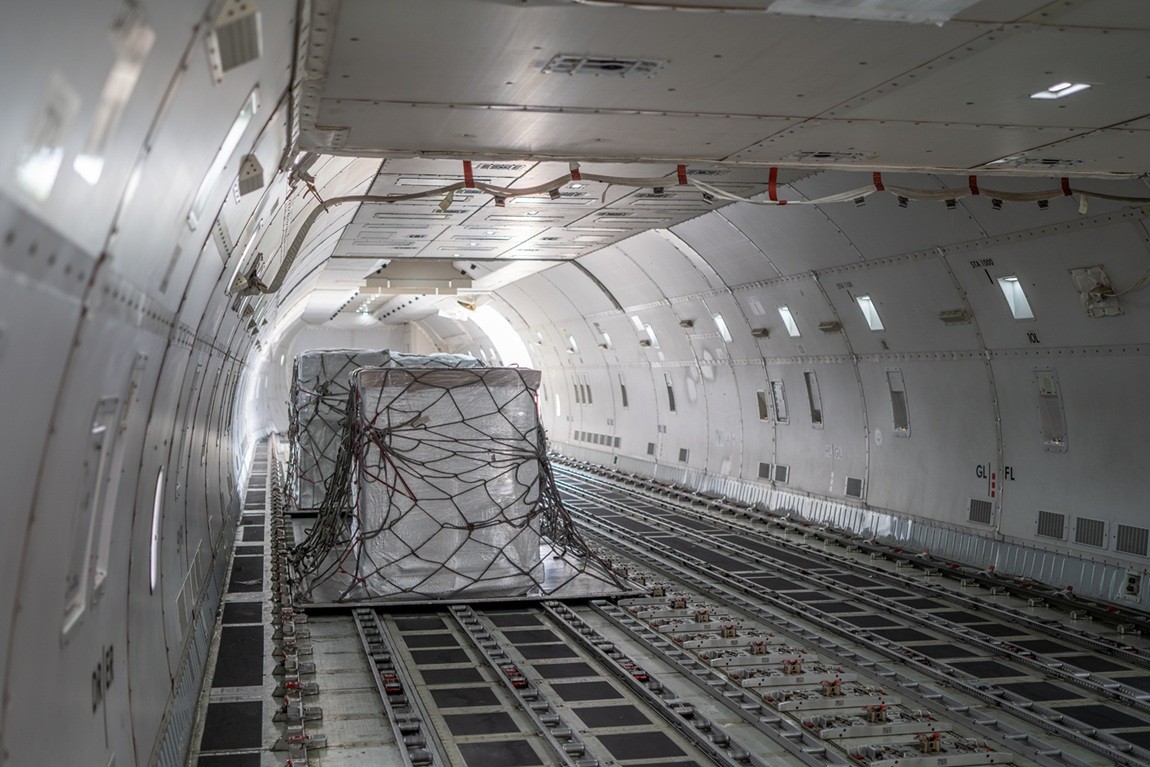
Global air cargo demand rose 3.9% year on year in July 2026, per www.aircargonews.net, easing from 8.5% growth in June. Airlines in Asia-Pacific, Europe, and North America contributed over 90% of the increase, with North America leading at 4.8%. Capacity grew 1.7% globally, lifting the cargo load factor to 46%. Jet fuel prices jumped 12.2% month on month and were 56.9% higher year on year. IATA cited sustained expansion amid moderating momentum and flagged fuel costs, geopolitics, and tariff uncertainty as key watchpoints.

Original source: Source information pending

Air Cargo Demand Rises 3.9% YoY in July

According to Air Cargo News, global air cargo demand increased by 3.9% year on year in July 2026, measured in cargo tonne-kilometers (CTK), though growth eased from 8.5% in June, 6% in May, and 4% in April as markets recovered from disruptions linked to the Middle East conflict.

Regional Contributions and Capacity Trends

Airlines in the Asia-Pacific, Europe, and North America collectively accounted for more than 90% of the overall demand increase in July. North American carriers recorded the strongest regional performance, with demand rising 4.8% year on year, while capacity contracted by 1.5%. European carriers saw demand grow 4.4% and capacity expand 1.3%. Asia-Pacific airlines posted 4.1% demand growth alongside a 3% capacity increase.

Latin American and Caribbean carriers also registered 4.1% demand growth, but capacity rose more sharply at 7%. Middle Eastern carriers grew demand by just 1.7%, with capacity up 4%; African airlines posted the weakest result — 1.1% demand growth against a 4.1% capacity increase.

Global capacity, measured in available cargo tonne-kilometers (ACTK), rose 1.7% year on year in July, tightening the supply-demand balance and lifting the global cargo load factor (CLF) by 1 percent to 46%.

Economic and Operational Context

The International Air Transport Association (IATA) noted that the global operating environment remained broadly supportive: global trade expanded 7.5% year on year, and the Global Manufacturing Output Purchasing Managers’ Index (PMI) stood at 52.7, down only 0.3 points from the prior month. The New Export Orders Index rose to 50.0, its highest level in three months.

Jet fuel prices surged 12.2% month on month in July and were 56.9% higher than in July 2025. Meanwhile, dedicated freighters gained market share as belly-hold traffic declined — a shift possibly reflecting demand for larger or specialist shipments and the operational flexibility freighters provide.

“Air cargo demand grew 3.9% year-on-year in July. While all regions recorded growth, airlines in Asia-Pacific, Europe and North America accounted for more than 90% of the overall increase.” — Marie Owens Thomsen, IATA’s senior vice president sustainability and chief economist

IATA added that although the outlook remains broadly positive, higher fuel prices, geopolitical tensions, and tariff uncertainty warrant close monitoring. Average air cargo yields in July 2026 remained well above their July 2025 levels.

Source: Air Cargo News

Compiled from international media by the SCI.AI editorial team.
Ask SCI.AI Finished reading? Continue with SCI.AI. Explore the related policy, route, company and historical context. Continue asking
Toyota RAV4 Hybrid Demand Outstrips Supply, Dealers Hold <3 Days Inventory
Strategy & Planning

Toyota RAV4 Hybrid Demand Outstrips Supply, Dealers Hold <3 Days Inventory

Toyota's 2026 RAV4 — now offered exclusively as a hybrid — faces unprecedented demand, leaving U.S. dealers with fewer than three days of inventory. Despite this constraint, Toyota's U.S. sales rose 0.3% through July 2026. The RAV4 sold nearly 480,000 units in 2025, ranking third nationally. Hybrids now account for over 18% of U.S. vehicle sales in 2026, per J.D. Power. Buyers like Nancy Berman accepted six-month waits, citing strong brand loyalty. Dealers report lots operating at roughly one-third capacity due to supply limits.

Southern Africa Citrus Exports Cut 5.5% for 2026 Season
Strategy & Planning

Southern Africa Citrus Exports Cut 5.5% for 2026 Season

Southern Africa’s citrus export forecast has been cut by 5.5% for the 2026 season, dropping from 209.4 million to 197.9 million 15kg cartons — a loss of 11.5 million cartons. The Citrus Growers’ Association of Southern Africa cited Middle East conflict (shutting off 20% of normal export markets), port delays, rising shipping costs, and severe weather — including flooding in the Western and Eastern Cape and heavy rainfall in Limpopo and Mpumalanga — as key drivers. Though production remains on a long-term growth path, the CGA stressed heightened responsibility for managing market access, logistics, and biosecurity risks.

XPO Adds 30% More Trailers Amid Freight Rate Surge
Strategy & Planning

XPO Adds 30% More Trailers Amid Freight Rate Surge

U.S. trucking is exiting a freight recession as demand rebounds and capacity tightens, pushing spot rates up 35%–36% in 2024 and contract rates up 10% this year and another 10% in 2025. XPO reports 4% YoY tonnage growth in June and has expanded its network since 2021 with 30% more trailers, 20% more tractors, and 15% more dock doors. Retailers now prioritize strategic carrier partnerships over transactional deals to manage rising costs and ensure supply chain resilience.

Welcome Back!

Login to your account below

Create New Account!

Fill the forms below to register

Retrieve your password

Please enter your username or email address to reset your password.

Scan to share via WeChat

Open WeChat and scan the QR code to share

QR Code

Add New Playlist