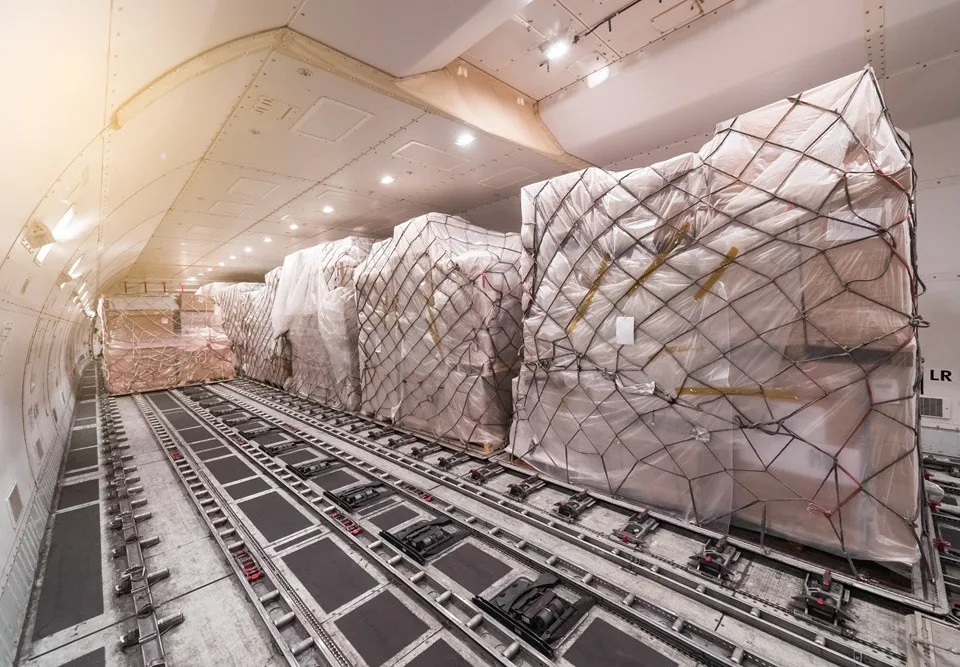
According to Air Cargo News, China-to-Europe freighter capacity has fallen by 28% compared to June levels, following the European Union’s introduction of a €3 customs duty on low-value parcels from outside the EU on 1 July.
E-commerce Imports and Immediate Capacity Impact
E-commerce imports into Europe dropped 24% in July versus June, triggering an immediate 10% reduction in direct China-Europe freighter capacity relative to June. Rotate, the analytics firm cited in the report, stated that freighter capacity remains consistently 28% below June levels and shows “no clear sign of recovery”.
Freighter Utilisation and Regional Declines
Global freighter utilisation has declined overall, as most lost capacity has not been redeployed elsewhere. For converted Boeing 747-400Fs — typically used for ad hoc operations — utilisation is down 13.8%. The steepest drops occurred at e-commerce gateways: Madrid fell 78%, Budapest 58%, and Liege 35%. In China, Ürümqi Tianshan International Airport saw a 72% decline, while Hong Kong dropped 28%.
Rate Firmness Amid Volume Pressure
Despite volume pressure from the EU customs duty, freight rates on the busiest lanes out of China to Europe have become firmer, according to the latest TAC Index data. The report notes that rerouting to transpacific routes has been limited and insufficient to offset broader capacity losses.
Recovery Outlook and Parallel Cases
Rotate suggests e-commerce shipping may recover within 12 months, citing precedent from other markets. The United States ended de minimis treatment for shipments from China and Hong Kong on 2 May 2025 and globally on 29 August 2025; Brazil ended de minimis on 1 August 2024.
Source: Air Cargo News
Compiled from international media by the SCI.AI editorial team.