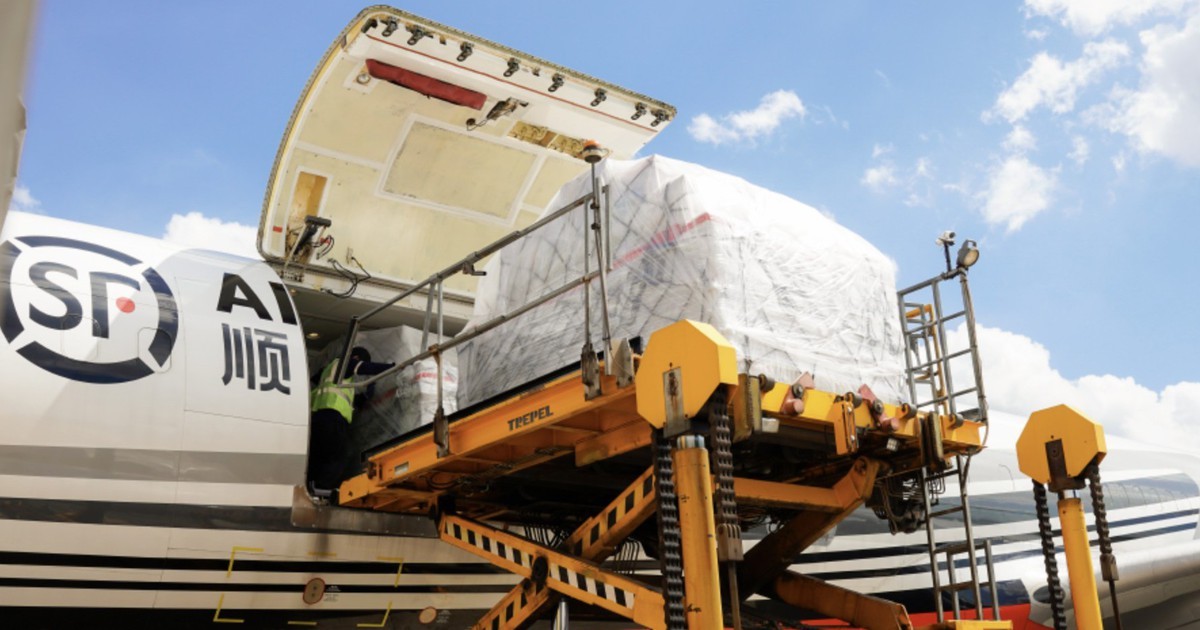
According to news.tuoitre.vn, Vietnam Airlines will deploy its first dedicated freighter aircraft in the third quarter of 2026 — a pivotal step toward reclaiming domestic air cargo value as foreign carriers control more than 80 percent of Vietnam’s international air cargo market.
Air Cargo Volume Soars, Revenue Stays Abroad
Cargo throughput at Vietnam’s airports hit an all-time high of 1.8 million tonnes in 2025, with 920,900 tonnes handled in the first half of 2026 alone. Yet despite this surge — driven by booming exports of smartphones, electronic components, and pharmaceuticals — revenue from high-value air freight continues flowing to foreign airlines. As Gordon Heap, Principal, Aviation at DXC Technology, explained:
“I don’t believe this situation has anything to do with systems or infrastructure. Despite volume growth, a dedicated cargo fleet is typically less profitable than serving passengers. The most profitable cargo movements are belly cargo where the revenue is additive to passengers.” — Gordon Heap, Principal, Aviation, DXC Technology
Vietnam remains the only country among the world’s top 30 economies by import-export turnover without a nationally registered freighter aircraft. Domestic carriers have historically relied on belly cargo aboard passenger flights, avoiding the capital intensity and operational complexity of dedicated freight operations.
Strategic Shift at Vietnam Airlines
Dang Ngoc Hoa, Board Chairman of Vietnam Airlines, confirmed that cargo operations will become one of the airline’s two strategic pillars, backed by heavy investment. Its first freighter — scheduled for launch in Q3 2026 — will initially serve routes to Hong Kong, South Korea, Singapore, and India. From 2029, the carrier plans to introduce wide-body freighters to open intercontinental services to Europe and the United States.
This marks a reversal from earlier attempts: in 2021, entrepreneur Johnathan Hanh Nguyen proposed investing VND 2,400 billion (US$90.7 million) to launch IPP Air Cargo, but shelved the project due to unfavorable market conditions and infrastructure demands.
Long Thanh Airport and Infrastructure Readiness
Phase 1 of Long Thanh Airport in Dong Nai City — located just outside Ho Chi Minh City — is set to begin commercial operations in December 2026. Gordon Heap emphasized that its greenfield design offers unique potential to become a world-class logistics hub, provided planners integrate dedicated ground-handling equipment, seamless customs clearance, warehousing, and multimodal connectivity to road and rail networks. He stressed that investors closely monitor performance metrics such as customs clearance time and cargo dwell time — not just runway capacity.
Korean Air’s Country Manager for Vietnam, Kyoung Hee Kang, stated that Vietnam is now the airline’s largest destination market in Southeast Asia. Korean Air forecasts total Vietnamese-market cargo volume will reach or exceed 50,000 tonnes in 2026 — up sharply from the 16,000 tonnes of export cargo it carried through Ho Chi Minh City in 2024.
Ground Handling Transformation Underway
The push for self-reliance extends beyond aircraft to tarmac operations. In April 2025, Vietjet shifted to self-handling ground services at Tan Son Nhat Airport instead of renewing its full-service contract with Saigon Ground Services Joint Stock Company (SAGS). That decision cost SAGS roughly VND591 billion ($22.3 million) — nearly 39 percent of its total 2024 revenue — prompting it to seek new international clients.
In early August 2026, Sun Group launched Phu Quoc Airport Ground Services Company Limited, expanding its aviation-tourism ecosystem on Phu Quoc Island. Associate Professor Dr. Nguyen Thien Tong noted that increased competition in ground handling will pressure incumbents to upgrade equipment, boost productivity, and raise service quality — reinforcing that competitiveness requires simultaneous upgrades both in the air and on the ground.
Source: news.tuoitre.vn
Compiled from international media by the SCI.AI editorial team.