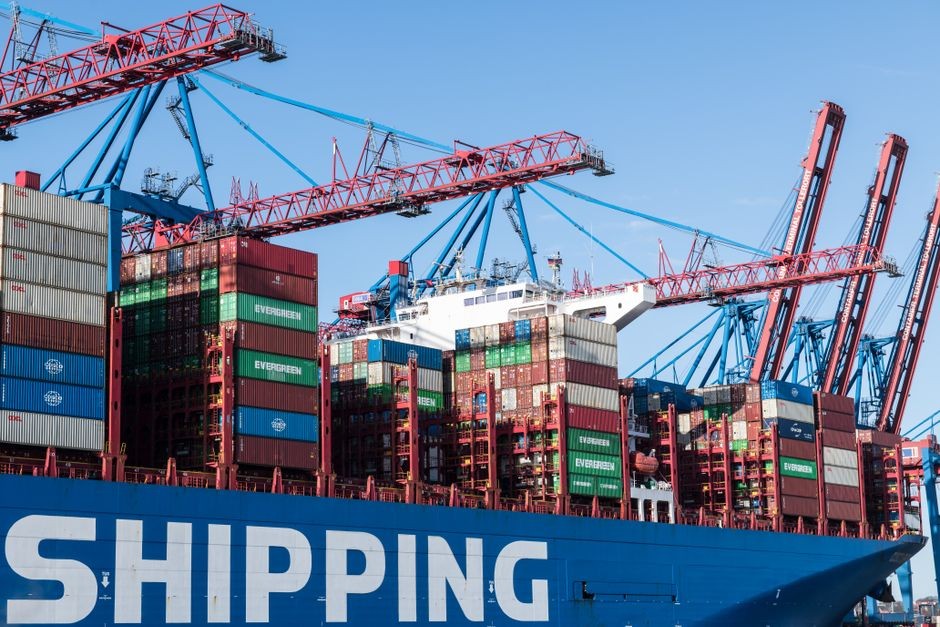
According to businessday.ng, the United States is urging African countries to adopt U.S.-developed artificial intelligence systems for national logistics and trade infrastructure — citing security, transparency, and sovereign data control as decisive advantages.
American Ecosystem Pitch at AFRICOM Symposium
At the US Africa Command (AFRICOM) Logistics and Communications Symposium held in Addis Ababa, Ethiopia, U.S. officials framed AI not as a narrow technical tool but as foundational infrastructure for continental integration. Mark Mitchell, deputy assistant secretary for the Office of Middle East and Africa at the International Trade Administration within the U.S. Department of Commerce, delivered a keynote address on July 29, 2026. He stated:
“The real choice is not which chip or cloud to buy, but which ecosystem powers your growth for the next generation. Choose your ecosystem carefully and choose American.” — Mark Mitchell, deputy assistant secretary for the Office of Middle East and Africa, International Trade Administration, U.S. Department of Commerce
This intervention coincides with intensified geopolitical competition over Africa’s digital future. The U.S. explicitly positions its approach against alternative ecosystems — notably those led by China — emphasizing long-term commercial diplomacy over transactional technology transfers. Mitchell underscored that U.S. partnerships aim to “strengthen capacity to negotiate effectively, diversify supply chains, and shape global standards,” reinforcing institutional agency rather than dependency.
Data Sovereignty as Core Design Principle
U.S. officials directly addressed concerns about foreign technology dependence by redefining AI sovereignty. Mitchell argued that “complete technological self-containment is unrealistic for any country because the AI stack is too complex.” Instead, he defined real sovereignty as “owning and using best-in-class technology for the benefit of your people and nation.” This philosophy underpins the U.S. offer: American companies would deploy AI infrastructure while ensuring that all logistics and trade data remain physically and legally within national borders.
“Keep your data yours,” Mitchell said.
“When American companies build it, it’s yours.” — Mark Mitchell, deputy assistant secretary for the Office of Middle East and Africa, International Trade Administration, U.S. Department of Commerce
This principle was presented not as aspirational rhetoric but as an operational guarantee tied to contractual and architectural design — including data residency clauses and locally hosted inference layers.
Operational Proof Points: A3I and TABIA
To demonstrate feasibility, U.S. military and civilian agencies highlighted two active programs. Paul Filcek, director of logistics at USAFRICOM, described the A3I programme — assess, advise, advocate, integrate — as a field-tested model for AI-enabled logistics capacity building. During the “advise” phase, A3I deploys generative AI to produce country-specific logistics reports, supporting evidence-based decision-making in partner nations. The programme is already active across multiple African nations, with deployments tracked quarterly since Q2 2025.
On the civilian side, the Technical Assistance for Bankable Infrastructure in Africa (TABIA) initiative — jointly developed by the U.S. Departments of Commerce and State — targets infrastructure readiness in Nigeria, Kenya, and Côte d’Ivoire. TABIA focuses on three pillars: commercial diplomacy, data governance, and investment partnerships. Its objective is to help African governments prepare bankable, AI-ready infrastructure projects — particularly in energy, digital infrastructure, critical minerals, and logistics — capable of attracting U.S. private investment and generating local value capture.
Commercial Strategy Anchored in Long-Term Investment
U.S. officials emphasized that American private-sector engagement differs fundamentally from short-term vendor models. They stated:
“Our private sector invests for the long term, helping to build durable, commercial ecosystems that strengthen the local institutions, that deepen the regulatory capacity, and that expand opportunities for African firms and workers.” — U.S. officials, U.S. Department of Commerce and State
This strategy aligns with documented trends: U.S. foreign direct investment in African digital infrastructure rose 27% year-on-year in 2025, according to U.S. Bureau of Economic Analysis data cited during the symposium. That growth outpaced Chinese FDI in the same sector by 11 percentage points.
The emphasis on governance and transparency extended to specific sectors. In logistics, U.S. firms were cited as offering interoperable APIs, auditable algorithmic workflows, and compliance-ready frameworks aligned with international standards including AfCFTA protocols. These features are positioned to accelerate border processing through customs — a critical bottleneck identified across 42 of Africa’s 54 nations, where average clearance time exceeds 72 hours per shipment.
Source: businessday.ng
Compiled from international media by the SCI.AI editorial team.