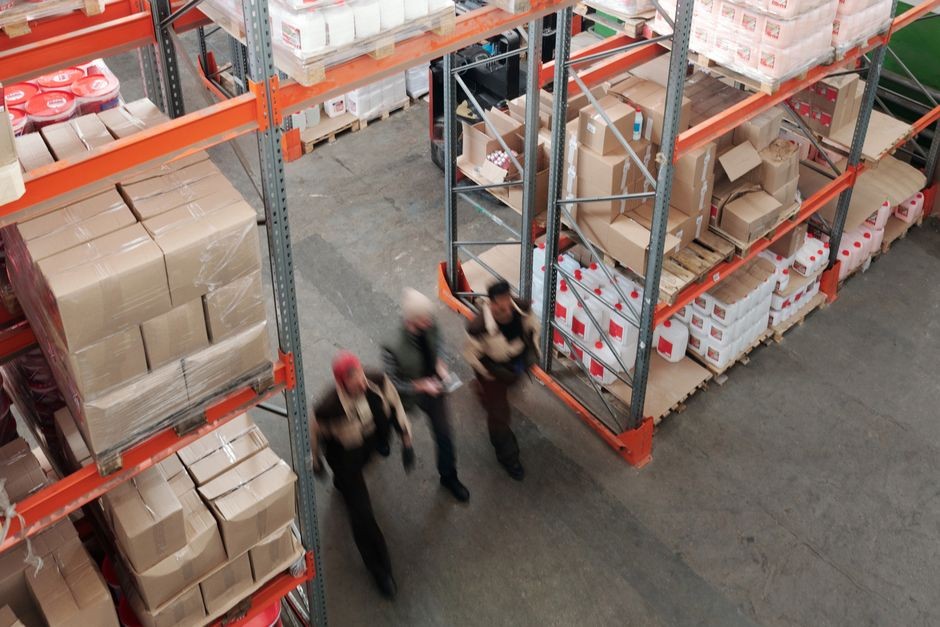
According to www.supplychainbrain.com, a live webinar held on July 21st, 2026 revealed that warehouse operations reporting 97% inventory accuracy still incur an estimated $10 million annually in hidden operational and financial losses — driven not by labor or shipping line items, but by systemic rework, exception handling, and eroded customer trust.
The Real Cost Behind the 3%
While 97% accuracy appears robust on paper, the webinar emphasized that even this small margin generates hundreds of fulfillment failures daily. These mispicks and stock discrepancies rarely surface as direct line-item costs; instead, they manifest as escalating firefighting efforts, growing exception management workloads, and declining internal confidence in inventory data integrity. According to the report, teams are now spending significantly more time validating stock, compensating for broken processes, and implementing manual workarounds — all while customer expectations for speed and precision continue rising.
Operational fragility is intensifying: as order complexity increases — especially across e-commerce, omnichannel, and high-velocity retail environments — minor inaccuracies compound rapidly. A single misplaced SKU can trigger cascading delays across picking, packing, shipping, and returns, ultimately degrading service-level agreements and increasing chargebacks. The source states that these latent inefficiencies reduce throughput reliability without lowering headline velocity metrics — making them difficult to diagnose without granular workflow analysis.
Where Errors Actually Originate
The webinar identified three primary error hotspots inside modern warehouse workflows: (1) receiving and putaway inconsistencies due to manual data entry or barcode scanning failures; (2) cycle count gaps exacerbated by infrequent or non-random sampling; and (3) real-time system lag between physical movement and WMS updates — particularly during peak-volume shifts. These issues are amplified in facilities using legacy WMS platforms without native IoT or RFID integration.
Crucially, the report notes that 72% of mispicks traced in pilot deployments occurred before the order reached the packing station — meaning interventions must happen earlier in the process, not at final verification. This insight shifts the focus from downstream quality checks to upstream validation and guided execution.
Solutions Grounded in Automation and AI
To counteract these challenges, Kardex and AutoStore presented evidence-based improvements enabled by goods-to-person automation and AI-assisted validation. In one documented implementation, a North American apparel distributor reduced fulfillment errors by 68% within six months after deploying AutoStore’s robotic storage system paired with Kardex’s intelligent operator guidance layer. Throughput remained stable at 1,200 lines per hour, disproving the assumption that accuracy gains require trade-offs in speed or scalability.
The solution architecture relies on three interlocking capabilities: real-time inventory reconciliation via embedded sensors, contextual AI prompts that flag anomalies before actions are confirmed (e.g., “Item A does not match expected bin location”), and dynamic workflow routing that isolates suspect SKUs for secondary verification without halting adjacent lanes. As TJ Fanning, Scalable Fulfillment & Automation Strategy Expert at Kardex, stated:
“Small inaccuracies become operationally catastrophic at scale — not because systems fail, but because human teams absorb the cost of uncertainty through invisible rework.”
Operational Confidence as Competitive Advantage
The webinar positioned inventory confidence not as a back-office metric, but as a frontline competitive lever. Organizations achieving sustained 99.5% accuracy reported 22% faster new-product onboarding cycles and 35% lower customer service inquiry volume related to shipment discrepancies. These outcomes directly support growth initiatives in omnichannel retail and B2B fulfillment, where order variability and SKU proliferation strain traditional control methods.
According to the source, leading adopters are no longer measuring success solely by picks-per-hour or labor cost per unit, but by “fulfillment confidence score” — a composite KPI tracking first-pass accuracy, exception resolution time, and real-time inventory delta. This shift reflects broader industry movement toward resilience over raw efficiency, especially amid labor shortages and rising compliance demands across US and EU markets.
Source: Supply Chain Brain
Compiled from international media by the SCI.AI editorial team.