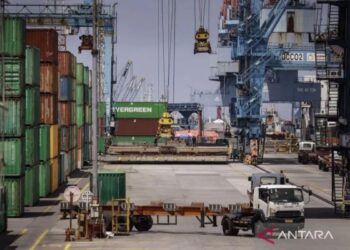
According to en.antaranews.com, Indonesia’s Trade Minister Budi Santoso stated that ratification of the ASEAN Food Safety Regulatory Framework Agreement (AFSRFA) could increase the nation’s food trade balance by US$634.83 million.
Projected Economic Gains and Sectoral Impact
The agreement is expected to generate US$252.17 million in national welfare gains, according to estimates presented by Minister Budi Santoso during a meeting with Commission VI of the House of Representatives (DPR) in Jakarta on Tuesday, July 21, 2026. He cited a Ministry of Trade study confirming that harmonized food safety standards would lower compliance costs, stabilize domestic food prices, and increase Indonesian purchasing power.
The AFSRFA is designed to enhance consumer health protection while facilitating trade in safe food across the ASEAN region. Its scope covers requirements, procedures, and coordination mechanisms for implementing food safety standards throughout the regional food supply chain — spanning all ten ASEAN member states. By removing technical barriers and aligning regulatory frameworks, the pact aims to reduce uncertainty for businesses and improve market access for Indonesian exporters.
Export Growth Targets and Commodity Focus
Under the agreement, Indonesia projects export growth in three key commodity groups: agricultural products, vegetable oils and fats, and processed food products. These sectors collectively represent a substantial share of Indonesia’s non-oil-and-gas export portfolio, which totaled US$229.2 billion in 2025, per official statistics from the Central Statistics Agency (BPS).
Minister Budi Santoso emphasized that regulatory harmonization will directly strengthen the competitiveness of Indonesian food products in regional markets. For example, standardized certification processes are expected to cut average export documentation time by up to 30% for small and medium-sized food enterprises — a critical improvement given that over 72% of Indonesia’s registered food exporters are SMEs.
Implementation Measures and Digital Infrastructure
To ensure effective implementation, the Indonesian government has outlined a multi-track mitigation strategy. This includes drafting and aligning domestic laws and regulations to serve as the legal foundation for the AFSRFA. The government will also develop an automated system for Certificates of Origin (SKA), enabling exporters to automatically claim preferential tariff treatment under ASEAN’s existing trade agreements — including the ASEAN Trade in Goods Agreement (ATIGA), which covers over 99% of tariff lines among member states.
Additional measures include strengthening trade remedy policies and governance to protect domestic industries; accelerating the digitalization of traceability-based food safety systems; and expanding outreach to stakeholders — particularly food processors, exporters, and agricultural cooperatives — to maximize uptake. The traceability initiative aligns with Indonesia’s National Food Safety System Roadmap, launched in 2024, which sets full digital integration for high-risk food categories by 2027.
Broader ASEAN Integration Context
The AFSRFA builds upon the ASEAN Food Safety Policy (AFSP), adopted in 2019, and represents the first binding multilateral framework for food safety regulation in the bloc. It complements other recent regional initiatives, including the ASEAN Agreement on Customs (AAC), which reduced average customs processing time from 72 hours to under 24 hours for priority goods since its full implementation in Q3 2025.
Indonesia’s push for deeper food trade integration coincides with broader ASEAN economic goals: the bloc aims to increase intra-ASEAN food trade share from 18.4% in 2023 to 25% by 2030. Regional food trade currently stands at US$42.3 billion annually, with Indonesia contributing approximately 12.7% of that total — making it the third-largest intra-ASEAN food exporter after Thailand and Vietnam.
Source: en.antaranews.com
Compiled from international media by the SCI.AI editorial team.