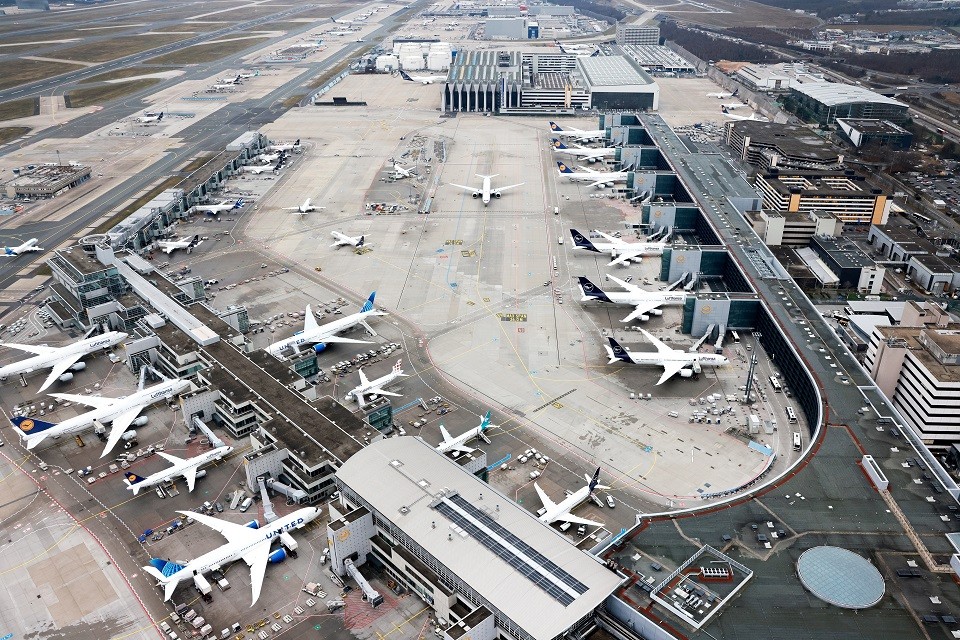
According to Air Cargo News, Frankfurt Airport — Europe’s largest cargo hub — recorded a 19.8% year-on-year decline in cargo volumes from the Middle East during the first half of 2026, driven by airspace closures and capacity reductions linked to the Iran conflict, compounded by a six-day Lufthansa strike in April.
First-half performance and structural shifts
Fraport, the airport operator, reported total cargo volumes of 1 million tonnes for the first six months of 2026, representing a modest 1% increase year-on-year. However, this growth masked significant headwinds: airmail volumes fell 12.4% year-on-year to 15,000 tonnes, reflecting an ongoing structural shift toward digital communication. Fraport noted that overall cargo throughput stagnated in the second quarter, with no net growth attributable to the cumulative impact of geopolitical disruption and industrial action.
Impact of Iran conflict and Lufthansa strike
Fraport explicitly tied the Q2 slowdown to two concurrent events: the six-day Lufthansa strike in April and the grounding of Lufthansa’s A321P2F freighter fleet. The company stated:
“Particular contributors included the six-day Lufthansa strike in April and the grounding of Lufthansa’s A321P2F fleet.”
Fraport further explained that since the beginning of the Iran conflict in March, key airspaces were either closed or heavily restricted, drastically reducing available capacity on Middle East routes. This forced airlines and forwarders to restructure networks — shifting freight flows toward direct connections between Europe, the Far East, and Africa.
Regional volume trends
The rerouting effect is evident across regional data. Volumes from the Far East rose 7% year-on-year, buoyed by e-commerce demand and the diversion of cargo away from Middle Eastern hubs. However, China-related traffic weakened in Q2, while other markets posted stronger gains: India, Japan, and Taiwan all recorded strong growth, largely due to added freighter capacity. Taiwan’s performance was further supported by robust export demand for high-tech products. Meanwhile, African cargo volumes surged 11%, as demand for direct Europe–Africa links intensified. US cargo volumes increased only 1.2%, despite favorable macroeconomic conditions, and Latin American traffic rose 1% — driven primarily by a 4% jump in Mexico-originating shipments, reflecting strengthened Germany–Mexico airfreight trade.
E-commerce dynamics and regulatory headwinds
E-commerce remained a “major growth driver” in H1, according to Fraport — though “some of its dynamism was lost” following the European Union’s introduction of a €3 customs duty on low-value parcels imported from outside the bloc. This regulatory change has already begun dampening parcel volumes at major European air cargo hubs, including Liege and Frankfurt. In parallel, European intra-regional cargo traffic declined 6.9%, with the A321P2F grounding disproportionately affecting short-haul and regional freight operations.
Freighter fleet strategy under review
Lufthansa Cargo is actively evaluating options for its grounded A321P2F freighter fleet, which contributed directly to the 6.9% drop in European cargo volumes. The aircraft type — a converted narrowbody freighter — had been deployed on regional and feeder routes, and its unavailability has disrupted network reliability and capacity allocation across multiple European corridors. No timeline for fleet reinstatement or replacement has been disclosed.
Source: Air Cargo News
Compiled from international media by the SCI.AI editorial team.