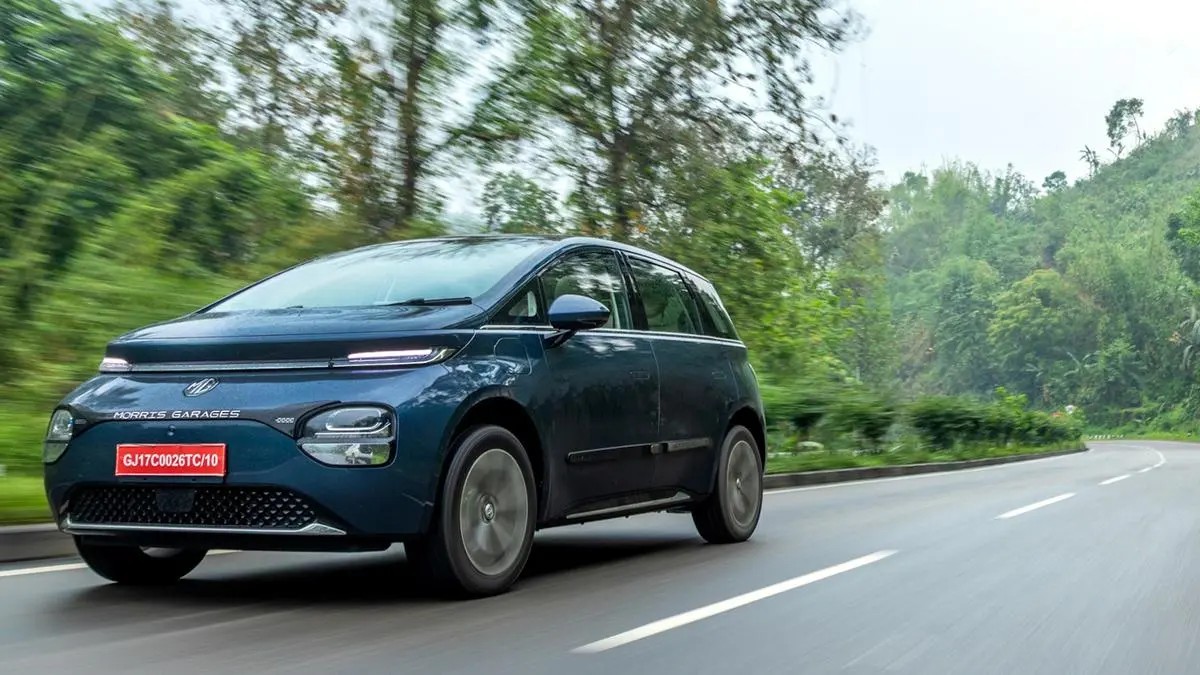
According to www.thehindubusinessline.com, JSW MG Motor India plans to raise the localisation level of its MG Windsor electric vehicle to over 70% to mitigate supply chain risks, as the company targets double-digit sales growth in 2026.
Windsor Drives Growth Amid Rising Localisation Push
The MG Windsor EV has emerged as JSW MG Motor India’s primary growth engine, achieving cumulative wholesale volumes of 75,000 units in just 21 months since its launch in October 2024. According to Anurag Mehrotra, Managing Director of JSW MG Motor India, the vehicle’s strong market reception underpins the strategic shift toward deeper domestic sourcing.
“As demand for Windsor continues to grow, we are focusing on increasing the localisation levels to over 70 per cent to reduce supply chain risks. The MG Windsor will continue to be one of our flagship products, enabling us to target a double digit growth by the end of this calendar year,” Mehrotra told PTI — a statement underscoring the model’s centrality to the company’s near-term commercial objectives.
Sales Performance and Market Penetration
In 2025, JSW MG Motor India recorded total sales of 70,554 units across its product portfolio. The Windsor alone delivered 4,056 units in June 2026, reflecting sustained momentum. Over its first 21 months on the market, the model averaged 3,700 units per month, confirming its role as the company’s top-performing vehicle.
Priced between ₹14.09 lakh and ₹18.60 lakh (ex-showroom), the Windsor targets broad consumer segments — with approximately 30% of its sales originating from India’s four major metropolitan areas: Delhi, Mumbai, Kolkata, and Chennai. The remaining 70% comes from tier-2 cities, tier-3 towns, and rural markets — highlighting its nationwide traction beyond urban hubs.
Strategic Rationale and Broader Industry Context
Mehrotra described the Windsor as “a winning proposition delivering strong value and resonating with the preferences of Indian car buyers.” He added that the model “has meaningfully contributed to accelerating India’s EV adoption, transforming the way India moves” — framing it not only as a commercial success but also as a catalyst for national electrification efforts.
This localisation initiative aligns with broader industry trends. Tata Motors, for example, achieved over 85% local content in its Nexon EV by mid-2025, while Mahindra & Mahindra reported 78% localisation for its XUV400 in Q4 FY2025. JSW MG’s move reflects growing pressure on OEMs to insulate production from global volatility — including geopolitical friction, shipping delays, and component shortages — particularly in battery cells, power electronics, and infotainment systems.
From a supply chain practitioner perspective, raising local content above 70% significantly reduces dependency on imported semiconductors and lithium-ion battery modules, shortens lead times, and lowers landed cost exposure to currency fluctuations and import duties. It also strengthens alignment with India’s Production-Linked Incentive (PLI) scheme for advanced chemistry cell (ACC) manufacturing and auto component incentives — both of which require minimum domestic value addition thresholds.
Source: thehindubusinessline.com
Compiled from international media by the SCI.AI editorial team.