According to The Loadstar, CMA CGM Chairman and CEO Rodolphe Saadé has reaffirmed the company’s strategic pivot toward integrated logistics amid persistent geopolitical disruptions, citing supply chain fragility as the ‘new normal’.
Strategic acquisition expands logistics footprint
CMA CGM has acquired FedEx Supply Chain for $1.4 billion, a move Saadé described as “considerably broader” than a simple warehousing transaction. The deal extends beyond asset transfer into long-term commercial partnerships covering ocean freight, air cargo, and contract logistics — collectively valued at approximately $5 billion.
The acquisition builds on CMA CGM’s earlier purchase of Ceva Logistics six years ago. As a result, the group’s logistics division now accounts for around 40% of total turnover, while maritime transport contributes 60%. Saadé emphasized that logistics is “less cyclical than maritime transport,” making it a stabilizing pillar amid volatile shipping markets.
- FedEx Supply Chain manages roughly 74,000 containers annually for diverse clients
- CMA CGM aims to become FedEx’s preferred carrier across ocean freight
- Air freight partnership includes mutual capacity exchange
Fleet expansion and intermodal resilience
Saadé confirmed CMA CGM remains committed to organic growth in container shipping, targeting position as the world’s number-two carrier by end-2027 in terms of container shipping capacity. This goal rests on continued vessel investments despite concerns about future overcapacity — supported by projected global economic growth of 3% to 4% annually and emerging market development.
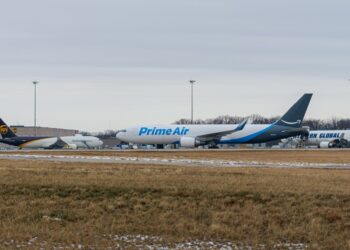
The group is also building its own air cargo operation, having ordered eight A350 freighters, with deliveries scheduled from late 2027. This complements its maritime strategy and responds to sustained e-commerce-driven demand.
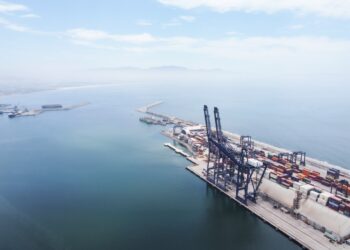
To mitigate chokepoint vulnerability, CMA CGM is investing in alternative intermodal routes. For example, the company is expanding infrastructure at the port of Sohar in Oman to enable truck-based transshipment when the Strait of Hormuz is inaccessible. Saadé stressed:
“We can no longer rely on a single transit point. We must organise alternatives… If Hormuz is open, we use it. If it isn’t, we must be able to offer our customers other options.” — Rodolphe Saadé, Chairman and CEO of CMA CGM
Geopolitical adaptation and US market expansion
The US market now represents approximately a quarter of CMA CGM’s total turnover. To strengthen its domestic footprint, the company partnered earlier in 2026 with US investment fund Stonepeak, enabling deeper terminal investments. This supports efforts to “streamline the flow of goods, bring stock closer to consumers, and reduce certain bottlenecks,” according to Saadé.
Current conditions reflect ongoing geopolitical stress: although oil prices have receded from recent peaks, insurance costs remain elevated following the Strait of Hormuz crisis. Customers are accelerating shipments — notably Christmas goods from Asia to Europe, the Americas, and Africa — due to uncertainty and fears of new US tariffs on Chinese imports at year-end.
As of late June 2026, nine CMA CGM vessels remained stranded in the Persian Gulf, though the CMA CGM Galapagos successfully transited the strait at month-end. Saadé stated the company remains in “crisis management mode” until all ships exit safely and the strait fully reopens — a process he expects to take “several months.” He also rejected proposals for tolls at strategic waterways, warning such measures would set dangerous precedents for Gibraltar and beyond.
Red Sea rerouting and diversified trade flows
Approximately 60% of CMA CGM’s fleet has resumed Suez Canal transits, while the remainder continues sailing around the Cape of Good Hope due to persistent Houthi attacks in the Red Sea. Saadé noted that detours significantly lengthen journey times, increase operating costs, and disrupt vessel rotations — reinforcing the need for flexible, diversified routing.
He dismissed narratives of globalization’s decline, asserting instead that “the major trade flows between Asia, Europe, and the US remain fundamental,” coexisting with growing regional trade. Geopolitics, he argued, does not end global trade but forces transport and logistics players to become “much more resilient, flexible, and diversified.”
Source: The Loadstar
Compiled from international media by the SCI.AI editorial team.