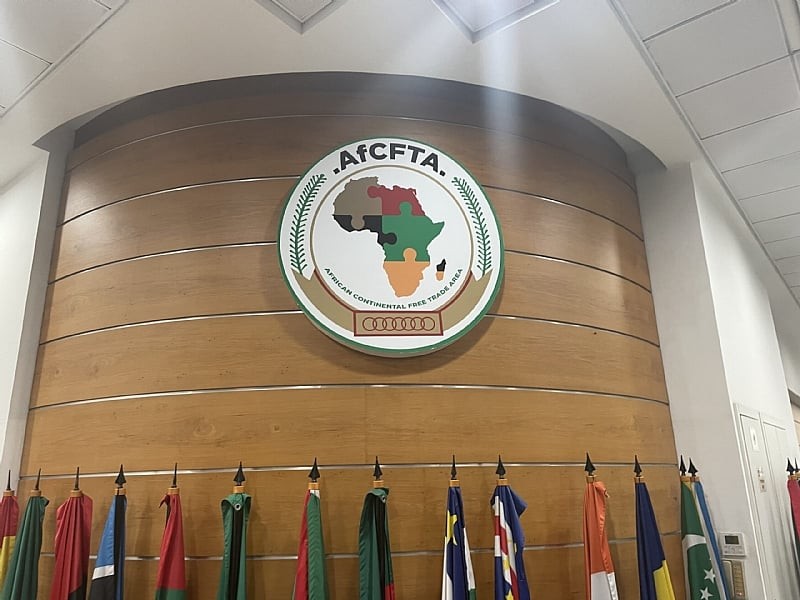
According to modernghana.com, the African Continental Free Trade Area (AfCFTA) faces significant headwinds unless Africa closes its annual trade finance gap — estimated at US$80 billion to US$120 billion — as warned in Afreximbank’s 2026 African Trade Report.
Financing shortfall undermines AfCFTA’s market potential
Although AfCFTA has created one of the world’s largest single markets — spanning 54 countries and over 1.3 billion people — many African businesses remain unable to access financing needed to capitalize on expanding cross-border trade opportunities. The report identifies inadequate trade finance as one of the continent’s most significant structural obstacles to regional economic integration and industrialisation.
Afreximbank stressed that while tariff barriers have been substantially reduced under AfCFTA, access to finance is now emerging as the more critical bottleneck. According to the report, the financing shortfall disproportionately affects small and medium-sized enterprises (SMEs), limiting their ability to secure working capital, import production inputs, fulfil export contracts, and expand into regional markets.
Root causes: risk perception, infrastructure, and capacity
The persistent trade finance gap stems from multiple interlocking constraints: high sovereign risk perceptions, limited risk-bearing capacity among domestic financial institutions, elevated transaction costs, and weak credit infrastructure across many African economies. These factors collectively constrain private sector participation in regional trade — even as African governments intensify efforts to deepen economic integration.
The report notes that Q3 2025 saw only marginal improvement in SME trade finance disbursement rates across West and Central Africa, with less than 17% of eligible SMEs receiving formal trade credit. In East Africa, average loan approval times for cross-border trade facilities exceeded 28 days, compared to under 5 days in comparable ASEAN markets.
Solutions: guarantees, digital infrastructure, and PAPSS
To bridge the gap, Afreximbank recommends scaling up trade finance facilities, expanding the use of credit guarantees and blended finance instruments, and strengthening the role of development finance institutions in mobilising private investment for trade-related projects. It also calls for targeted investment in industrial ecosystems, digital trade infrastructure, and efficient payment systems.
A key enabler highlighted in the report is the Pan-African Payment and Settlement System (PAPSS), which aims to reduce reliance on foreign currencies, lower transaction costs by up to 60%, and facilitate cross-border payments in under 2 hours. As of June 2026, PAPSS had gone live in 17 countries, processing over $2.1 billion in intra-African trade settlements since its 2022 pilot launch.
Industrialisation hinges on affordable finance
Afreximbank concluded that Africa’s trade challenge now extends beyond market access alone. According to the report, unlocking the full benefits of AfCFTA increasingly depends on whether businesses can secure affordable financing to produce, transport, and trade goods competitively across African markets.
The bank warned that unless the trade finance gap is significantly reduced, efforts to accelerate industrialisation, strengthen regional value chains, and expand intra-African trade are likely to remain below their full potential. As stated in the report:
“The continent’s ability to translate tariff liberalisation into tangible trade growth rests not on policy documents, but on banks’ willingness and capacity to finance real transactions.” — Afreximbank, 2026 African Trade Report
Source: modernghana.com
Compiled from international media by the SCI.AI editorial team.