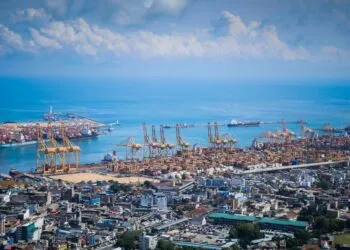
According to www.czapp.com, escalating geopolitical tensions in the Middle East are disrupting global PET supply chains, increasing freight costs, reshaping trade flows, and straining sustainability commitments — with the Strait of Hormuz handling around a quarter of global seaborne oil trade.
Disruption Reshapes Established PET Trade Flows
The global PET industry has long relied on predictable, cost-optimized trade routes for raw materials, resin, and finished packaging. That stability is now eroding. Ongoing conflict-related disruption across the Red Sea and persistent volatility around the Strait of Hormuz are forcing suppliers and brand owners to reconfigure logistics strategies. As shipping becomes slower and more expensive, ripple effects extend far beyond port delays: polymer availability, production planning, and regional supply-demand balances are all shifting in real time.
According to data cited by Kpler and JMIC, rerouted vessels and extended voyage times are inflating landed costs for PET resin and preforms across Asia, Europe, and North America. When alternative routes add 7–14 days to transit times, inventory buffers dwindle, just-in-time manufacturing falters, and procurement teams scramble for dual-sourced alternatives. This is not temporary friction — it’s structural recalibration. As McKinsey observes,
“global trade is not retreating but reconfiguring,”
with companies now prioritizing resilience, diversification, and risk management over pure cost minimization.
Sustainability Under Strain
Longer shipping distances directly increase transport-related emissions — undermining hard-won progress on carbon reduction goals. Emergency sourcing decisions also reduce supply chain transparency and efficiency, complicating compliance with regulatory mandates such as EU recycled content targets and national plastic packaging taxes. For PET producers committed to circularity, this pressure is accelerating investment in regional recycling infrastructure. Local rPET capacity is no longer a sustainability differentiator — it is becoming a strategic necessity for continuity of supply.
Brand owners must still meet legally binding 30% recycled content targets by 2030 under EU Packaging and Packaging Waste Regulation (PPWR), regardless of geopolitical shocks. Meanwhile, virgin PET resin shortages triggered by petrochemical feedstock constraints — particularly paraxylene and monoethylene glycol — are pushing converters toward rPET blends earlier than planned. According to the report, uncertainty around Q3 2026 resin availability is already prompting forward-buying behavior among top-tier beverage brands headquartered in London, Miami, and Sao Paulo.
Resilience Requires Transparency and Partnership
Resilience in the PET value chain is increasingly defined by three interlocking capabilities: real-time visibility into global trade flows, trusted partnerships across geographies, and agile local capacity. The report highlights that companies with integrated logistics analytics platforms — tracking vessel positions, port congestion indices, and customs clearance timelines — are better positioned to anticipate bottlenecks and shift volumes preemptively. Conversely, those relying solely on historical cost benchmarks face margin erosion and stockouts.
Stephen Geldart, Associate Director – Head of Analysis at Czapp, emphasizes that “supply chain resilience isn’t about avoiding disruption — it’s about shortening the recovery cycle.” His team’s analysis shows that PET converters with dual-sourcing agreements covering at least two regions (e.g., Southeast Asia and Turkey) reduced lead-time variability by 42% during Red Sea disruptions in early 2026. For supply chain professionals, this means moving beyond supplier scorecards to co-developing contingency protocols — including shared forecasting, buffer-stock pooling, and joint rPET qualification programs.
Emma-Jane Batey, an independent writer and communications consultant specializing in sustainability for the global packaging manufacturing industry, notes that “responsible PET packaging producers now measure resilience not only in cost per kilogram or carbon intensity, but in weeks of operational continuity under stress.” Her analysis draws on over 15 years of executive ghostwriting and thought leadership work across FMCG packaging.
Source: czapp.com
Compiled from international media by the SCI.AI editorial team.