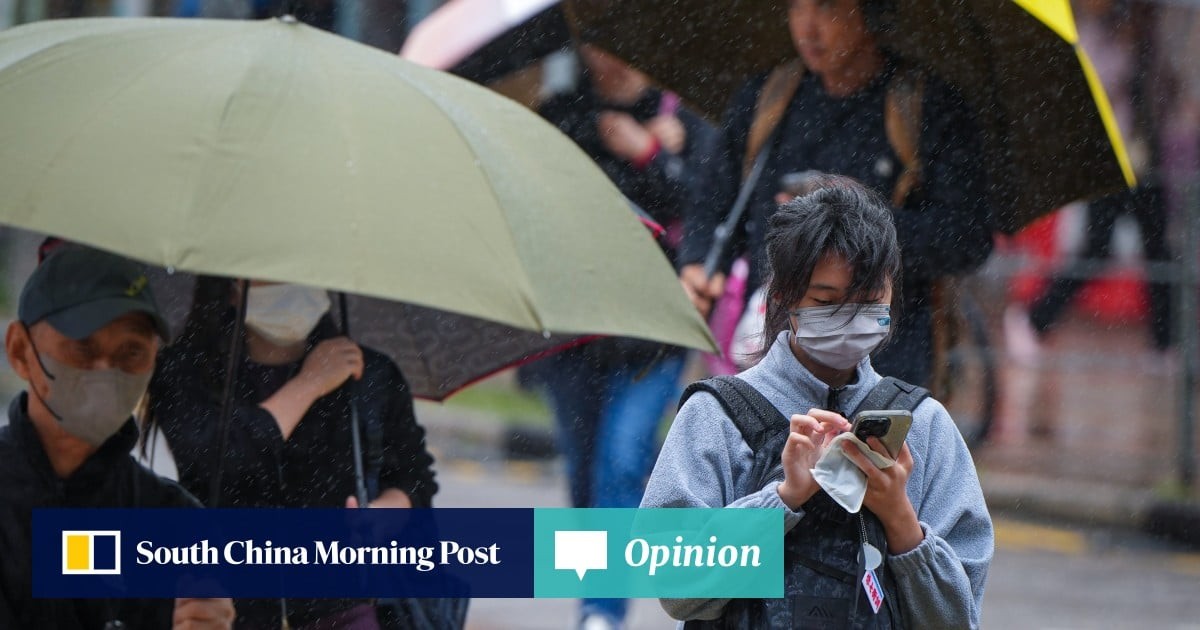
According to www.scmp.com, suspected child suicide cases among primary and secondary school students in Hong Kong remained persistently high for three consecutive academic years — 32 in 2023, 28 in 2024, and 31 in 2025.
Stagnant Rates Despite Intervention Efforts
Despite the implementation of a three-tier emergency mechanism in secondary schools, extensive public awareness campaigns, and sustained government investment in mental health resources, the annual count of suspected student suicides has shown no downward trend. The Education Bureau’s latest figures underscore a troubling plateau: 28 cases in 2024 followed by 31 in 2025, nearly matching the 32 reported in 2023. This consistency across three full academic years signals a systemic challenge rather than a statistical anomaly.
The Love-Perception Gap
Research from the Jockey Club Centre for Suicide Research and Prevention at the University of Hong Kong identifies strong family support as a key protective factor against suicidal ideation. Yet, as co-authors Paul Yip and Xiaofang Weng emphasize, parental devotion alone is insufficient. What matters critically is whether children *perceive* that love as understanding, acceptance, and emotional safety. This disconnect — termed “parent-child incongruence” or “parent-child discrepancy” — is not marginal: empirical studies consistently show wide gaps between how parents assess their relationships and how their children experience them.
“Science tells us a parent’s love is not enough. The crucial variable is whether the child actually feels understood, supported and accepted.” — Paul Yip, Director, Jockey Club Centre for Suicide Research and Prevention, University of Hong Kong
The phenomenon is especially pronounced in complex family structures, including single-parent and stepfamily households — configurations that have grown more common in Hong Kong over the past two decades. These arrangements often intensify communication challenges without necessarily reducing parental commitment.
Economic and Social Pressures Amplify Risk
The financial burden of raising a child in Hong Kong is exceptionally high — a reality reflected in intensive scheduling, private tutoring, weekend enrichment classes, and long-term academic planning. While these efforts signal investment, they may inadvertently crowd out unstructured time for emotional connection. As the authors note, many Hong Kong parents report hearing the anguished question from their children: “I’ve given you everything; why do you still feel I don’t understand you?” That rhetorical tension captures the core issue: provision does not equal perception.
This dynamic is reinforced by structural constraints — including overcrowded housing, long working hours, and limited access to school-based psychological counselors. According to official data, only 1 full-time counselor serves approximately 500 students in many secondary schools — far below WHO-recommended ratios. Moreover, stigma around mental health persists, discouraging early help-seeking behavior among adolescents.
Implications for Policy and Practice
For educators, social workers, and public health practitioners, the data point to a clear operational priority: shift from resource volume to relational quality. Training programs for teachers now include modules on recognizing emotional withdrawal — not just academic decline — as a warning sign. Meanwhile, pilot initiatives in 12 secondary schools across Hong Kong Island and Kowloon have introduced weekly “connection circles,” where students and staff engage in guided, non-evaluative dialogue focused on belonging and validation — not problem-solving or performance feedback.
These interventions are grounded in evidence that perceived support — not objective support levels — mediates resilience. A longitudinal study tracking 1,247 students aged 10–16 found that those reporting high congruence with parental expectations (i.e., alignment in values, communication frequency, and emotional responsiveness) showed 63% lower odds of suicidal ideation over a two-year follow-up, even after controlling for socioeconomic status and academic pressure.
Source: South China Morning Post
Compiled from international media by the SCI.AI editorial team.