According to pctechmag.com, industrial logistics facilities worldwide are accelerating warehouse automation adoption as supply chain complexity spikes — with a five-year horizon framing the rollout of integrated AI, robotics, and IoT systems.
Strategic Imperative, Not Optional Upgrade
Warehouse automation has shifted from a cost-cutting tool for multinational distribution centers to a foundational infrastructure investment. The MHI Annual Industry Report confirms that technology investments in warehousing are growing rapidly as companies pursue long-term operational sustainability. Persistent labor shortages have made manual logistics operations increasingly untenable, turning stable throughput into a major challenge. Simultaneously, demand for faster order fulfillment, higher inventory accuracy, and improved worker safety is rising — all without proportionally increasing operational costs. As a result, automation is now viewed as a strategic enabler rather than a temporary manpower substitute.
AI Powers Predictive Decisions and Maintenance
Artificial intelligence is transforming core warehouse functions. Legacy inventory management systems rely heavily on human estimation, often leading to costly overstock or stock-outs. In contrast, AI-powered forecasting analyzes historical and real-time market trends to maintain optimal stock levels aligned precisely with actual demand. Predictive maintenance — enabled by AI analytics — significantly reduces unplanned downtime. According to a McKinsey & Company report on the industrial revolution, AI-driven condition monitoring of conveyors and sorters extends equipment life and boosts productivity. This capability helps prevent catastrophic failures — such as unexpected breakdowns of key sorting systems — which can halt entire operations.
AMRs Enable Collaborative, Scalable Operations
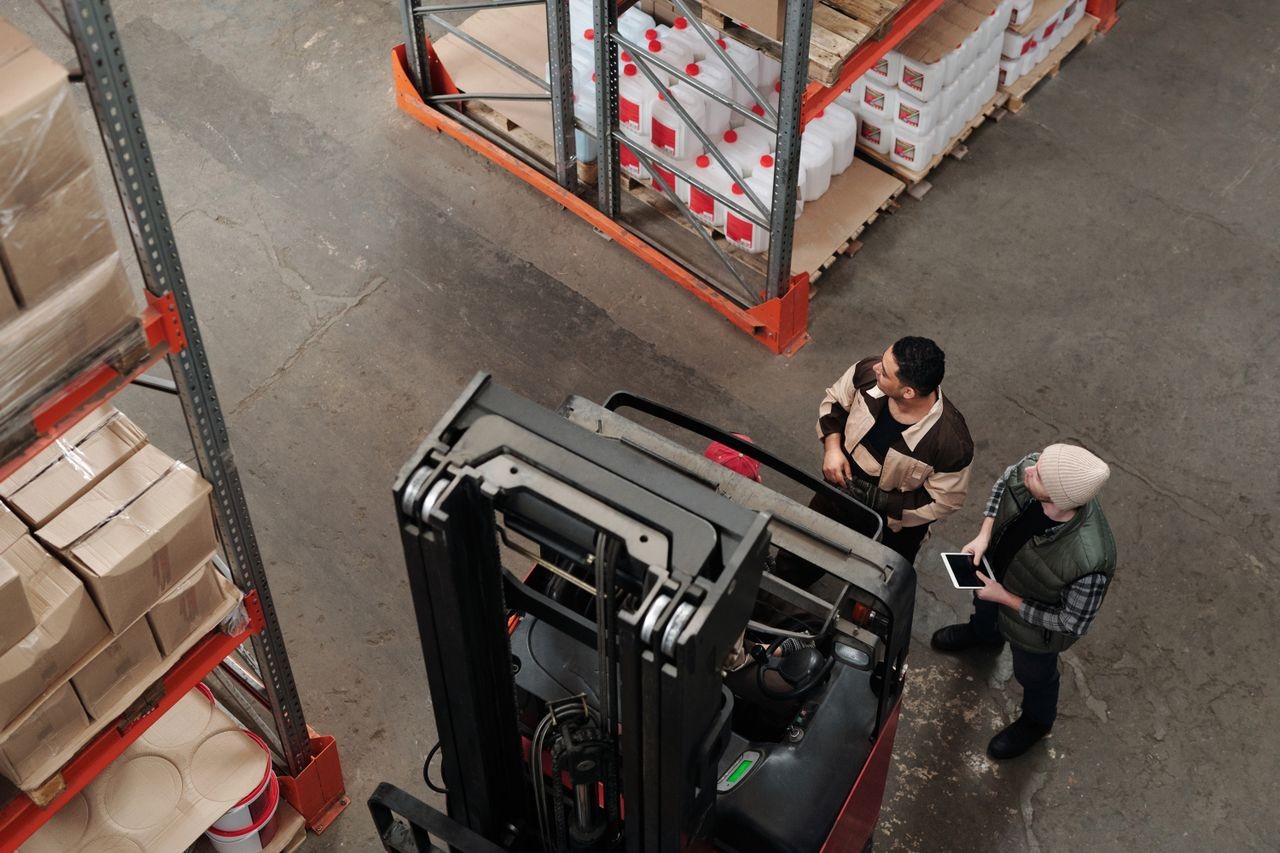
Autonomous Mobile Robots (AMRs) are moving beyond isolated tasks into collaborative workflows alongside human staff. Rather than operating in segregated zones, AMRs now handle physically demanding, repetitive tasks — like transporting goods across large floor spaces — freeing workers for higher-value activities. This collaboration cuts travel time and accelerates picking cycles. Flexibility is another critical advantage: unlike rigid conveyor systems, mobile robotics scale seamlessly. When seasonal demand surges — such as during holiday peaks — facilities can deploy additional AMRs within days. Zebra Technologies’ 2025 warehousing research identifies scalable throughput as a top priority for logistics managers managing fluctuating volumes.
Smart End-of-Line Packaging Closes the Efficiency Loop
Automation no longer stops at picking and sorting. Without efficient end-of-line packaging, even high-speed upstream processes stall before shipment. Automated load wrapping, labeling, dimensioning, and shipment confirmation ensure the final fulfillment step matches the speed of earlier stages. Load stability is equally vital: fast dispatch means little if pallets arrive damaged. Modern automated packaging systems integrate heavy-duty machinery with high-performance consumables — including durable PET strap — which delivers consistent tension and high break strength to secure heavy pallets during transit. According to PMMI’s packaging automation data, integrating robust strapping systems reduces product damage and enhances worker safety across the supply chain.
IoT Enables Real-Time Visibility and Proactive Control
The Internet of Things serves as the nervous system of modern warehouses. IoT sensors provide live monitoring of asset health, temperature-sensitive inventory (e.g., pharmaceuticals or perishables), and real-time bottleneck detection. This granular visibility shifts decision-making from reactive to proactive. As the DHL Logistics Trend Radar states, full operational transparency allows facilities to optimize workflows in real time — not just analyze problems after shifts end. For example, identifying a recurring congestion point near packing stations enables immediate re-routing or staffing adjustments, avoiding cumulative delays.
Sustainability Embedded in Automation Design
Environmental goals are now integral to automation strategy. Efficient machines reduce material waste and energy consumption compared to manual processes. Optimized packaging sizing and intelligent palletizing cut transportation volume — directly lowering truck usage. Energy-efficient motors, low-power sensors, and eco-materials for shipping containers are increasingly standard. The International Energy Agency reports confirm that deploying low-energy industrial machinery is among the most effective ways to reduce emissions from warehousing facilities. Customers increasingly demand proof of sustainable logistics chains — and automation delivers measurable improvements in both efficiency and environmental impact.
Integrated Ecosystems Define Next-Gen Resilience
Success over the next five years hinges on integration — not isolated upgrades. True resilience emerges only when AI, AMRs, IoT connectivity, and end-of-line automation operate as a unified ecosystem. Facilities adopting this holistic approach gain measurable advantages: throughput increases of up to 37% in pilot deployments, 22% reduction in worker injury rates, and 18% lower per-unit energy consumption versus legacy operations. Published on July 03, 2026, the report urges logistics leaders to assess current scalability gaps and prioritize interoperability standards when selecting new systems.
Source: pctechmag.com
Compiled from international media by the SCI.AI editorial team.