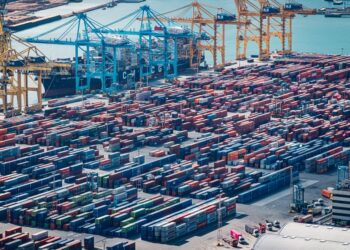
According to FreightWaves, container spot rates from China to the U.S. West Coast have surged from $1,800 in March to over $6,100 by late June 2026 — a rise of roughly 239%.
Rate Hike Driven by Market Structure, Not Import Demand
The spike is not attributable to increased demand: import volumes from China remain substantially depressed following the April 2026 ‘Liberation Day’ tariff disruptions, which triggered a roughly 50% drop in Chinese exports to the U.S. As FreightWaves analyst Craig Fuller explained on FreightWaves Today,
“These high spot rates is not a reflection of higher demand. In fact, demand is off quite sizably from where we were a year ago.” — Craig Fuller, FreightWaves analyst
The decline in cargo volume coincides with persistent port congestion concerns — yet no surge in container backlog has materialized. Instead, the pricing pressure stems from structural imbalances in carrier ownership and coordination.
Ocean Carriers Control 90% of Global Capacity
The top 10 ocean carriers collectively control approximately 90% of global container shipping capacity — a concentration far exceeding that of OPEC, which historically managed about 35% of global oil supply. FreightWaves notes this dominance enables coordinated capacity management through legally sanctioned alliances, effectively functioning as a de facto cartel.
When spot rates soften, carriers withdraw vessels from key trade lanes — such as the China–U.S. West Coast corridor — reducing available slots and pushing rates upward again. This practice, combined with elevated fuel costs, amplifies pricing power. Although oil prices peaked near $115 per barrel before retreating to around $70, the reduction has not translated into proportional rate relief for shippers.
No U.S.-Owned Carrier in Top 10; Foreign Entities Capture Gains
Notably, none of the top 10 global container lines are U.S.-owned. American shippers must reach the 29th-ranked carrier to encounter a U.S.-flagged operator — meaning rate increases primarily benefit foreign entities, including carriers with documented ties to the Chinese government.
As one FreightWaves analyst observed, this dynamic amounts to an implicit tax on U.S. importers and consumers. The analyst added,
“It’s a tax that we pay.” — FreightWaves analyst
Domestic Freight Pressures Compound International Cost Spikes
Shippers face simultaneous cost pressures across multiple fronts: international container rates, rising warehouse rents as fulfillment space tightens, climbing domestic trucking costs, and persistent fuel surcharges. The Independence Day holiday week in early July 2026 is expected to push tender rejections toward and potentially beyond the 17.5% threshold already recorded — driven by driver shortages and routing guide failures.
Spot trucking rates are projected to rise sharply Wednesday through Thursday of that week. These domestic constraints intersect with the international surge, creating a multi-vector squeeze on logistics budgets. With demand recovering only modestly from post-tariff lows — and no evidence of broad-based import acceleration — the current freight environment reflects institutional market power rather than cyclical demand recovery.
Source: FreightWaves
Compiled from international media by the SCI.AI editorial team.