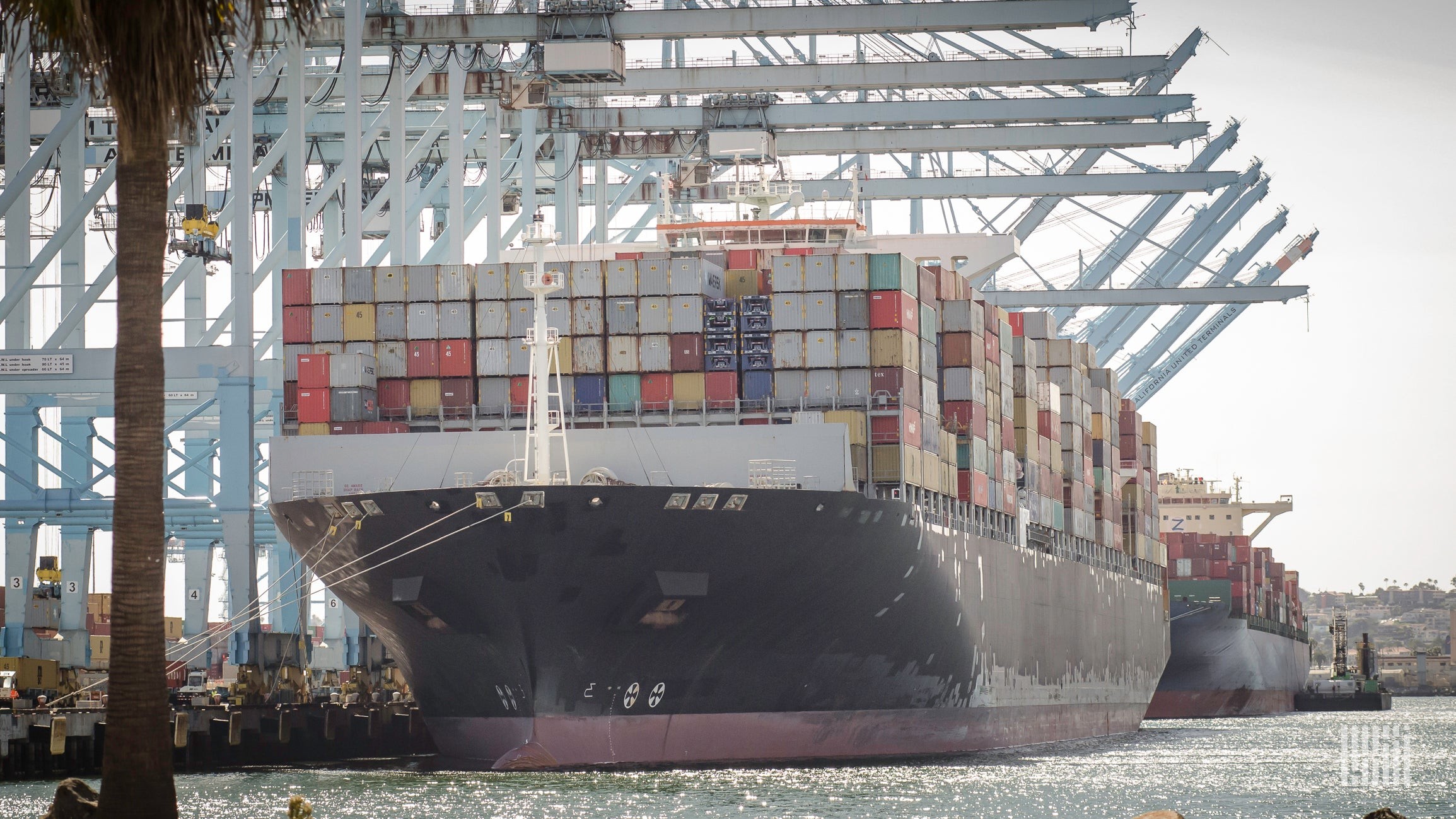
According to www.freightwaves.com, import volumes at the Port of Long Beach — the second-busiest U.S. container gateway — rose 40% year-on-year in May 2026, reaching 418,851 twenty-foot equivalent units (TEUs).
Record-breaking May volumes and frontloaded cargo
The Port of Long Beach handled a total of 842,030 TEUs in May 2026, up 31.7% from May 2025 and marking the third-busiest May on record. This surge reflects widespread frontloading by retailers and shippers anticipating July 2026 cost increases, including new manufacturer price hikes and elevated fuel expenses. Exports also rose 32.9% to 109,168 TEUs, while empty container movements — a leading indicator of future import demand — climbed 21.8% to 314,012 TEUs.
Through the first five months of 2026, Long Beach processed 4,050,247 TEUs, a marginal 0.2% increase over the same period in 2025 and closely tracking the all-time volume record set last year. The port, together with the adjacent Port of Los Angeles, forms the busiest U.S. container gateway — a critical node for trans-Pacific trade.
Drivers: tariffs, geopolitics, and energy volatility
Chief Executive Noel Hacegaba of the Long Beach Harbor Commission attributed the early surge to converging uncertainties: rising fuel costs, unresolved tariff policy, and geopolitical developments — notably the recent U.S.-Iran peace agreement that reopened the Strait of Hormuz. These factors are compressing the traditional peak shipping season, shifting expectations toward higher-than-normal cargo volumes in July and August 2026.
“These numbers reflect the strength and adaptability of the supply chain,” said Noel Hacegaba in a media briefing. “Shippers are responding to the higher cost of doing business by moving cargo earlier.” He emphasized that predictability remains foundational:
“Supply chains perform best when businesses can plan with confidence. Whether we’re talking about fuel costs, geopolitical risks, or tariff policy, predictability remains one of the most important drivers of supply chain efficiency and economic growth.”
— Noel Hacegaba, Chief Executive, Long Beach Harbor Commission
Carrier response and market tightening
Ocean carriers have reacted to the frontloading trend by adjusting capacity on trans-Pacific routes. Over the past several weeks, this has driven trans-Pacific freight rates significantly higher and made available booking space increasingly scarce for shippers. The combination of tariff uncertainty, energy-market volatility, and post-war recalibration in Middle East maritime corridors is reshaping near-term logistics planning across the retail and manufacturing sectors.
While the immediate effect is a surge in container throughput, Hacegaba cautioned that longer-term business plans remain shadowed by unresolved variables — particularly the potential downstream impact of pending U.S. trade policy decisions and sustained energy-price instability. The port’s performance underscores how macro-level uncertainty translates directly into operational acceleration at the infrastructure level.
Broader industry context
This frontloading pattern aligns with recent moves across North American logistics infrastructure. For example, Americold recently broke ground on a new cold chain facility at an eastern Canada port leveraging dual rail and ocean access; CSX opened its $495 million Baltimore intermodal rail tunnel in June 2026; and the Port of Virginia completed a $450 million deepening project to accommodate larger vessels. Collectively, these investments signal intensified focus on capacity resilience amid volatile demand timing.
For supply chain professionals, the Long Beach data confirms that uncertainty does not stall movement — it compresses it. Frontloading requires tighter coordination between procurement, inventory planning, and carrier contracting, especially as rate volatility and slot scarcity compound seasonal pressure. Real-time visibility tools and dynamic forecasting models are now essential not just for optimization, but for basic execution reliability.
Source: FreightWaves
Compiled from international media by the SCI.AI editorial team.