According to www.scmp.com, Zhipu AI’s Hong Kong–listed shares surged 48% intraday on June 15 following the open-source release of its GLM-5.2 foundation model.
Zhipu AI’s Market Ascent
The rally extended through the week, with Zhipu AI — trading under the name Knowledge Atlas Technology in Hong Kong — reaching an intraday share price of HK$2,980 (US$380) on the morning of June 22. This valuation briefly pushed its market capitalisation above HK$1.2 trillion, representing a 25-fold appreciation since its January 2026 debut.
The company’s rapid valuation growth reflects intensified investor interest in sovereign AI infrastructure amid escalating geopolitical fragmentation. Zhipu AI’s decision to open-source GLM-5.2 — a move timed just before the U.S. regulatory intervention — positioned it as a viable alternative within diverging AI ecosystems. According to the report, this development occurred against the backdrop of sustained U.S. export controls initiated in October 2022, which targeted Nvidia’s advanced silicon and later expanded to include foundational open-source models under restrictive licensing regimes.
U.S. Model Restrictions Backfire
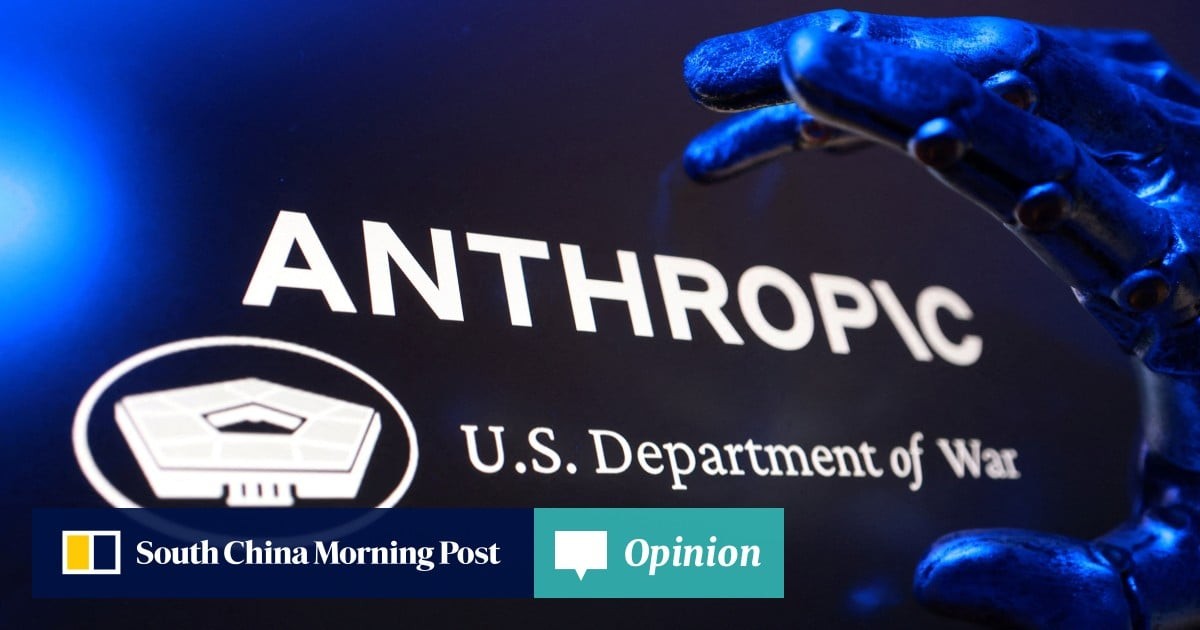
On June 12, 2026, the U.S. Commerce Department ordered California-based Anthropic to block foreign access to its newly launched Fable 5 and Mythos 5 AI models. Unable to verify user nationality in real time, Anthropic was forced to shut down both models globally — locking out its own non-American staff and downgrading affected subscribers to an older version.
Although Washington cited a “jailbreak” security vulnerability as justification, Anthropic’s internal technical review found the exploit involved only minor flaws already present in other publicly available models. The source states that Anthropic had actively lobbied for stricter cross-border AI model restrictions — helping shape the very regulatory framework that ultimately constrained its own operations. As noted by Dr Ruby Tong, “Washington treats software models like physical nuclear components, yet software cannot be embargoed like hardware.”
Hong Kong’s Regulatory Opportunity
Ruby Tong, a university innovator and technology strategist bridging academic research, deep tech commercialisation, and AI governance, argues that Hong Kong is uniquely positioned to serve as a neutral regulatory node. She states: “As a global ‘sovereign AI premium’ emerges and U.S. weaponisation of AI models triggers panic, Hong Kong can bridge diverging AI ecosystems.”
This role hinges on Hong Kong’s legal autonomy, common-law infrastructure, and established financial and data governance frameworks — all operating outside mainland China’s cybersecurity and data localisation mandates while remaining aligned with international compliance expectations. Unlike mainland jurisdictions, Hong Kong has not imposed mandatory model registration or pre-deployment audits for commercial AI systems — enabling faster iteration without compromising accountability. The source notes that this regulatory agility emerged precisely as U.S. controls tightened after October 2022 and as Chinese firms accelerated domestic model development in response.
Structural Irony in Techno-Nationalism
The incident underscores a systemic contradiction: policies designed to slow technological diffusion instead accelerate indigenous capability building. By denying access to state-of-the-art models, the U.S. unintentionally incentivises parallel development — a dynamic evident in Zhipu AI’s 25-fold post-debut appreciation and the broader surge in Chinese open-source foundation model releases since early 2026.
Dr Tong highlights that code moves instantly across borders — unlike hardware — making software embargoes inherently porous. The result is not containment but bifurcation: two increasingly separate stacks, each with distinct standards, interoperability protocols, and governance norms. Hong Kong’s potential lies not in choosing sides, but in certifying, auditing, and facilitating cross-stack validation — a function no other jurisdiction currently fulfills at scale.
Source: South China Morning Post
Compiled from international media by the SCI.AI editorial team.