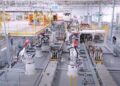
According to www.globaltrademag.com, warehouse owners and logistics managers are turning to intelligent automation to drive performance amid mounting pressure to accelerate fulfillment and increase operational transparency. This shift is fueling growth in the warehouse automation market, characterized by a new generation of distribution centers designed for speed and precision.
Eight Key Automation Technologies
The source identifies eight types of technology leading this transformation:
- Automated pallet movement systems — including high-speed conveyors, pallet shuttles, and integrated automated storage and retrieval systems — designed to increase storage density while speeding up large-scale inventory movements
- Pallet shuttle systems specifically use self-powered robotic carriers to move pallets within racking structures, enabling as many as 11,000 movements per week and eliminating the need for wide forklift aisles
Strategic Drivers and Operational Impact
These technologies respond directly to persistent industry challenges: accelerating order cycle times, improving space utilization, reducing manual labor dependency, and enhancing real-time visibility across inventory flows. As noted in the article, leaders are embracing greater use of artificial intelligence and robotics not as incremental upgrades but as foundational elements for competitive advantage.
While the source does not name specific vendors or deployments beyond system categories, it situates this evolution within broader 2026 logistics trends covered elsewhere on the site — including port infrastructure investments (e.g., Port of Los Angeles securing $70M federal funding), rising freight rates tied to fuel pressures and Strait of Hormuz tensions, and growing adoption of AI agents in delivery and transportation.
For supply chain professionals, the implications are concrete: facility design must now accommodate modular, scalable automation architecture; labor planning must integrate human-robot collaboration protocols; and capital allocation decisions increasingly weigh upfront automation investment against long-term throughput, accuracy, and labor cost metrics. The 11,000 movements per week benchmark for pallet shuttles, for instance, signals a threshold at which automation begins to redefine capacity planning — shifting focus from square footage to movement velocity and system uptime.
Source: www.globaltrademag.com
Compiled from international media by the SCI.AI editorial team.