According to www.gtreview.com, supply chain finance is evolving from a working capital tool into a strategic mechanism for ecosystem stability — driven by geopolitical volatility, including repeated disruptions in the Strait of Hormuz, through which a significant share of global energy and regional trade flows.
The shifting landscape: From efficiency to resilience
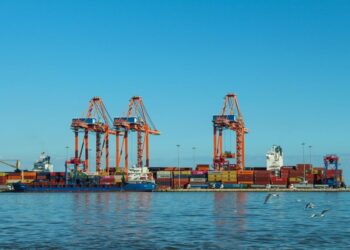
The global supply chain landscape has faced sustained pressure, with periodic disruptions to key maritime corridors amplifying operational risks across the Gulf Cooperation Council (GCC) region. According to the report, businesses have experienced shipment delays, freight cost increases, and sudden procurement gaps — forcing rapid adaptations in logistics strategy. Procurement teams are expanding use of overland corridors across the GCC, adopting multimodal freight solutions, and intensifying coordination with suppliers managing their own cost and capacity constraints.
These developments signal that supply chain finance (SCF) is no longer merely a tactical balance sheet optimisation tool. As Prateek Vahie, chief commercial officer at Wio Bank, explains, it has become a foundational capability for maintaining continuity amid sustained volatility. The report notes that even before recent disruptions, structural strains were evident: the global trade finance gap stands at US$2.5 trillion, per the Asian Development Bank, with small and medium-sized enterprises accounting for the majority of unmet demand.
Liquidity asymmetry as systemic risk
When major trade routes falter, liquidity stress cascades rapidly across supplier networks. Payment cycles in many sectors have extended to 60 or even 90 days, placing acute strain on suppliers operating with thin financial buffers. SMEs — central to the Middle East’s economic diversification ambitions — face disproportionate vulnerability despite demonstrated adaptability.
“Recent disruptions have demonstrated that efficiency alone is insufficient and that the ability to absorb and adapt to shocks is becoming a defining characteristic of competitive supply chains,” said Prateek Vahie, chief commercial officer at Wio Bank.
This liquidity asymmetry has shifted from a financial inefficiency to a systemic risk: the financial health of one node directly affects the stability of the entire network. The source states that buyer-led SCF programmes — which extend the credit strength of large organisations across their supplier base — are now critical levers for distributing liquidity where it is most urgently needed.
Buyer-led SCF as strategic infrastructure
Buyer-led SCF enables suppliers to access timely working capital at lower cost — allowing them to fund inventory, pay staff, and absorb short-term shocks without resorting to high-cost borrowing. Simultaneously, buyers reduce production delay and stock shortage risks while strengthening supplier relationships. According to the report, this dual benefit becomes especially valuable during periods of geopolitical uncertainty, such as the ongoing instability affecting the Strait of Hormuz.
The article highlights that companies across the Middle East are reconfiguring procurement strategies at speed — shifting toward overland transport routes, diversifying supplier bases across new geographies, and increasing safety stock levels. Many are also accelerating adoption of digital procurement tools that deliver real-time visibility into supply chain performance — a shift that increases both complexity and capital intensity.
Banks’ expanded role: Beyond capital provision
In this dynamic environment, banks like Wio Bank serve not only as capital providers but as enablers of operational flexibility. The source states that businesses benefit from adaptable financial obligation structures and continued access to trade finance solutions — supported by digital platforms that streamline onboarding, documentation, and transaction visibility.
Such platforms allow banks to deliver timely, targeted support precisely when volatility peaks. The report underscores that maintaining liquidity access — backed by integrated digital infrastructure — is now inseparable from supply chain continuity planning. Looking ahead, SCF will be defined by its capacity to support ecosystem health rather than transactional efficiency — including diversified funding structures, deeper integration with enterprise resource planning (ERP) and procurement systems, and extension of support beyond tier-1 suppliers to mitigate downstream risks.
Sustainability and regional imperatives
The evolution also includes a growing alignment with sustainability objectives: financing structures can incentivise suppliers meeting defined environmental and social standards. As the Middle East continues investing in manufacturing and regional value chain development, building resilient trade networks has become a strategic imperative — not just for individual firms, but for national economic security.
The report notes that these adaptations are occurring against the backdrop of June 23, 2026 publication timing and appear in GTR Issue 2 2026. It further cites the Asian Development Bank as the source of the US$2.5 trillion trade finance gap estimate — a figure representing unmet financing needs primarily among SMEs across emerging markets.
Source: gtreview.com
Compiled from international media by the SCI.AI editorial team.