According to www.inboundlogistics.com, the U.S. Department of Energy (DOE) has allocated $17.5 billion in low-interest loans to accelerate procurement of long-lead nuclear reactor components — a structural intervention aimed at cutting multi-year delays from new plant construction.
Front-End Financing Targets Core Component Delays
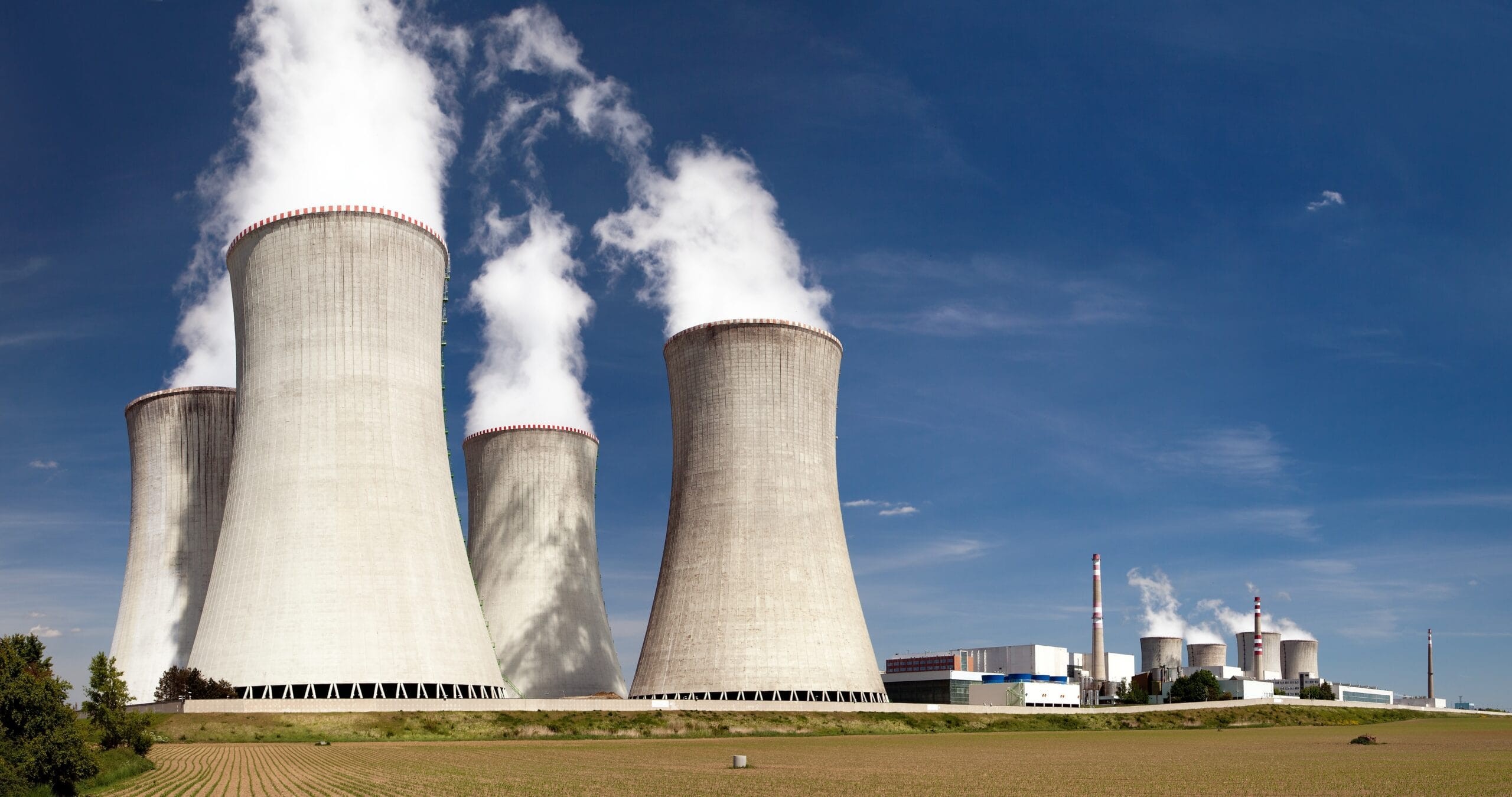
The funding, announced on June 23, 2026, is administered by the DOE’s Office of Energy Dominance Financing (EDF), formerly the Loan Programs Office. It targets the most time-intensive phase of nuclear buildout: securing hyper-specialized, forged structural parts that historically require three to five years just to manufacture. These include heavy steel pressure vessels, massive steam generators, and high-power coolant pumps — all essential for Westinghouse AP1000 reactors.
The capital will be distributed across five selected projects structured as special purpose vehicles (SPVs) formed jointly by utilities and Westinghouse. To qualify, each SPV must contribute $1 billion in private capital into the procurement pipeline. All five projects plan to deploy the Westinghouse AP1000, the only U.S.-certified pressurized water reactor currently available for commercial deployment.
Learning from Vogtle: Unbundling Tech and Execution
The strategy directly responds to failures observed at Southern Company’s Plant Vogtle expansion in Georgia, where two AP1000 units came online in 2023 and 2024 — seven years behind schedule and $17 billion over budget. According to EDF Director Gregory Beard, pre-construction financing is expected to compress commercial operation timelines by up to three years.
A key structural shift distinguishes this initiative from past efforts: the deliberate unbundling of technology supply from field execution. While Westinghouse remains the foundational technology provider, engineering, procurement, and construction (EPC) contracts will be awarded through a separate, competitive bidding process. Crucially, the AP1000 design is now fully finalized — eliminating the rolling engineering changes that disrupted early supply chain logistics at Vogtle.
Hyperscaler Demand Drives Urgency
The push to bring 10 new large-scale reactors under construction by 2030 is anchored in non-negotiable power demand from artificial intelligence infrastructure. Hyperscalers including Microsoft, Google, and Meta are actively seeking gigawatt-scale, carbon-free baseload electricity. These tech conglomerates are expected to serve as primary off-takers via long-term power purchase agreements (PPAs), providing revenue certainty needed to justify the capital outlay.
The component financing operates alongside broader federal efforts to rebuild domestic nuclear fuel capacity — including a recent $2.7 billion allocation for domestic uranium enrichment and ongoing negotiations to convert surplus defense plutonium stockpiles into commercial-grade fuel.
Blueprint for Industrial Supply Chain De-Risking?
If successful, the $17.5 billion program could establish a replicable federal model for de-risking other capital-intensive industrial supply chains. Sectors such as grid-scale energy storage, deep-water offshore wind, and domestic critical mineral refining face identical “chicken-and-egg” procurement dilemmas: developers hesitate to order multi-million-dollar components without finalized project approval, yet waiting for approval extends delivery times by years.
By using federal capital to absorb front-end procurement risk, the government is testing whether it can artificially stabilize volatile industrial supply chains. Should the framework prove effective at shielding utilities from hyper-inflation and long-lead bottlenecks, the “procurement-first” loan model may be adapted for cross-country transmission lines, advanced chip manufacturing facilities, and large-scale domestic mining operations.
Source: inboundlogistics.com
Compiled from international media by the SCI.AI editorial team.